




















Trump letter to Norway ignites Greenland and Nobel backlash, sharpening NATO and tariff tensions

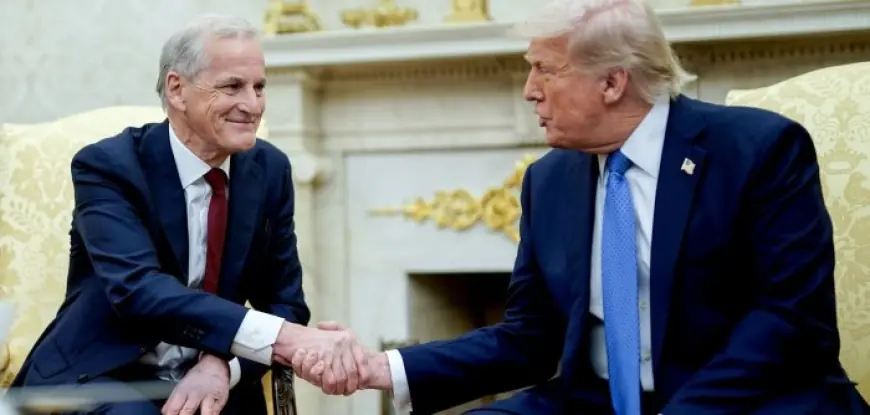
The Trump letter to Norway has triggered a fast-moving diplomatic storm after Norway’s prime minister confirmed he received a written message from U.S. President Donald Trump that blended frustration over the Nobel Peace Prize with renewed insistence on “complete” U.S. control of Greenland. The exchange, dated Sunday, January 18, 2026, has quickly widened from a bilateral note into a broader transatlantic dispute touching security, NATO cohesion, and looming tariff threats.
At the center is the unusual framing: Trump’s message links his anger about not receiving the Nobel Peace Prize to a harder posture toward allies, while repeating maximalist language on Greenland and pressing for backing from partners. The result is a clash not just over territory and trade, but over how far U.S.-Europe relations can bend before formal alliances begin to strain.
What the Trump letter to Norway said
Norway’s leader said he reached out to Trump on behalf of himself and Finland’s president to urge de-escalation and discuss several pressure points, including Greenland and trade measures affecting Nordic countries. Trump’s reply, as shared publicly by Norwegian authorities and echoed widely in recent coverage, carries three dominant themes:
-
A claim that Norway “decided” not to award him the Nobel Peace Prize, presented as a personal and political grievance
-
A statement that he no longer feels obliged to think “purely” in terms of peace, even if peace remains a stated priority
-
A reiteration of demands around Greenland, framed as a U.S. national security imperative that allies should support
The language has drawn attention because it treats the Nobel Prize as something governments grant directly and because it escalates Greenland rhetoric in a way that puts allied unity under public stress.
Why Greenland is suddenly at the center of a Norway dispute
Norway is not the sovereign power responsible for Greenland; Denmark is. But Oslo has been pulled into the story for two reasons: Norway’s diplomatic outreach attempted to cool tensions, and the Nobel Prize is awarded in Norway even though the selection is made by an independent committee appointed by Norway’s parliament.
Trump’s message effectively uses Norway as a symbolic stand-in for two separate frustrations: European resistance to his Greenland stance and his long-running desire for Nobel recognition. That blending has widened the fallout, drawing in NATO dynamics and raising questions about whether this is rhetorical leverage, a negotiating tactic, or a signal of more confrontational policy.
Nobel Peace Prize: the key misunderstanding driving the flare-up
A critical point repeated by Nordic leaders is that the Nobel Peace Prize is not handed out by the Norwegian government. The committee operates independently, and Norway’s prime minister has emphasized that distinction publicly.
This matters because it undercuts the premise of Trump’s complaint. When a leader treats an independent prize as a government decision, it becomes harder to steer the conversation back to policy. The dispute shifts from negotiable interests (trade, security posture) to perceived personal slights, which can be volatile and unpredictable in diplomacy.
NATO and tariffs: why the letter is more than a headline
The Trump letter to Norway lands amid a broader confrontation over trade measures and security commitments. Norway and Finland have objected to announced or threatened tariff increases affecting Nordic countries and other European partners. At the same time, Trump’s Greenland push is being framed by his team as a strategic necessity tied to Russian and Chinese activity in the Arctic.
For NATO, this is a stress test in public:
-
If Washington pressures allies to endorse extraordinary territorial demands, alliance politics get personal and transactional
-
If European partners respond with retaliatory tariffs or coordinated pushback, economic friction reinforces security distrust
-
If the dispute escalates rhetorically, it risks weakening deterrence messaging at a moment when the Arctic is becoming a more contested theater
Even if no immediate policy changes follow, the tone of the exchange sets a precedent: private messages can become public, and public allies can become negotiating counterparts under threat of economic and strategic pressure.
Timeline of the Trump letter to Norway controversy
-
Sunday, Jan. 18, 2026: Norway’s prime minister sends Trump a message urging dialogue and de-escalation, referencing Greenland and tariffs.
-
Later Jan. 18: Trump replies with a message tying Nobel frustration to a tougher stance and repeating demands over Greenland.
-
Monday, Jan. 19: Norway confirms receipt and releases the exchange publicly, accelerating international reaction.
-
Tuesday, Jan. 20: The dispute continues to ripple across European capitals as officials weigh responses on trade and alliance messaging.
What happens next
Two tracks are likely in the near term. First, European governments may try to compartmentalize: keep Greenland discussions in established diplomatic channels while addressing tariffs through trade mechanisms. Second, Washington may amplify the pressure by linking security cooperation and economic terms to Arctic posture.
The biggest unknown is whether Trump’s Greenland position remains rhetorical leverage or turns into concrete steps that force allies to choose between solidarity and resistance. For now, the Trump letter to Norway has become a flashpoint because it mixes personal grievance, territorial demands, and alliance expectations in one document—an approach that makes de-escalation harder and miscalculation easier.