Nate Hobbs Decision Window Tightens as Packers Add Depth and Weigh a Costly Roster Bonus

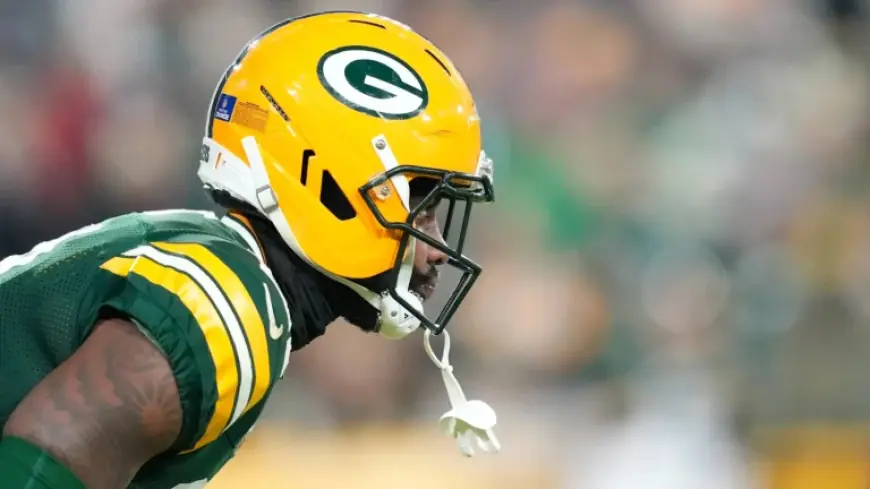
In a matter of days, a single contract trigger could shape Green Bay’s cornerback room more than any spring practice rep. nate hobbs, signed last offseason after four years in Las Vegas, now sits at the center of a roster math problem: a $6. 25 million roster bonus due March 13 and a set of cap outcomes that make any move expensive in one way or another.
nate hobbs and the March 13 roster-bonus squeeze
The decision point is straightforward, even if the implications are not. nate hobbs is due a $6. 25 million roster bonus on March 13 if he is on the team on the fifth day of the league year. That looming payment turns the coming days into a practical deadline for clarity.
Green Bay’s contract structures often lean heavily on signing bonus money as the only guarantees, with roster bonuses included in some deals. In this case, the only guarantees at signing for nate hobbs came through a $16 million signing bonus—money already committed. If the team were to move on before the roster bonus is due, $12 million in bonus prorations would count as dead money.
From a cap perspective, the immediate options described in the available details are stark. A standard release would leave $12 million in dead money and only $838, 000 in cap savings. A post-June 1 designation could produce $8. 84 million in savings in 2026, but those funds would not become available until June, and teams are limited to two post-June 1 designations per year. The mechanics create a narrow corridor where timing matters as much as the roster evaluation itself.
Benjamin St-Juste arrives as depth, and the cornerback room looks less settled
On Tuesday, the Packers took an early step toward their stated offseason aim of adding depth and competition at cornerback by agreeing to sign Benjamin St-Juste to a two-year, $10 million contract. General manager Brian Gutekunst had said he wanted to strengthen the position, and the move signals that the team is acting on that priority while the broader roster remains in flux.
St-Juste, 28, is an outside free agent addition and comes with a defined recent role: last season he played 16 games with two starts and logged 35% of defensive snaps, while contributing heavily on special teams (67% of special teams plays). Over his career, he has appeared in 70 games with 47 starts and has two interceptions and 41 pass breakups.
The Packers return starters Keisean Nixon and Carrington Valentine, but the St-Juste signing adds another option into a room where a decision is still pending. Importantly, Gutekunst had earlier indicated the team was likely to move forward with nate hobbs and guard Aaron Banks—yet Banks’ contract was restructured, effectively ensuring his return. No parallel cap-driven adjustment has been made to the Hobbs deal, and that contrast underlines why Hobbs’ status now reads less certain than it did earlier in the offseason.
What changed on the field: role reduction, knee issues, and a season that never stabilized
Any cap decision ultimately sits on top of a football decision, and the on-field story behind nate hobbs in Green Bay was choppy. After knee surgery in August, his preparation for the season was affected. He did not debut until Week 2, then later missed five additional games due to knee trouble and ultimately finished the season on injured reserve.
His role also contracted quickly. The Packers benched him five games into the season and reduced his usage significantly. While he had previously contributed as both a slot and boundary corner in Las Vegas, his snap share in Green Bay tells a different story: after his Week 6 demotion, he cleared 33% of the defensive snaps only once.
Those facts do not, by themselves, dictate what Green Bay should do next. But they frame why the contract trigger matters so much. If a player’s role is limited and health has disrupted availability, the appetite to carry a large roster bonus can diminish—particularly when the cap mechanics offer limited immediate relief in the event of a quick separation.
At the same time, the exit ramps are not clean. Cutting him before the roster bonus is due produces minimal short-term cap savings under a standard release, and the post-June 1 approach delays relief until June while consuming one of the team’s two annual designations. That tension—between uncertain on-field return and awkward cap consequences—sits at the heart of this decision.
Expert perspectives: Gutekunst’s earlier signal, Demovsky’s notes, and what the numbers imply
Brian Gutekunst, General Manager of the Green Bay Packers, had indicated earlier in the offseason that the team was likely to move forward with nate hobbs and Aaron Banks. In practice, Banks’ restructure has already clarified one side of that message.
Robert Demovsky, NFL reporter at, has noted that the Packers’ roster is far from finalized as conversations with other teams continue, while also pointing to the reality that Green Bay must decide whether to retain Hobbs as the roster bonus date approaches. Separately, Demovsky noted “rumblings” about a quick separation, an observation that aligns with the absence of any cap maneuvering on Hobbs’ contract to date.
The numbers provide their own form of commentary. A standard release yields only $838, 000 in cap savings against $12 million in dead money. A post-June 1 designation can create $8. 84 million in savings in 2026, but not immediately. These are not the kinds of figures that make a decision painless; they force the team to define what it values most—immediate certainty, delayed flexibility, or continuity at a position it is actively restocking.
Why this matters beyond one player: a roster still moving, and a timeline that won’t wait
St-Juste’s arrival speaks to process: the Packers are building optionality at cornerback. Yet the March 13 roster bonus places an external clock on the nate hobbs evaluation, compressing what might otherwise be a longer spring competition into a near-term front-office choice.
With the roster described as not finalized, Green Bay’s next steps at cornerback will reveal how the organization is balancing depth-building against cap management. The unanswered question is not only whether Hobbs stays, but what the team is willing to pay—financially and strategically—to keep its options open at a position it has already targeted for reinforcement.
If the Packers are serious about competition and depth, do they see nate hobbs as part of that plan once the March 13 bonus hits, or is the St-Juste deal the first step toward reshaping the room before that deadline arrives?