U.S. Army’s M1E3 Tank vs. Russia’s T-14 Armata: Evaluate the Elite

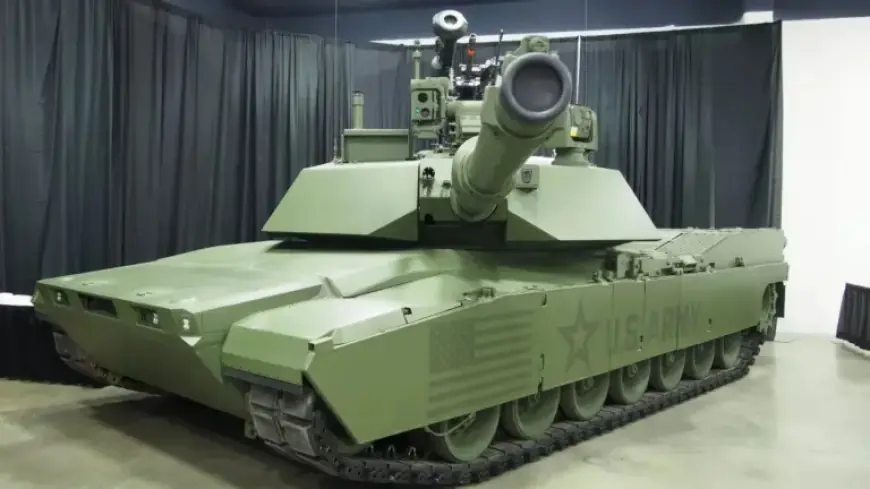
The latest advancements in armored warfare were showcased during the January 2026 Detroit Auto Show. The U.S. Army revealed the M1E3 Abrams tech demonstrator, highlighting significant technological upgrades. While not a prototype, the M1E3 promises to be a formidable contender for future battlefield scenarios, especially against rival tanks like Russia’s T-14 Armata.
M1E3 Abrams: Next-Gen Technology
The M1E3 Abram’s tech demonstrator features several groundbreaking enhancements compared to previous models. Key improvements include:
- An unmanned turret to reduce crew size to three.
- A hybrid electric powerplant aimed at improving fuel efficiency.
- A new autoloader to streamline ammunition handling.
These advancements indicate the tank’s potential to engage effectively against modern armored threats.
Survivability Features
Survivability is critical in combat. The M1E3 is designed with modular armor packages catering to different missions. This layered defense approach includes both active and passive protection systems. However, the current demonstrator lacks the final armor configuration.
The T-14 Armata adopts a different but effective strategy. It incorporates:
- Afganit hard-kill and soft-kill defense systems.
- A crew capsule shielded by reactive and composite armor.
This design minimizes the risk of catastrophic damage in case of a turret penetration.
Mobility and Performance
Mobility is vital for any tank’s effectiveness. The M1E3 replaces the traditional gas turbine engine with a hybrid diesel-electric engine, providing approximately 1,000 horsepower. This change seeks to improve fuel logistics and operational tempo.
In contrast, the T-14 features a 12N360 Twin Turbo Diesel engine, offering superior speed both on and off-road. It boasts a new gearbox with twelve forward and twelve reverse gears, enhancing maneuverability.
Technology and Sensors
Modern warfare relies heavily on technology. The M1E3 integrates advanced electronic systems, including:
- Tank-organic and off-board UAV feeds for enhanced situational awareness.
- Integrated counter-UAS radar.
The T-14 also emphasizes networking capabilities, featuring multispectral sights for its crew and a comprehensive situational awareness system.
Conclusion: A Battle of Potential
Comparing the M1E3 and T-14 is complex due to their differing stages of development. While the T-14 is a more established design, the M1E3 is still undergoing critical developments. Should these tanks meet in battle today, the T-14 might have the upper hand based on readiness. However, as the M1E3 progresses towards operational status, the dynamics could shift dramatically.
Both tanks showcase innovative features that could redefine armored combat. The future of tank warfare may well depend on the successful integration of technology, survivability, and mobility in these elite machines.