























Babar Azam’s viral BBL flashpoint with Steve Smith sparks debate on strike rotation and trust

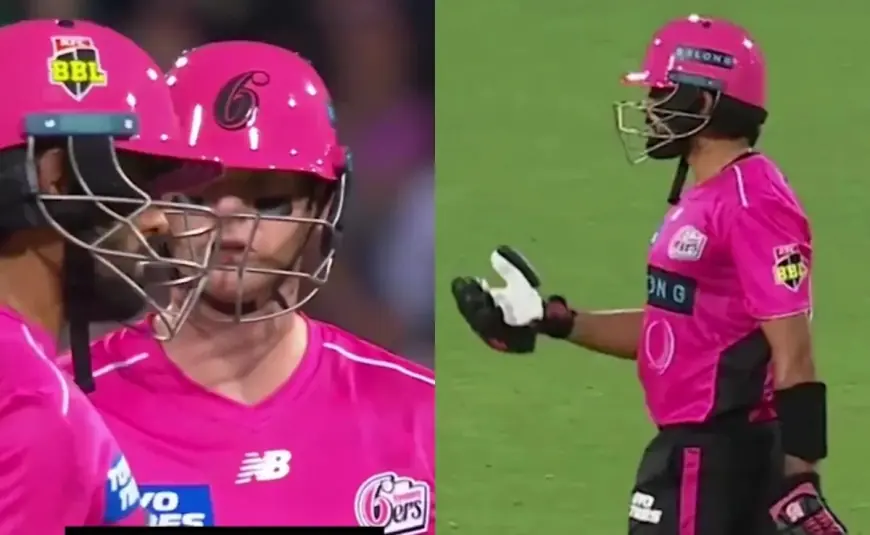
Pakistan star Babar Azam found himself at the center of a social-media storm after a tense moment with Steve Smith during a Big Bash League game in Sydney on Friday. The clip, widely shared within minutes of the final ball of an over, captures Babar’s visible frustration when a single was declined—turning an otherwise routine exchange into a talking point about communication, instincts, and late-over tactics between elite batters.
What happened in the BBL and why it blew up
In the final ball of an over, Babar nudged into the infield and set off before being turned back, with Smith choosing not to risk the run. Babar’s reaction—head shake, terse body language—traveled quickly. He was dismissed shortly afterward, amplifying scrutiny of the decision not to rotate the strike and the broader question of who should face which bowler at which moment.
Moments like this resonate because they compress strategy and ego into a few seconds. Modern T20 batting often preplans “ownership” of specific matchups: the set batter may want the first six balls of a new over against a favorable bowler; the partner may read the field and back his pace to beat a direct hit. When judgment calls collide, even world-class teammates can read the same split-second differently.
Babar Azam’s form and the strike-rotation subplot
Beyond the clip, the underlying cricket is instructive. Babar’s T20 tempo is built on high first-contact quality and selective risk. He prefers to build by manipulating fields, then cash in when bowlers err. That profile rewards strike rotation: quick ones keep the board moving and force bowlers to change angles. Refusing a single, therefore, isn’t just about one run—it can interrupt rhythm for a batter who thrives on continuity.
For Babar, the immediate takeaway is composure management. He rarely shows frustration; when he does, it invites narratives about pressure, expectations, and leadership aura. Resetting between balls—especially after a disagreement—matters as much as any technical adjustment.
Steve Smith’s calculation: risk vs. next-over leverage
From the other side, the refusal can be read as a calculation about leverage. If the fielders are tight and the direct-hit risk is real, declining the single protects a new-over scenario where a preferred batter faces a favorable matchup. In T20, that choice is defensible—provided the team cashes in next over. The problem is optical: when a wicket falls soon after, the “no” looks like the hinge on which momentum swung.
This is where elite pairs earn their keep. The best duos pre-brief these scenarios, agree on cues, and use in-over signals to avoid crossed wires. Expect any lingering friction to be ironed out in the team room with role clarity around end-overs, left-right disruptions, and who owns which matchup windows.
Why this matters for Pakistan fans tracking Babar Azam
The BBL cameo doubles as prep for a crowded 2026 calendar. Pakistan’s white-ball core is taking shape ahead of the T20 World Cup, and Babar’s touch and tempo remain central to that build. Three practical implications emerge from the Sydney incident:
-
Clarity under pressure: World tournaments hinge on razor-thin margin calls. Sharper pre-agreements on strike rotation reduce the chance of emotion clouding the next ball.
-
Finisher partnerships: Whether Babar anchors or floats, a consistent closing partner—comfortable taking first ball of high-leverage overs—can stabilize endgame roles.
-
Tempo checkpoints: If bowlers are denying boundaries, Pakistan will need 35–45 “cheap” runs via chanceless singles and twos. That only happens if communication is airtight.
Social media noise vs. dressing-room reality
The viral cycle magnifies gestures, but teams live in longer arcs: video review, matchup charts, and practice reps. Within that frame, the Sydney flashpoint is a teachable moment, not a crisis. The healthiest outcome is mundane: acknowledge the read, agree on next time’s cue, move on. Babar’s track record—heavy T20 returns, improved boundary options early in the innings—suggests this will register as a blip rather than a trend.
What to watch next with Babar Azam
-
Immediate response: World-class players often answer with a clean, low-drama knock—high control, low false-shot percentage, and visible calm between deliveries.
-
Role clarity in closing overs: Look for explicit patterning—who takes first ball of overs 17–20, and how singles decisions change against yorkers vs. slower-ball plans.
-
Body language and resets: Small signals—eye contact after a declined run, mid-pitch chats—will indicate that the communication channel is clear.
Babar Azam’s heated reaction lit the fuse, but the real story is an old T20 riddle: when does one run matter less than who faces the next six balls? In Sydney, the answer was debated in real time. The best teams settle it before the moment arrives. Expect Babar to park the clip, tighten the plan, and turn the next end-overs scenario into the quiet, clinical finish that has defined so many of his T20 nights.