Trump Welcomes Chinese EVs: ‘Let China Enter the Market’

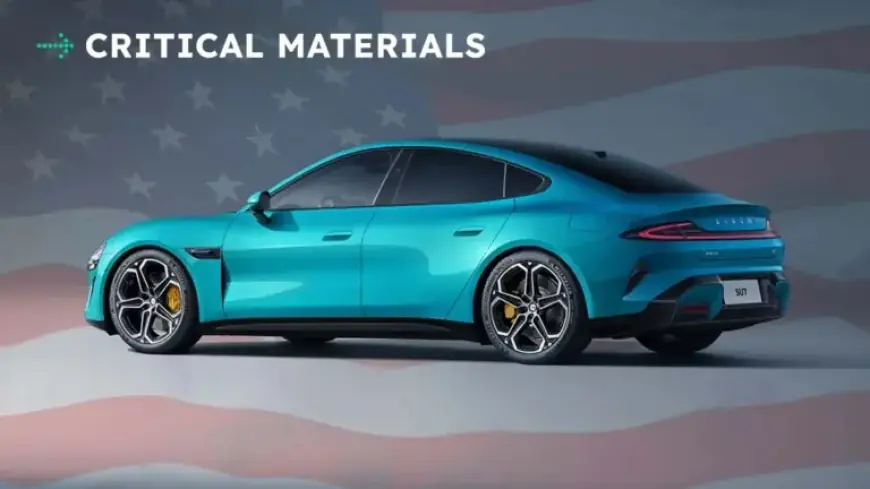
President Trump has made headlines by inviting Chinese electric vehicle (EV) manufacturers to establish operations in the United States. During a recent address at the Detroit Economic Club, he notably stated, “Let China come in,” emphasizing that any automaker from China is welcome as long as they build a factory in America and employ American workers.
Trump’s Statement on Chinese EVs
This statement represents a significant shift from the previous administration’s tariff-heavy approach toward Chinese imports. With remarks made on January 13, Trump indicated that companies like BYD and Xiaomi are now seen as potential partners in the U.S. auto market.
U.S. Market Potential
The U.S. stands as the world’s second-largest automotive market, trailing only China. Several Chinese auto manufacturers, including Geely, which owns Volvo and Polestar, are actively considering a U.S. launch. At the Consumer Electronics Show (CES) in Las Vegas, Geely confirmed it is evaluating plans to introduce its brands to American consumers.
- Trump’s Remarks: “Let China come in” applies to Chinese companies building U.S. manufacturing plants.
- Targeted Companies: BYD, Xiaomi, and Geely are potential entrants in the U.S. market.
- Market Size: The U.S. is the world’s second-largest car market.
The Competitive Landscape for American Automakers
Ford executives are addressing challenges stemming from increased competition. Jim Farley, CEO of Ford, admitted to admiring innovations from Chinese automakers, hinting at a changing tide among American consumers. Younger buyers, in particular, are showing a greater willingness to consider Chinese EVs as viable options.
EV Innovations and Rankings
A new report from the Center of Automotive Management (CAM) highlights leading innovators in the EV sector. BYD, Geely, and Volkswagen outrank other manufacturers by balancing critical factors such as range, energy consumption, and charging efficiency.
- BYD: Leading in battery system integration and charging technologies.
- Geely: Continually optimizing battery performance across its brands.
- Volkswagen: Focused on scaling production while improving efficiency in high-volume models.
Notably, Tesla has seen a decline in its standing, ranking eighth after previously dominating the list from 2016 to 2020.
Ford’s Strategic Adjustments
Ford recently announced significant changes to its EV strategy. This involves scrapping portions of its initial plans while still pushing for affordable EV options. The automaker is now centralizing efforts on practical, budget-friendly models instead of a broad electrification initiative.
Farley indicated that the company aims to produce 300,000 units of a new Universal EV architecture, focusing on cost-effective solutions. He stated that the company’s priority remains on affordability to better compete with emerging Chinese brands.
Conclusion
With factories and jobs at stake, Trump’s approach signals a new era of collaboration with Chinese automakers. As the competition intensifies, American manufacturers must adapt swiftly to maintain their market share and innovate effectively in the evolving automotive landscape.