Powerful Earthquake Hits Northern Italy: Key Details

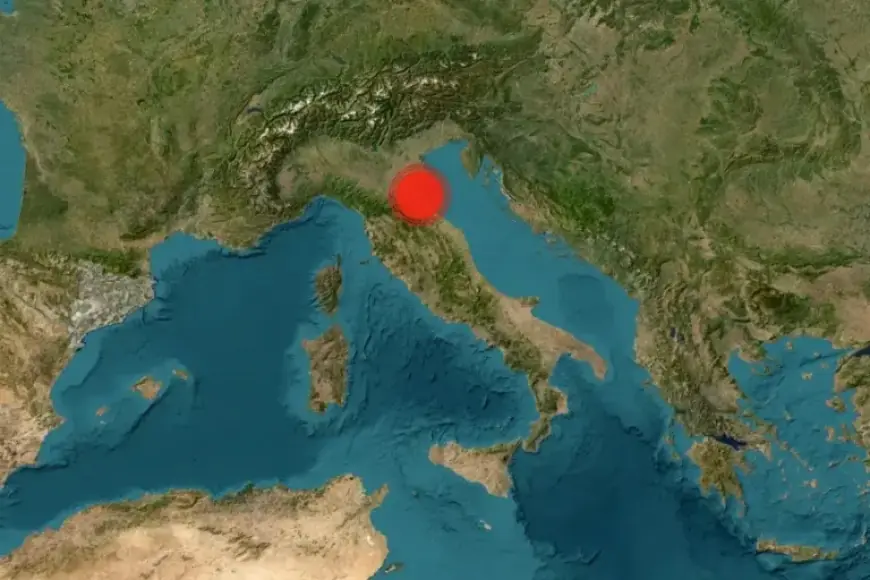
A recent earthquake measuring 4.6 on the Richter scale hit the village of Fornace Zarattini in northern Italy. The U.S. Geological Survey reported the tremor occurred at approximately 10:17 a.m. local time, at a depth of 10 kilometers (6.2 miles). Fornace Zarattini is located near Ravenna in the Emilia-Romagna region.
Overview of the Earthquake in Northern Italy
This event is part of a region that generally experiences lower seismic activity compared to the central and southern Apennine zones. Despite this, northern Italy remains susceptible to earthquakes due to its position in an active tectonic area. The seismic history of Italy results from the collision between the African and Eurasian tectonic plates.
Seismic Activity Insight
- Magnitude: 4.6
- Location: Fornace Zarattini, Emilia-Romagna
- Time: 10:17 a.m. local time
- Depth: 10 kilometers (6.2 miles)
The National Institute of Geophysics and Volcanology also recorded a seismic event with a magnitude of 4.1 in proximity to Fornace Zarattini. The northern Apennines and the Po Plain experience geological activity from compressional and thrust tectonic processes, resulting in minor tremors being felt in the region.
Historical Significance of Ravenna
Ravenna, situated close to the epicenter, is notable for its rich history. Once the seat of the Roman Empire in the 5th century, it became a prominent city of Byzantine Italy until the 8th century. The city is home to several UNESCO World Heritage Sites, including early Christian monuments that attract numerous tourists.
UNESCO Heritage Sites in Ravenna
- Mausoleum of Galla Placidia
- Neonian Baptistery
- Basilica of Sant’Apollinare Nuovo
- Arian Baptistery
- Archiepiscopal Chapel
- Mausoleum of Theodoric
- Church of San Vitale
- Basilica of Sant’Apollinare in Classe
These sites highlight the artistic integration of Graeco-Roman traditions with Christian iconography, showcasing the unique heritage of the region.
Conclusion
In summary, the recent earthquake in northern Italy serves as a reminder of the region’s geological dynamics and the historical significance of surrounding cities like Ravenna. As Italy continues to contend with its seismic challenges, the cultural landmarks remain a vital part of its identity.