Louboutin Owed $21.6 Million and Additional Funds

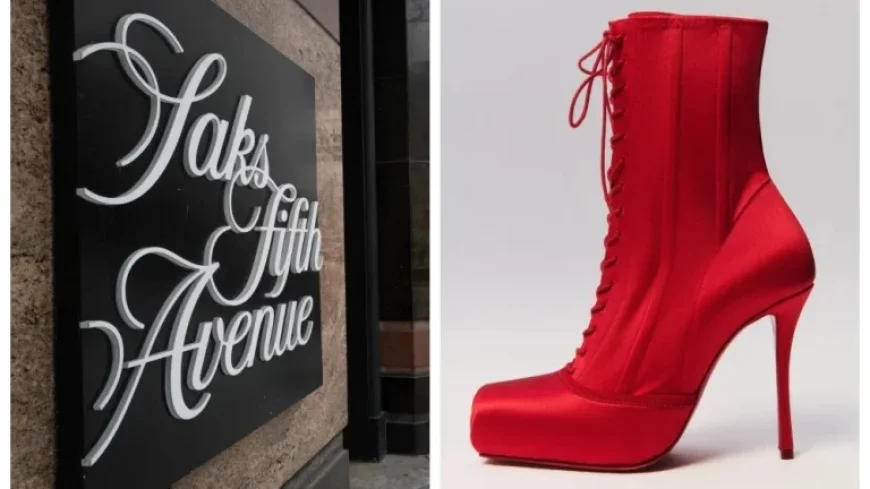
In a significant development for the luxury retail sector, Saks Global has filed for Chapter 11 bankruptcy in the U.S. Bankruptcy Court for the Southern District of Texas. The parent company of Saks Fifth Avenue, Neiman Marcus, and Bergdorf Goodman will undergo restructuring with a financing package of $1.75 billion secured from bondholders.
Creditor Overview
Christian Louboutin ranks as the thirteenth largest unsecured creditor, owed $21.6 million. Other notable creditors include:
- Capri Holdings (parent company of Michael Kors and Jimmy Choo) – $33.3 million.
- Chanel – $136 million.
- Kering (parent of Gucci and Balenciaga) – $59.9 million.
Overall, the bankruptcy filing lists more than 10,000 creditors, highlighting the widespread impact on small independent brands.
Financial Status
Saks Global reports both assets and debts in the range of $1 billion to $10 billion. A significant portion of their debts includes:
- $2.2 billion in bonds from the Neiman Marcus acquisition, completed just last year.
- $600 million taken on during a refinancing this past summer.
Leadership Changes
Following Richard Baker’s brief tenure as CEO, Geoffroy van Raemdonck has been appointed to lead the company. His priorities include rebuilding relationships with vendors and enhancing customer service. He has brought in key executives from Neiman Marcus, including:
- Darcy Penick – President and Chief Commercial Officer.
- Lana Todorovich – Chief of Global Brand Partnerships.
Brandy Richardson continues as the Chief Financial Officer.
Employee Impact
Saks Global employs approximately 16,830 individuals, with over 14,600 in full-time roles. Plans are underway to pay certain pre-petition claims to critical vendors.
Market Analysis
The luxury retail landscape is shifting, with Saks and Neiman Marcus witnessing declines in foot traffic. Recent data indicates:
- Saks Fifth Avenue saw a 5.7 percent drop in 2025 visits.
- Neiman Marcus experienced a 4.6 percent decline in the same year.
In contrast, Bloomingdale’s enjoyed an increase in foot traffic, further illustrating the competitive challenges faced by Saks Global.
The company’s restructuring efforts will be closely monitored as they aim to leverage strong customer loyalty, especially among high-spending clientele. The top 3 percent of customers account for nearly 40 percent of the company’s gross merchandise value.
As Saks navigates through this complex bankruptcy process, the focus remains on enhancing its business model and solidifying its future within the luxury retail market.