NASA Rover Detects Increasing Organic Compounds on Mars

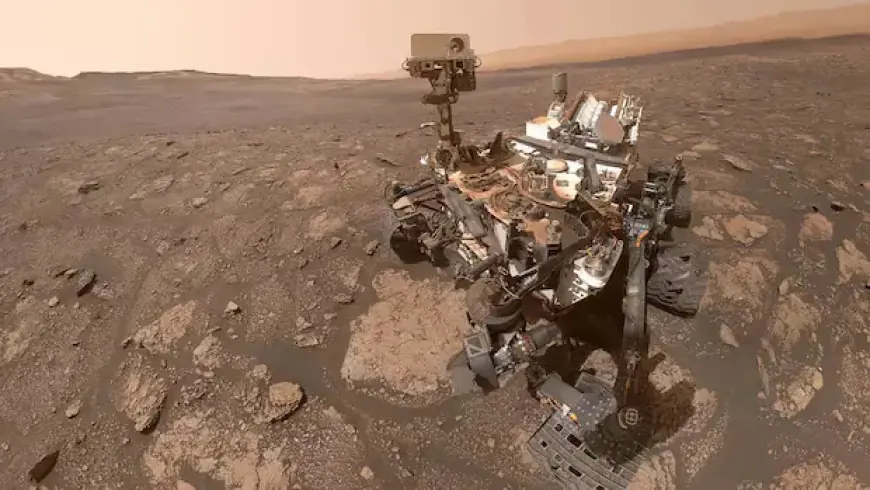
NASA’s Curiosity rover has detected a new set of organic compounds in ancient Martian rock. The findings come from material collected in a dried lakebed near Mars’ equator.
The discovery and the sample
Curiosity identified seven diverse organic compounds in rock from Glen Torridon. Five of those compounds had not been seen on Mars before.
Scientists also found chemical evidence suggesting a molecule with a structure similar to DNA precursors. The sampled sediment dates to at least 3.5 billion years ago.
Where and how the rock was collected
The rover drilled into bedrock at a site named Mary Anning inside Gale crater. Curiosity has operated in Gale crater since it landed in 2012.
Glen Torridon contains abundant clay minerals. Those clays point to past water and help preserve organic matter.
Laboratory analysis on Mars
The Sample Analysis at Mars (SAM) instrument processed the powdered rock. Scientists mixed the powder with a chemical that breaks complex organics into detectable pieces.
The experiment took place in 2020 and produced the organic detections reported in a new study. The research was published in Nature Communications.
Team and publication
Amy Williams, an astrobiologist and planetary scientist at the University of Florida, led the study. She is a member of Curiosity’s science team.
Scientific context and caution
Organic molecules are carbon-based and form the building blocks of life on Earth. The total number of organics identified on Mars is now in the dozens.
Scientists stressed these compounds can form without biology. Possible sources include geologic reactions and meteorite infall.
Implications for the search for life
Researchers say the findings refine understanding of the molecules present on ancient Mars. Definitive proof of past life would require returned samples tested on Earth.
One team member noted that if complex organic matter from life persisted on Mars, current and upcoming rover instruments should detect it.
Coverage of this development on Filmogaz.com used the keyword NASA Rover Detects Increasing Organic Compounds on Mars to highlight the significance.
Broader mission context
Curiosity’s results join other recent rover discoveries. Last year, Perseverance reported a rock with features possibly formed by microbe-driven chemical reactions.
NASA rovers remain central to assessing Martian habitability. These missions continue to map environments that were once warmer and wetter than today.