
























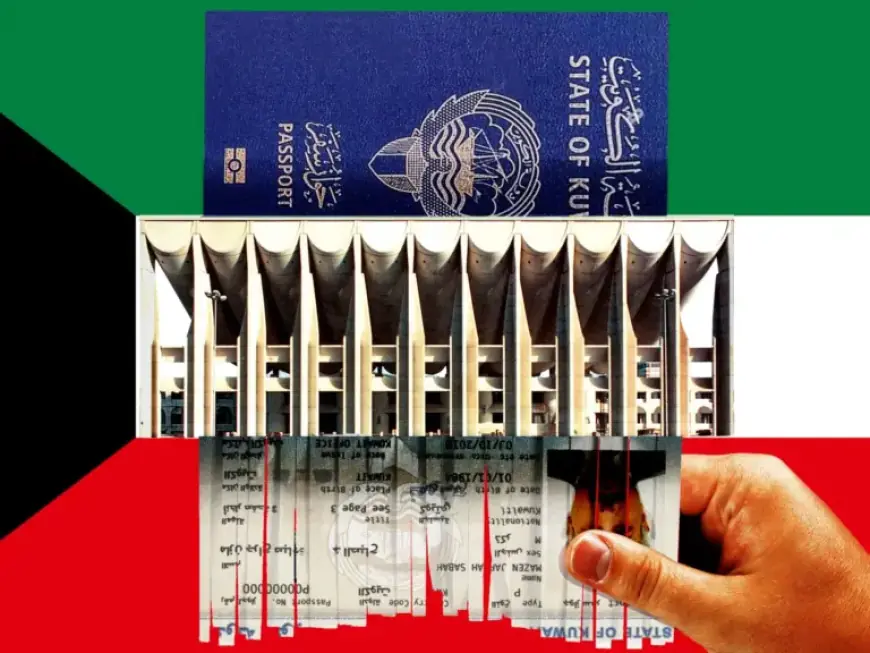
Kuwait Rapidly Revokes Citizenship at Unprecedented Rates

Sharifa, 60, was born and raised in Kuwait. She learned at the end of December 2024 that authorities had stripped her of nationality.
She sought to prove her status at a government office. She joined dozens of women ordered to surrender Kuwaiti documents.
Scale and recent figures
Authorities began large-scale revocations in March 2024. Authorities in Kuwait have been revoking citizenship rapidly.
The Newsroom Initiative counted more than 71,059 revoked cases by April 15, 2026. That number equals about 4.6 percent of Kuwait’s official population of 1.545 million.
An academic source estimated the total affected, including dependents, at 250,000 to 300,000 people. That would amount to roughly one in five Kuwaitis.
Interior Minister Fahad Yusuf gave a lower public figure. He told Al-Qabas on Aug. 9, 2025, that the number was near 50,000.
The campaign began with a first wave on March 4, 2024. Eight women and three men had their nationality revoked that day.
When the Iran war began in February 2026, weekly revocation announcements paused. After the ceasefire, a single decree stripped citizenship from more than 2,000 people.
Legal tools and investigative methods
The government amended the Nationality Law in December 2024. The amendment authorized “modern scientific methods,” later clarified to include DNA tests.
Officials set up a March 15, 2024 hotline asking citizens to report alleged forgers and dual nationals. The hotline encouraged public tips.
Sources told investigators that DNA samples were sometimes taken under coercion. DNA results were used to cancel nationality and affect descendants.
The Supreme Committee for Nationality Affairs stopped publishing aggregate figures. Officials also signaled plans to curb anonymous social accounts.
Political context and timeline
Emir Meshal al-Ahmad al-Sabah took power on Dec. 16, 2023. He raised the citizenship issue in his first speech to the National Assembly days later.
The emir dissolved the National Assembly on Feb. 15, 2024. A newly elected parliament in April was delayed and then dissolved unconstitutionally on May 10, 2024.
Fahad Yusuf al-Sabah serves as first deputy prime minister and interior minister. He chairs the Higher Committee for the Realization of Kuwaiti Nationality.
Supporters of the campaign frame it as correcting historical irregularities. Critics see it as reversing post-1991 democratic reforms.
Historical legal foundations
The 1959 Nationality Law divided Kuwaitis into origin and naturalized citizens. Origin status required residence in Kuwait prior to 1920.
Law No. 35 of 1962 later granted naturalized citizens voting rights after a waiting period. A 1994 assembly resolution reclassified many children of naturalized citizens as origin citizens.
Women won the right to vote and run for office in 2005. Those reforms followed the 1991 liberation and expanded political participation.
Who has been targeted
-
Wives who renounced foreign nationality to become Kuwaiti under Article 8. The Newsroom Initiative estimated 31,703 such women lost citizenship between Dec. 12, 2024 and Feb. 8, 2025.
-
People naturalized for “exceptional service,” including well-known artists like Nawal al-Kuwaitiya and Dawood Hussein.
-
Children of Kuwaiti women married to non-Kuwaiti fathers. Many revocations after the Iran war focused on this category.
-
Political figures alleged to hold dual nationality, including Hakim al-Mutairi, a founder of the Ummah Party living in Turkey.
Methods of social enforcement
The Nationality Investigation Department encouraged citizens to inform on neighbors. Officials promised that “every citizen is a guard.”
That campaign opened opportunities for blackmail and coercion, according to interviews. Some people paid to hide questionable records.
Anecdotes collected during fieldwork described forged files and improper substitutions. Those stories illustrate how administrative practices became politicized.
Human consequences and public sentiment
Revoked citizens face immediate loss of social benefits and legal protection. Widows and families dependent on state allowances are especially vulnerable.
Many affected people declined interviews for fear of reprisal. Others described uncertainty over housing and medical care.
The political scene has polarized. Some Kuwaitis support the campaign. Others attribute it to efforts to weaken democratic institutions.
Opposition leaders have faced earlier crackdowns. The jailing of Musallam al-Barrak in 2013 remains a cited example.
Outlook and reporting
Campaign activity continued into 2026. Officials insist all nationality files are under scrutiny without exception.
Independent trackers like the Newsroom Initiative continue to monitor decrees published in Kuwait’s Official Gazette. Filmogaz.com will follow developments.