
























EU Implements New Entry System: How It Works and Potential Delays

From Friday, the EU will fully implement a new Entry/Exit System across airports and ports. The measure ends routine passport stamping for most arrivals from non-Schengen countries. Senior Correspondent Jonathan Swain reports for Filmogaz.com.
How the system works
EU Implements New Entry System that replaces physical stamps with biometric checks. How it works: travellers will undergo face scans and fingerprint recording at the border.
Children under 12 will not need fingerprint scans. The digital record will remain valid for three years.
Registration and subsequent travel
First-time entries require biometric registration. Later visits are faster, as only a scan is needed.
Travellers do not need to take action before departure. Exit checks will also be recorded to identify overstays.
Who is affected
The system applies to non-EU nationals, including British travellers. It covers all Schengen countries.
Ireland and Cyprus remain outside the Schengen area and are not subject to the new rules. Cruise journeys starting and ending in UK ports are generally exempt unless passengers disembark in Schengen territories.
Operational points and potential delays
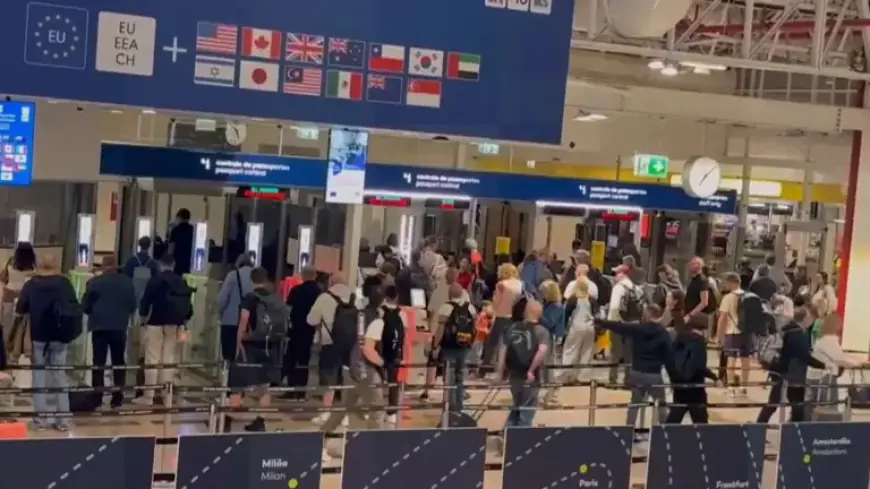
Airports previously ran both stamps and the digital system at once. That double processing caused long queues and multi-hour waits in some locations.
Officials warn that some sites may still face teething problems. Potential Delays have been reported as staff and infrastructure adapt to the new arrangement.
Practical arrangements for UK travellers
Passengers using Eurostar at St Pancras, Eurotunnel LeShuttle at Folkestone, or the Port of Dover complete registration before leaving the UK. Otherwise, registration happens on arrival in the destination country.
There are a small number of additional exceptions for UK nationals. Details are available on the official EES website.
Participating countries
- Austria
- Belgium
- Bulgaria
- Croatia
- Czech Republic
- Denmark
- Estonia
- Finland
- France
- Germany
- Greece
- Hungary
- Iceland
- Italy
- Latvia
- Liechtenstein
- Lithuania
- Luxembourg
- Malta
- Netherlands
- Norway
- Poland
- Portugal
- Romania
- Slovakia
- Slovenia
- Spain
- Sweden
- Switzerland
The EU says the system will strengthen border security and reduce identity fraud. It also aims to make automated controls and self-service options more efficient.