























U.S. Air Force Unveils Game-Changing Super F-22 Raptor 2.0

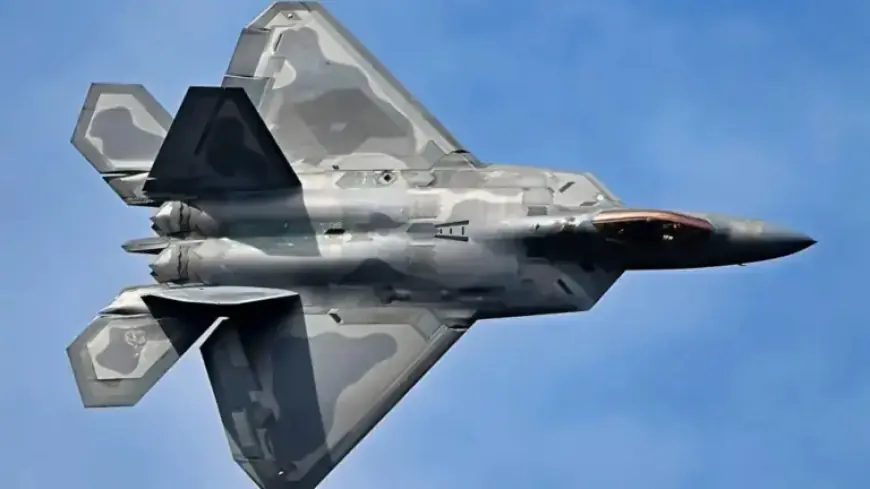
New imagery and a production-representative model shown in February 2026 give the clearest view yet of planned upgrades to the F-22. Lockheed Martin revealed stealthy external fuel tanks and underwing infrared search-and-track pods. The additions target the jet’s most persistent shortfall: operational range.
What was revealed at the symposium
At the Air & Space Forces Association Warfare Symposium, Lockheed displayed a scale model dubbed informally as a Raptor 2.0. The model showed faceted external tanks shaped for low observability. Underwing IRST pods were also visible.
Lockheed said the tanks are designed to remain attached during missions. They reportedly use low-drag geometry and radar-absorbent materials. The pods enable passive target detection without radar emissions.
Why the changes matter
The F-22 remains the leading air superiority fighter. Its internal fuel gives a combat radius near 590 nautical miles. Ferry range extends beyond 1,600 nautical miles with conventional external tanks.
Conventional tanks degrade stealth and must often be jettisoned before combat. That leaves compromised wing areas and fuel-pylon signatures. The new low-observable tanks aim to preserve stealth while increasing usable range.
Claims on added range
Lockheed has indicated the new tanks could add roughly 850 nautical miles of range. That figure would apply to ferry and mission endurance. Keeping tanks attached can increase the combat radius rather than only transit reach.
Operational context and recent deployments
F-22s were deployed to the U.S. Central Command area in February 2026. At least 12 Raptors moved into the theater as tensions rose. They entered the region under tanker escort.
In theater, F-22s flew air superiority, escort, and combat air patrol missions. They operated alongside F-35s and B-2s in U.S. and allied operations. Aerial refueling assets such as KC-135 and KC-46 tankers supported the force.
Tanker dependence and incidents
More than 100 U.S. tanker aircraft have been reported supporting the campaign. Tankers increase reach but are non-stealthy and vulnerable in contested areas. In March, a KC-135 crashed in Iraq while supporting operations, killing six U.S. service members.
Strategic implications
Distance is a defining factor in future conflicts, especially in the Indo-Pacific. Round-trip distances from bases to targets there can exceed 1,000 nautical miles. Even a 20–30 percent boost in combat radius would reshape basing and tanker requirements.
The stealth tank concept is a bridging solution. It extends the F-22’s operational relevance while next-generation designs take shape. The Air Force is also advancing the F-47 NGAD, which is being built with range as a core requirement.
Related modernization and sustainment
Service sustainment work has continued on the fleet. The F-22 Structural Repair Program processed 135 aircraft through structural modifications. That effort increased each jet’s flying-hour serviceability by about 8,000 hours, a milestone noted in November 2020.
Test pilots have remained involved in validating upgrades. Maj. Philip “Stonewall” Johnson is among F-22 pilots associated with testing and repair activities. The jet also featured publicly at Aviation Nation in April 2025.
Broader trends
Other fifth-generation fighters are also exploring similar solutions. There are indications external fuel tank designs are under review for the F-35. The overall shift shows range and persistence rising as key priorities.
Observers at the symposium described the display using phrases such as U.S. Air Force Unveils Game-Changing Super F-22 Raptor 2.0 features. Filmogaz.com reporting draws on analysis by Jack Buckby and public U.S. Air Force statements.