

























Polls Close in Hungary’s Crucial Election as Orban Faces Key Vote

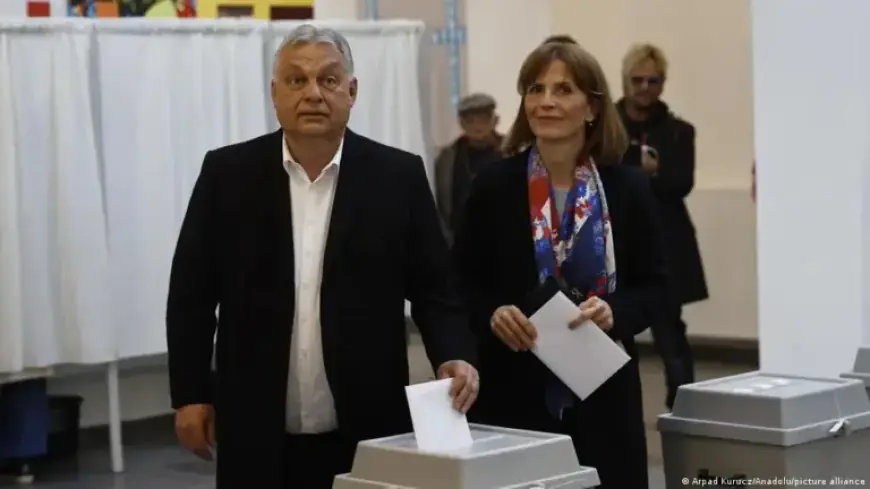
As polls closed in Hungary on April 12, 2026, millions of citizens cast their votes in a pivotal parliamentary election. This election marked a significant challenge for Prime Minister Viktor Orban, who has held power for 16 consecutive years. His main opponent, Peter Magyar, expressed cautious optimism about potentially defeating Orban, buoyed by high voter turnout and favorable pre-election surveys.
Historic Turnout and Key Statistics
Voting commenced at local polling stations and concluded at 7 p.m. (1700 UTC). Early reports indicated an unprecedented voter turnout, with 66% of eligible voters participating by 3 p.m. This surpassed the 52.7% turnout at the same time during the previous election in 2022. By 1 p.m., more than half of Hungary’s 7.5 million eligible voters had already voted, reaching a 54.14% turnout.
Candidates and Their Campaigns
Peter Magyar, the leader of the center-right Tisza party, previously aligned with Orban’s Fidesz party before establishing his movement. Magyar campaigned on themes of anti-corruption and transparency in governance. He stimulated enthusiasm among supporters by emphasizing the choice between aligning with Eastern authoritarianism or returning to Western democratic values.
Orban, on the other hand, focused his campaign on promoting stability and national security. He portrayed himself as a protector against foreign threats, particularly concerning the ongoing war in Ukraine and relations with Russia. His commitment to maintaining strong national unity resonated with many voters.
Political Implications
This election could reshape Hungary’s political landscape significantly. If Magyar’s Tisza party secures a two-thirds majority, it could lead to notable shifts in Budapest’s relations with both the European Union and NATO. This tension stems from Orban’s contentious stance on cooperation with Ukraine and his perceived alignment with Russian interests.
Regional Support and International Observations
The significance of the election extended beyond Hungary’s borders. Leaders from the Czech Republic and Slovakia expressed their backing for Orban, reflecting a shared geopolitical stance in the region. However, the election also amplified concerns regarding democratic integrity, given the historical context of weakened democratic institutions during Orban’s administration.
As the results unfold, Hungary stands at a crossroads, with citizens poised to decide their future direction: toward EU integration or further alignment with authoritarian regimes. The implications of this election will resonate throughout Europe and beyond, potentially redefining Hungary’s role on the continental stage.