

























Court Urges Weighing National Security in White House Ballroom Halt

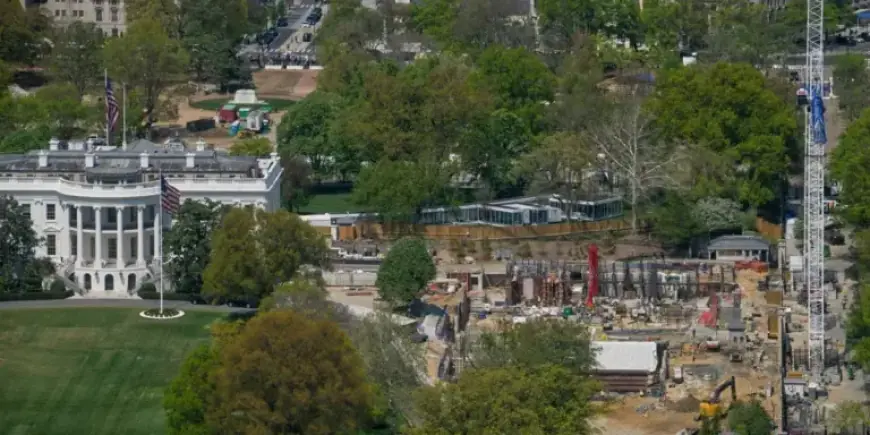
A federal appeals court has ordered a lower court to reassess national security questions tied to pausing work on President Trump’s $400 million White House ballroom. The three-judge panel said the record lacked detail on how much construction could stop without risking safety.
Appeals court returns case
On March 31, U.S. District Judge Richard Leon barred further work without congressional approval. He stayed enforcement for 14 days.
The appeals panel extended that stay by three days. The new deadline is April 17, allowing the administration to seek Supreme Court review.
The panel told Judge Leon to clarify whether and how his injunction affects White House safety and security plans. The court urged weighing national security alongside preservation concerns before halting work.
Government security claims
Government attorneys said the project includes critical security features against drones, ballistic missiles, and biohazards. They warned that stopping some work could imperil the president and staff.
Judge Leon exempted any construction necessary to ensure safety and security. He said he had reviewed the government’s sensitive materials privately before finding that a halt would not jeopardize national security.
Contested construction elements
The administration described below-ground additions as bomb shelters, military installations, and a medical facility. Much of the government’s concern centered on this subterranean work.
Officials initially argued the below-ground security upgrades were distinct from the aboveground ballroom. Later filings suggested the security work might be inseparable from the overall project.
The appeals court said that shift left unclear whether pausing parts of the project would compromise those security upgrades.
Timeline and approvals
The National Trust for Historic Preservation sued in December. The suit followed demolition of the East Wing to clear space for a 90,000-square-foot ballroom.
President Trump said the room would fit 999 people and would be funded by private donations. Federal funds, however, are paying for underground bunkers and security upgrades.
Two days after Judge Leon’s ruling, a key oversight agency issued final approval for the project. Another commission had approved it earlier. Critics note the administration began major structural changes before full public input.
Judges and opinions
- The appeals panel included Patricia Millett, Neomi Rao, and Bradley Garcia.
- Millett was nominated by President Barack Obama. Rao was nominated by President Trump.
- Garcia was nominated by President Joe Biden.
- Judge Rao dissented and cited a statute permitting presidential improvements to the executive residence.
- She wrote that the government presented credible evidence of security vulnerabilities that halting construction would prolong.
Next steps and reactions
The case returns to the district court for clarification on the injunction’s interaction with safety plans. The appeals court allowed a short extension for potential Supreme Court review.
Carol Quillen, president and CEO of the National Trust, said the organization awaits further district court guidance. She reaffirmed the group’s focus on preserving the White House and seeking broad consultation.
Reporting by Filmogaz.com.