























LNG Canada’s Gas Flaring Exceeds Permitted Volumes, Documents Reveal

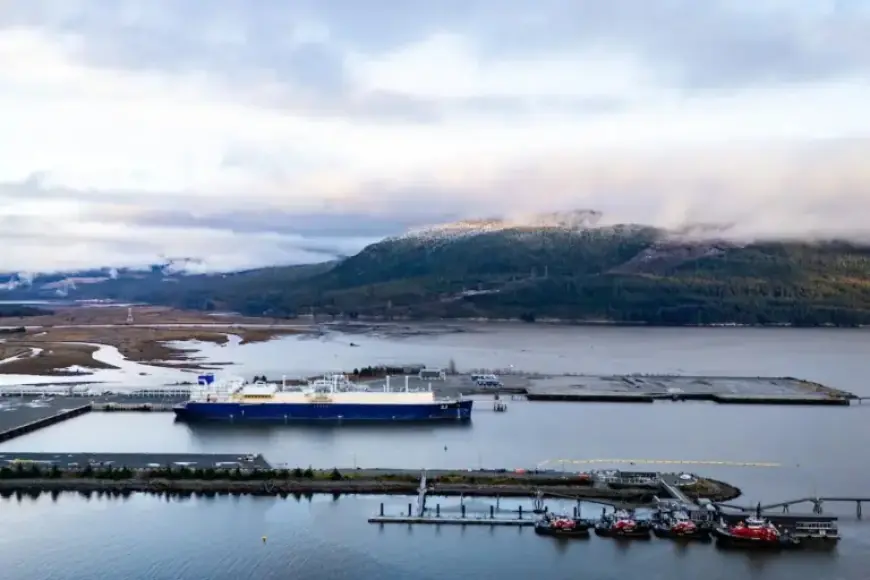
Recent documents have revealed that LNG Canada’s gas flaring at its facility in Kitimat, British Columbia, has exceeded permitted volumes significantly. This information emerged from monthly air emissions reports obtained by Laura Minet, a researcher at the University of Victoria, through freedom of information requests.
Significant Flaring Exceedances
According to the reports, the volume of gas flared between October and January surpassed limits by alarming margins. The breakdown by categories shows:
- Warm/wet flares exceeded permitted volumes by an average of 45 times.
- Cold/dry flares exceeded by 40 times.
- Storage and loading flares exceeded by five times.
The LNG facility converts natural gas into liquefied form, facilitating its shipment to Asian markets. Despite exceeding flaring limits, an LNG Canada spokesperson stated that the facility is in its early operational phase, and increased flaring is typical during this period.
Facility Overview
LNG Canada represents Canada’s first facility of its kind, co-owned by Shell and four Asian companies. The company is also considering a second phase that may double its capacity, currently under expedited federal review.
Community Notifications and Concerns
Since March, LNG Canada has posted ten community notifications regarding flaring events. One recent notification detailed a flare lasting three hours, which reached heights of 10 to 15 meters, generating noise and visible emissions.
Environmental and health organizations have expressed concerns about the health risks associated with pollutants released during flaring. Nevertheless, LNG Canada claims that publicly available air quality monitoring data indicates that pollutants like nitrogen dioxide and sulfur dioxide have remained consistently low over the past year.
The Need for Compliance
Flaring is regulated by provincial safety measures to ensure controlled combustion of natural gas during operational phases. LNG Canada reiterated that while this process is critical, it is not anticipated to be routine during regular operations.
Minet, leading the Clean Air Lab, emphasizes the importance of adhering to flaring permits. She noted that the consistently high flaring levels since last September are surprising. Her research into global LNG facilities shows that high flaring volumes during startup phases typically last around two years.
Minet advocates for better assessment of environmental impacts due to these high flaring levels as LNG facilities progress through their operational phases.