









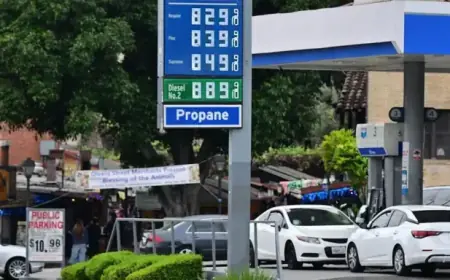















Rising Oil Prices Boost Profits for Oil Companies—But Not Indefinitely


Rising oil prices are significantly impacting the global oil industry, providing profits but also posing critical challenges. As crude oil prices fluctuated wildly from around $70 to near $120 per barrel due to the recent Iran conflict, analysts are observing both the benefits and drawbacks of such volatility.
Current State of Oil Prices
After several months, crude oil prices currently hover between $90 and $100 per barrel. This level is pivotal for oil companies, as they prefer prices to remain within the $60 to $90 range to maintain profitability without severely straining consumers.
The Financial Landscape
Companies like ExxonMobil have reported significant financial gains due to rising prices. For instance, ExxonMobil anticipates a revenue increase exceeding $2 billion due to higher oil prices. In fact, since the start of the year, energy stocks have surged approximately 25%, while the broader S&P 500 has seen slight declines.
- U.S. Companies: Major Beneficiaries – As the largest oil producer globally, the U.S. is currently benefitting disproportionately from high oil prices.
- Record Profits: In 2022, the oil industry accrued around $916 billion in profits, with the U.S. receiving $301 billion—seven times the previous annual average for U.S. companies.
Disparities in Profit Distribution
Despite high profits in the oil sector, the wealth distribution remains highly unequal. Research shows that about 50% of the profits in the oil and gas industry end up with the top 1% of American earners, while just 1% is allocated to the bottom 50%.
Challenges Facing Oil Companies
Rising prices bring challenges as well. Major oil firms are impacted by geopolitical tensions that disrupt supply chains, especially in the Middle East. ExxonMobil estimates that production difficulties and conflict-related disruptions may cost it between $1 billion and $1.6 billion in revenues.
Hedging and Production Constraints
Another concern for producers is the hedging strategy, where companies secure oil prices ahead of time. Many firms had locked in average prices around $57 per barrel before the recent spikes, limiting their profit potential. Additionally, physical production constraints, such as pipeline capacity and labor shortages, hinder rapid output increases.
Market Volatility and Economic Impact
The market’s volatility has broad implications. High and fluctuating oil prices can exacerbate inflation, impact economic growth, and push interest rates higher. As prices stay elevated, consumer demand may begin to wane, potentially leading to significant shifts in the market landscape.
Looking Ahead
Industry experts express concern over sustained high prices. If oil prices stabilize above $90 per barrel for too long, the result may be detrimental for not only consumers but also the oil industry in the long run. This scenario could trigger a shift towards alternative energy sources, fostering greater interest in electric vehicles and renewable energy solutions, thus creating long-term demand disruptions for oil companies.