






















Skoda’s New Bike Bell Outperforms Noise-Canceling Headphones

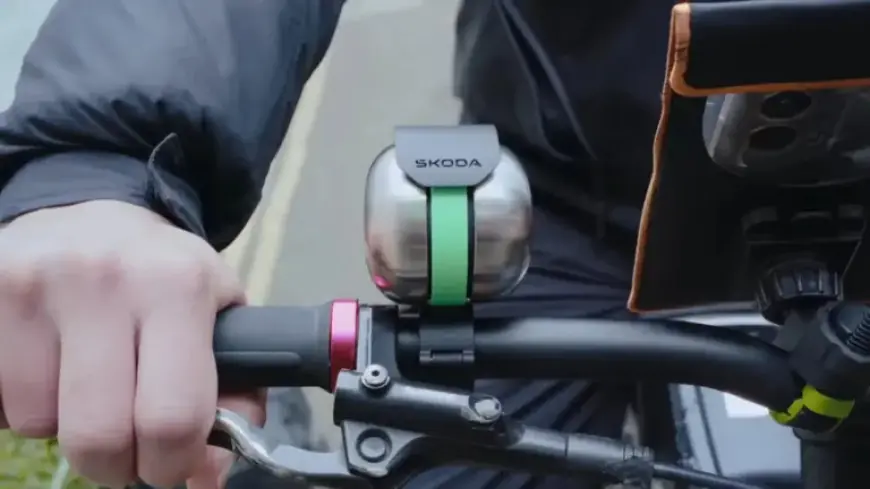
Skoda has unveiled a revolutionary product, the DuoBell, specifically designed for cyclists. This innovative mechanical bicycle bell targets the challenges posed by Active Noise Cancellation (ANC) technology in modern headphones.
Understanding the Noise Cancellation Challenge
With advancements in ANC technology, many headphones effectively block external sounds. This has created a safety concern for cyclists as pedestrians may fail to hear traditional bike bells when wearing these headphones. Cyclists often rely on audible signals to alert pedestrians of their presence, increasing the risk of accidents.
The Design of the DuoBell
- The DuoBell features a unique dual-resonator system.
- It operates using an irregular striking mechanism.
- The bell emits sounds in a frequency range between 750Hz and 780Hz, where ANC is least effective.
The clever design enables the DuoBell to generate sounds that ANC algorithms struggle to suppress. This capability significantly enhances the chances of pedestrians detecting the bell’s sound.
Collaboration with Research Experts
To develop the DuoBell, Skoda collaborated with scientists from the University of Salford. This partnership focused on acoustic research to identify the frequency range that would effectively penetrate ANC systems. Their findings were pivotal in refining the bell’s sound output.
The Need for Safety Solutions
As ANC headphones gain popularity, the need for specialized safety devices like the DuoBell becomes more crucial. Traditional bicycle bells fall short in noisy environments, creating a gap in safety for both cyclists and pedestrians. Skoda’s innovative approach seeks to address this concern.
Future Considerations
The introduction of the DuoBell might prompt audio companies to enhance their ANC technologies. It is essential for the industry to consider maintaining a “safety gap” while developing new technologies.
Overall, the DuoBell is a significant step forward in ensuring safer interactions between cyclists and pedestrians in a world increasingly dominated by noise-cancelling technology.