

























Fact-Checking Trump’s Claims on Iran’s Air Defenses and Bin Laden Warning

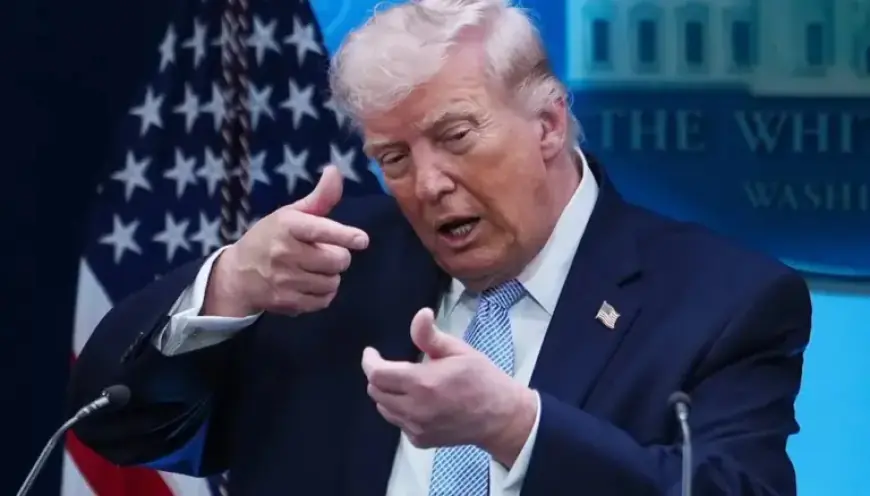
In recent statements, President Donald Trump declared a triumph concerning two U.S. service members while addressing the ongoing tensions with Iran. He issued a stark warning about potential strikes on Iran’s civilian infrastructure if an agreement isn’t reached by April 7 regarding the Strait of Hormuz. During a press briefing on April 6 at the White House, Trump detailed a plan that included actions against bridges and power plants in Iran if negotiations fail.
Trump’s Claims on Iran’s Defense Capabilities
Trump has asserted that Iran lacks effective military defenses, claiming the nation possesses “no anti-aircraft weaponry.” This statement conflicts with recent events where Iran successfully shot down two U.S. military aircraft shortly before Trump’s remarks. On April 2 and 3, an F-15E fighter jet and an A-10 attack plane were targeted in separate incidents, suggesting that Iran has operational air defense systems contrary to Trump’s assertions.
Incidents Involving U.S. Aircraft
- The F-15E crashed in Iran, but both crew members were rescued.
- The A-10 managed to reach Kuwaiti airspace before the pilot ejected and was saved.
- During search and rescue operations, two U.S. Black Hawk helicopters were reportedly hit by Iranian fire, yet the crew remained unharmed.
Despite Trump’s claims, credible reports indicate that Iran employed a new air defense system against U.S. aircraft. An Iranian military spokesperson noted the country’s growing capabilities, highlighting advancements in technology by local scientists.
Effectiveness of Iranian Military Assets
White House spokesperson Anna Kelly stated that Iranian ballistic missile and drone attacks had significantly decreased. However, queries regarding how Iran managed to down the U.S. aircraft were left unaddressed. Experts suggest that Iran continues to possess surface-to-air missile systems, which can be mobile and concealed, challenging the narrative that the nation is entirely defenseless. Additionally, Iran reportedly maintains shoulder-fired missiles, capable of targeting low-flying aircraft.
As seen in prior conflicts, Israel has conducted operations that targeted Iran’s air defenses. This ongoing military activity suggests the complexity of the situation and Iran’s adaptive strategies to preserve its military capacity.
Trump’s Misleading Statements on Osama bin Laden
In a separate claim, Trump recounted from his 2000 book, “The America We Deserve,” that he advocated for the elimination of Osama bin Laden prior to the 9/11 attacks. However, in reviewing the text, it becomes clear that while bin Laden is mentioned, there is no explicit call for his assassination. Trump referenced bin Laden’s presence as a critique of U.S. national security policy rather than a specific directive to eliminate him.
The discussion around bin Laden focuses on the 1998 U.S. actions against his terrorist training camps as a response to embassy bombings, illustrating a long-standing U.S. awareness of bin Laden’s threat but not a direct order from Trump for action against him prior to the 9/11 tragedy.
Conclusion
President Trump’s recent claims regarding Iran’s military capabilities and his alleged foresight concerning Osama bin Laden highlight the complexities and inaccuracies surrounding national security discourse. These statements call for closer scrutiny as political narratives continue to influence public perception of global threats and defense strategies.