

























Ashley Banjo’s Pilgrimage: A Journey of Life-Changing Moments

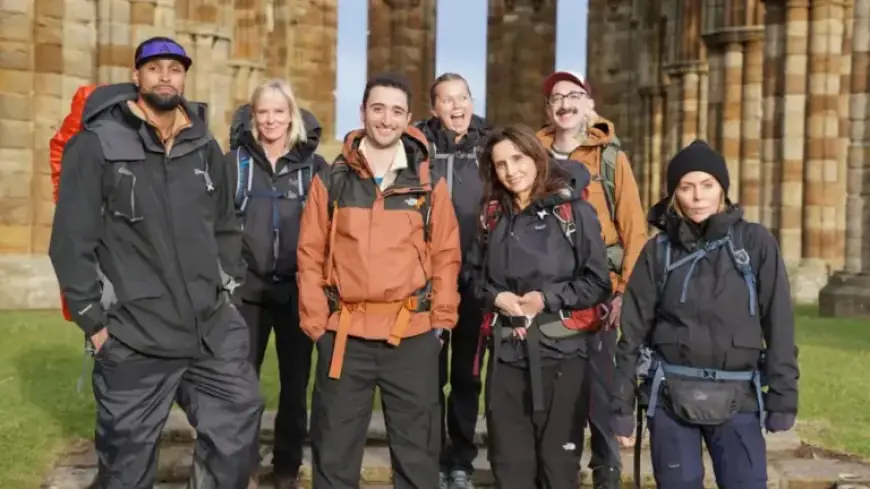
Ashley Banjo joined BBC Two’s Pilgrimage for a journey that delivered genuine life-changing moments. He walked parts of three historic trails across North East England. The trek combined landscape, history and personal reflection.
The route and distances
The group covered 390 km by foot and bus. Their route ran from just south of Whitby to Lindisfarne. Trails included the Way of St Hild, St Oswald’s Way and St Cuthbert’s Way.
The Way of St Hild links St Hilda’s Church in Hartlepool with Whitby Abbey. Whitby Abbey was central to seventh-century Anglo-Saxon Christianity. The path also crosses Hadrian’s Wall and Harwood Forest in Northumberland.
Lindisfarne and other landmarks
Lindisfarne has attracted pilgrims for more than 1,000 years. Pilgrims crossed a tidal causeway to reach the island. Banjo described the island view as one of the most beautiful he had seen.
Durham Cathedral impressed the group with its Norman architecture and stained glass. It houses the remains of St Bede and St Cuthbert. The cathedral also holds the head of St Oswald.
Participants and perspectives
Seven people took part in this series. They brought diverse faith backgrounds and life experiences. The cast included actors, presenters, comedians and TV personalities.
- Patsy Kensit — actress, raised Catholic in a selective fashion.
- Jayne Middlemiss — presenter, brought up in the Church of England.
- Hermione Norris — actress, identifies as agnostic.
- Tasha Ghouri — TV personality, previously described herself as atheist.
- Ashley Blaker — comedian, Jewish and formerly ultra‑orthodox.
- Hasan Al‑Habib — comedian, observant Muslim.
- Ashley Banjo — dancer, choreographer and television presenter.
Banjo first rose to public attention after winning Britain’s Got Talent in 2009. His family moved to the UK from Nigeria. He was raised with Christian principles and wanted context for his faith.
Encounters and shared moments
The group faced challenging weather and steep climbs. They also sat with philosophical questions about belief. On the Cheviot Hills, Banjo experienced a wide, uninterrupted view.
They shared small accommodations, including a camping hut with Hasan Al‑Habib. The trio of Banjo, Ghouri and Al‑Habib visited Durham University’s Islamic prayer room. Al‑Habib invited others to observe his prayer.
Friendly banter produced nicknames within the group. Banjo became known as “New Testament Ash,” and Ashley Blaker as “Old Testament Ash.” Several participants stayed in touch after filming via a WhatsApp group.
Historical context on the trail
The routes follow paths associated with early Christian figures. Heavenfield marks where King Oswald secured a key victory. After that victory, Oswald invited St Aidan from Iona to found a priory on Lindisfarne.
Other stops included Housesteads Roman Fort and Newcastle Reform Synagogue. Newcastle’s Jewish community grew due to late‑19th and early‑20th‑century migration. Harwood Forest featured as the backdrop to a remote hostel stay.
Broadcast details and public interest
The series is now in its eighth run on BBC Two. All episodes of Pilgrimage: The Road to Holy Island stream on BBC iPlayer. Two episodes aired at 9pm on 6 and 7 April on BBC Two.
Research from the British Pilgrimage Trust shows public interest in pilgrimage. Twenty percent of Britons said they would like to go on a pilgrimage. About 5.5 percent have already made one within Britain.
Reflections from Banjo
Banjo said the walk allowed him to lower his performer’s guard and reflect. He found slower days and long walks restorative. Being outdoors and walking for hours left a lasting impression.
On the trail, Banjo reported moments of awe and spiritual feeling. The pilgrimage encouraged him to view his Christianity in historical and geographical context. The trek combined personal discovery with England’s sacred landscapes.
For coverage and commentary on the series, Filmogaz.com reviewed Banjo’s pilgrimage and the programme’s portrayal of faith journeys. The show links heritage, nature, and personal transformation on screen.