

























Starving Gray Whales Found Dead in Ocean Shores After Willapa River Swim

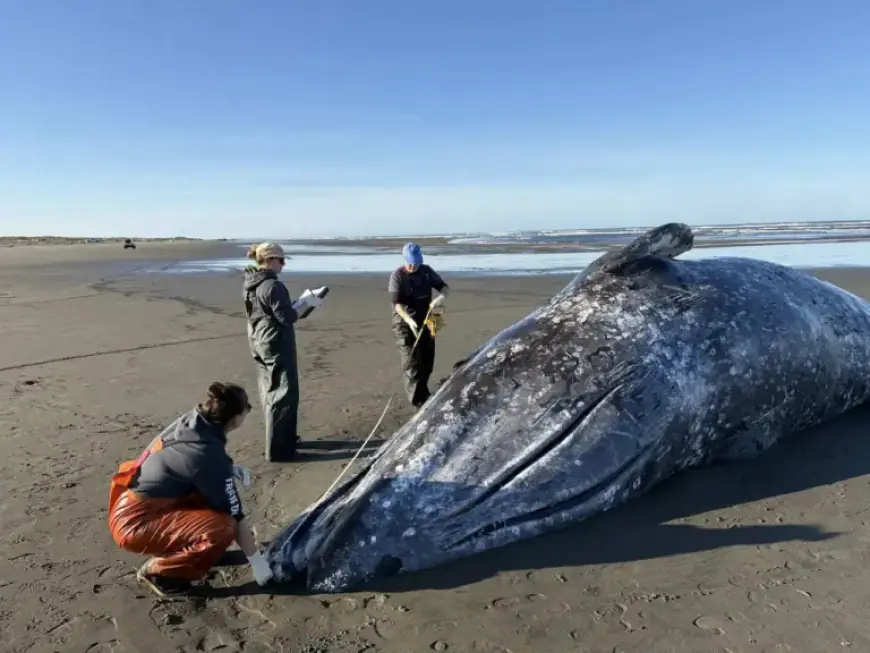
Recent events along the Washington coast have raised alarm about the condition of gray whales. Just two days after a juvenile gray whale swam approximately 20 miles up the Willapa River, two adult gray whales were discovered dead at Ocean Shores, about 20 miles north of the river entrance. These marine mammals were found along the beach between the North Jetty and the Taurus Boulevard beach approach.
Observations on the Stranded Gray Whales
Both whales were determined to be starving, according to John Calambokidis, a research biologist with Cascadia Research Collective. This nonprofit organization, based in Olympia, focuses on the research of marine mammal populations. The two whales measured about 42 feet in length, with the male exhibiting severe head trauma indicative of a ship strike.
It’s important to note that the three whales encountered — the juvenile and the two adults — may not have traveled together. Gray whales are typically solitary, often moving independently rather than in groups.
Population Concerns for Gray Whales
The status of gray whales has been worrying for several years. Mortality rates have surged since 2019, reducing their population to less than half of what it was a decade ago. Calambokidis described the situation as a “crisis in the population.” The National Oceanic and Atmospheric Administration (NOAA) has been tracking an unusual mortality event involving gray whales from 2018 to 2023. During this period, 690 gray whales have stranded along the coasts of the United States, Mexico, and Canada, with a peak in strandings occurring between 2018 and 2020.
Causes of Decline
Investigations suggest that changes in feeding grounds within the Arctic and sub-Arctic regions are significant factors in this decline. A 2024 study in PLOS One revealed that many of the examined gray whales were emaciated, suggesting malnutrition as a major contributor to their deaths rather than disease.
- This decline has persisted longer and has been more severe than previous natural population cycles.
- NOAA estimates the current eastern North Pacific gray whale population to be around 13,000, the lowest figure since the 1970s.
- Calf production remains alarmingly low, exacerbating concerns about the future of the species.
Current Migration Issues
This year has begun poorly for gray whales in Washington. As they migrate north from their breeding grounds in Baja California to summer feeding areas in Alaska, scientists have recorded six dead gray whales thus far. This annual migration covers a distance of approximately 10,000 to 12,000 miles and places significant nutritional pressure on the whales.
Risks of Being Off Course
During migration, gray whales often face peak nutritional stress. Weak, malnourished whales may stray from their routes, making them susceptible to dangers like ship strikes. Disorientation can lead them to unusual locations, as seen with the juvenile gray whale that swam so far into the Willapa River. In regions like Grays Harbor, gray whales typically prey on ghost shrimp, common in soft substrates. However, their search for sustenance can lead them to riskier areas.
Cascadia Research is considering conducting surveys in the Grays Harbor and Willapa Bay regions to assess the whales’ body conditions and the availability of prey. Calambokidis noted reports of other whales in the vicinity, but not in the river, indicating a broader issue that may require immediate attention.