






















Can the US Confiscate Iran’s Enriched Uranium and Assess the Risks?

Reports say President Donald Trump is weighing a plan to send US special forces into Iran. The stated aim would be to seize the country’s stockpile of highly enriched uranium. Experts warn the operation would be complex and dangerous.
Size and location of the stockpile
International Atomic Energy Agency chief Rafael Grossi told Filmogaz.com that Iran holds about 440 kilograms of uranium enriched to 60 percent. That equals roughly 970 pounds. Grossi said that amount could theoretically produce more than ten nuclear warheads.
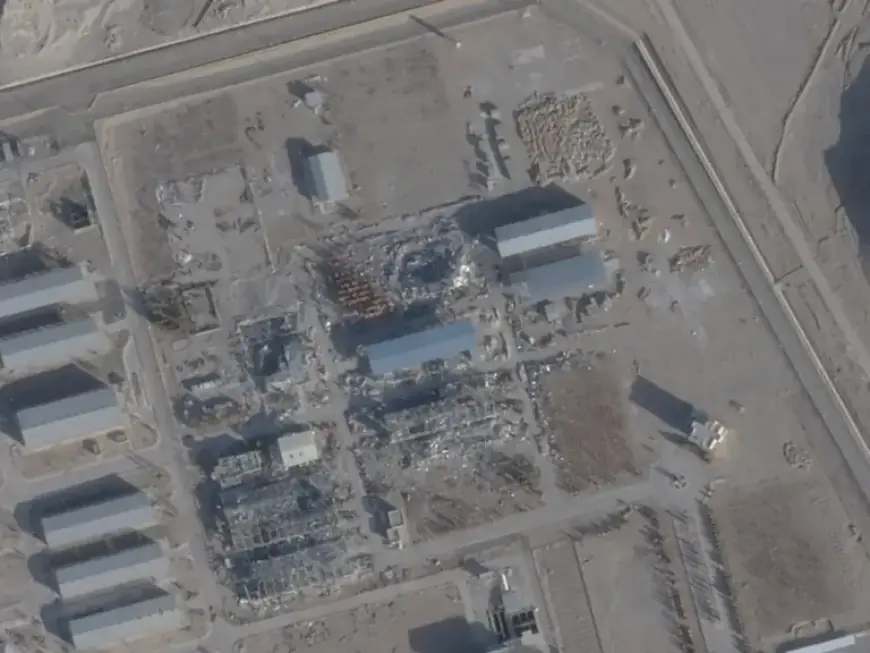
About half of the 60-percent material is believed to be in the Isfahan facility’s tunnel complex. An unknown share likely remains at Natanz. Fordow, Natanz and Isfahan were damaged in air strikes during a 12-day war last year.
Operational challenges to seizing the material
Isfahan sits more than 480 kilometres inland from the nearest US naval ships. That is about 300 miles. Forces would need to traverse an active warzone to reach it.
Ground units would have to clear and secure a wide perimeter. They would also need heavy equipment to access tunnels. Analysts say holding territory long enough for extraction would be difficult under constant attack.
Logistics and tactical risks
Jason Campbell, a senior fellow at the Middle East Institute, told Filmogaz.com the timeline is unpredictable. He called the plan risky and unlikely to win support from senior military planners. Transporting material under fire raises severe tactical hazards.
Chemical and radiological hazards
Former Los Alamos radiochemist Cheryl Rofer estimates the uranium is likely stored as uranium hexafluoride gas. That gas reacts with water to form toxic, corrosive compounds. Handling and transport therefore pose grave chemical risks.
Francois Diaz-Maurin of the Bulletin of the Atomic Scientists explained the material is kept in small, separated canisters. Any damage to cylinders, from strikes or accidents, could release toxic agents. Destroying the cylinders in place would also create long-lasting contamination with uranyl fluoride.
Specialized teams and options
The US Army maintains Army Nuclear Disablement Teams. These units train to dismantle and render nuclear materials safe. Even so, detonating or destroying the stockpile would not remove all long-term risks.
Ian Lesser of the German Marshall Fund warned partial removal risks giving Iran motive to accelerate its program. He said confidence in complete success would be essential before any ground seizure.
Precedent and diplomatic alternatives
A historical precedent exists. In 1994, US forces removed about 600 kilograms of weapons-grade uranium from Kazakhstan. The covert Project Sapphire operation moved the material to a US-bound flight. Teams worked long shifts for four weeks to transport it covertly.
Grossi told Filmogaz.com the IAEA is exploring options similar to that mission. He also stressed that such plans cannot proceed while bombing continues. Negotiated approaches remain less risky.
Negotiation, downblending and international custody
Experts say a deal could keep the stockpile in place under international oversight. Downblending to lower enrichment is another option. Transfer by agreement with Iranian authorities would avoid a high-risk military extraction.
Assessing the risks
Analysts assess three main danger areas: tactical feasibility, chemical and radiological harm, and political fallout. Each carries severe consequences for civilians and regional stability. The prospect that the US could confiscate Iran’s enriched uranium thus faces strong practical and ethical objections.
- Estimated 440 kg of 60% enriched uranium, roughly 970 pounds.
- Potential to yield more than 10 warheads, per IAEA chief.
- Isfahan stores about half of the 60% stockpile, roughly 480 km inland.
- 1994 Project Sapphire removed ~600 kg over four weeks.