

























P.E.I.’s Oldest Wind Farm Undergoes Major Turbine Overhaul

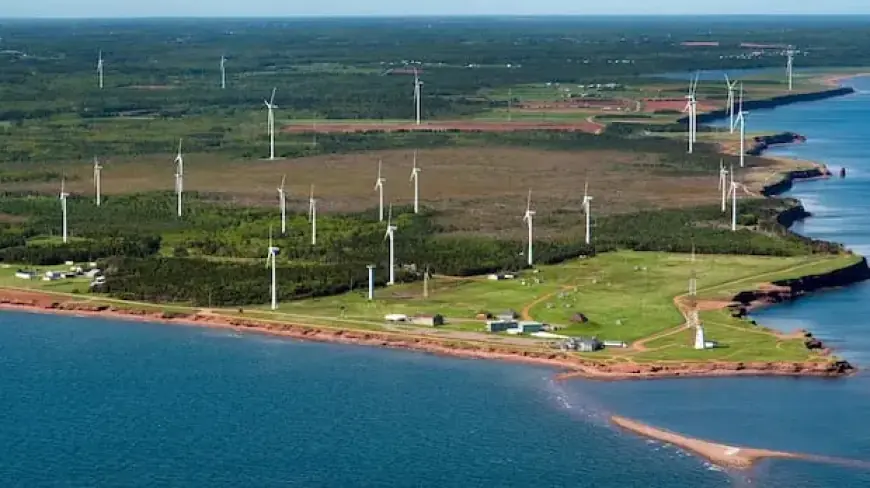
The P.E.I. Energy Corporation is set to upgrade the province’s oldest wind farm, North Cape. This initiative involves the replacement of aging turbines with modern, larger models designed to enhance efficiency and energy output.
P.E.I.’s Oldest Wind Farm: North Cape Wind Farm
Located on P.E.I.’s northwestern tip, the North Cape wind farm began operations in the early 2000s. It was a pioneering project in Atlantic Canada. Blair Arsenault, an operations engineer, emphasizes its significance, stating it has been essential to wind energy in P.E.I. for the past 25 years.
Challenges Facing Aging Turbines
The existing turbines are experiencing increased downtime and rising repair costs. This decline in operational efficiency has prompted the push for modernization. Arsenault points out a notable decrease in annual energy production, from approximately 33 gigawatt hours to about 28 gigawatt hours.
The provincial government has initiated an environmental impact assessment. This study aims to facilitate the retirement of the outdated turbines and their replacement with new technology.
Details of the Replacement Plan
- Current Turbines: The North Cape wind farm comprises 16 turbines, each rated at 0.66 megawatts with a rotor diameter of 47 metres.
- New Turbines: Future installations will feature larger designs, with recent projects like the Eastern Kings wind farm utilizing turbines up to 4.2 megawatts and rotor diameters of 138 metres.
New generation turbines promise improved performance. They are better equipped to endure harsh weather conditions. For instance, while the existing model operates down to -20°C, new turbines can sustain functionality at temperatures as low as -30°C, maintaining efficiency even at -40°C.
Future Developments
The selection process for new turbines will involve requests for quotes from manufacturers. Arsenault aims to have the revamped wind farm operational by 2029 or 2030. Existing infrastructure, such as access roads and transmission lines, will be reused wherever possible, although outdated turbines themselves cannot be incorporated due to size discrepancies.
Impact on Energy Supply
Maritime Electric’s vice-president, Angus Orford, notes that the utility is mandated to buy energy generated by the P.E.I. Energy Corporation. Current wind power production adequately meets local demand. However, Orford cautions that while increasing wind energy capacity is beneficial, it does not resolve the underlying issues of energy generation capability.
Wind and solar energy are intermittent, requiring backup from dispatchable sources, such as hydroelectric plants or fossil fuels. This stability remains a critical requirement in North America amidst ongoing capacity challenges.