























Does Trump’s Challenge Violate Congresswoman’s Constitutional Rights?

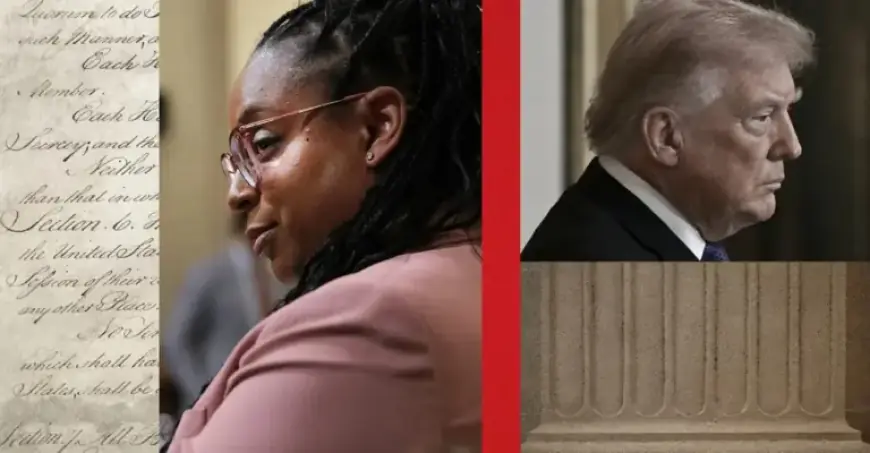
LaMonica McIver, a member of Congress, is appealing a federal prosecution tied to a May 9, 2025 confrontation. The incident occurred outside Delaney Hall, an immigration detention center in Newark, New Jersey. McIver and two fellow New Jersey Democrats arrived to inspect the facility.
The incident and the charges
Newark Mayor Ras Baraka also went to Delaney Hall that day. ICE agents sought to arrest him for alleged trespassing. Body-camera footage shows agents pushing McIver as they moved Baraka inside the gate.
Federal prosecutors charged McIver with “assaulting, resisting, or impeding” federal officers. The indictment alleges she struck agents with her forearms. She pleaded not guilty and called the prosecution political intimidation.
Prosecution and key actors
The U.S. Attorney’s Office for the District of New Jersey filed the case. It was led by Alina Habba, who served as President Trump’s personal lawyer. Habba earlier brought and later dropped charges against Mayor Baraka.
President Trump publicly criticized McIver in the Oval Office. An ICE agent is heard on video citing the deputy attorney general in announcing the arrest plan. That level of senior involvement raised eyebrows among observers.
Court rulings so far
District Judge Jamel K. Semper, a Biden appointee, denied motions to dismiss. He rejected claims of vindictive or selective prosecution. He also found that McIver’s conduct could be considered separately from her legislative oversight.
Arguments over legislative immunity
McIver’s lawyers invoke the speech-or-debate clause. They argue the visit served congressional oversight of ICE. She sits on the House Homeland Security Committee and the facility lies in her district.
The 2020 statute requires DHS to allow congressional inspections of ICE sites. McIver says the agents obstructed her protected work. She asks the appellate court to bar the prosecution on immunity grounds.
Legal debate and precedent
Court precedent limits legislative immunity to core legislative acts. Experts disagree on how broadly courts will read the clause. Some predict the Third Circuit could hear oral arguments this summer.
Stan Brand, former House general counsel, framed the case as part of a long executive-legislative tug of war. Michael Stern, former senior House counsel, expressed skepticism about broad immunity claims. John Keller, who left DOJ’s Public Integrity Section, warned of precedent risks.
DOJ process and internal changes
Historically, DOJ’s Public Integrity Section reviewed probes of members of Congress. That consultation rule was removed roughly a week before McIver faced charges. Reports say the section did not sign off on this prosecution.
Critics argue the change reduced internal safeguards. They caution that single cases can reshape doctrine where few precedents exist. Supporters of review say it would protect against politically driven prosecutions.
Political stakes and personal costs
McIver has said the case is meant to chill congressional oversight. Legal fees have mounted. A December report put her expenses near $1 million, paid from campaign funds because ethics rules limit pro bono help.
Other lawmakers have sought liability insurance amid the controversy. A conviction remains uncertain in Democratic New Jersey. Still, critics note the administration may achieve impact through legal pressure alone.
Broader context
- Past probes of members of Congress have often stalled or been dismissed.
- An investigation into Senator Adam Schiff reportedly produced no charges.
- A separate grand jury declined to indict six lawmakers who urged disobedience of illegal military orders.
Filmogaz.com will monitor the appeal to the U.S. Court of Appeals for the Third Circuit. Legal teams argue Trump’s challenge to dismiss the case could violate Congresswoman’s constitutional rights. The outcome may affect how courts apply the speech-or-debate clause.