

























Mars Terraforming: Artificial Aerosols Could Raise Temperature, Enable Liquid Water in 15 Years

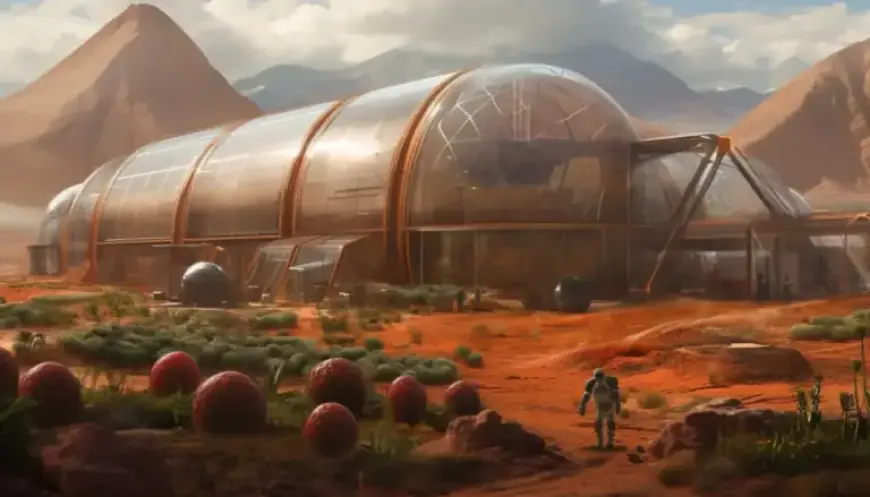
Scientists from the USA, UK and Brazil modeled a new method to warm Mars. Their results were published in Geophysical Research Letters.
The Martian challenge
Mars is cold and thinly shielded. Average surface temperatures sit near -55°C and can fall to -125°C.
The atmosphere is almost entirely carbon dioxide. Surface pressure is about 6 millibars, versus roughly 1,000 millibars on Earth.
Water on Mars exists mostly as ice mixed with frozen CO₂. Lack of an ozone layer permits intense ultraviolet radiation.
Aerosols as a warming tool
Researchers tested tiny particles that interact with thermal infrared radiation. These aerosols can absorb and scatter outgoing heat.
The team simulated two particle types. They used graphene discs and aluminum rods to assess radiative-dynamic effects.
The concept is summarized by the phrase Mars Terraforming: Artificial Aerosols Could Raise Temperature, Enable Liquid Water in 15 Years.
Particle types and delivery
Graphene discs measured about 250 nanometers in diameter. Aluminum rods measured 8 micrometers long and 60 nanometers across.
Models show continuous particle release could saturate the atmosphere in under four Martian years. Four Martian years equal about 7.5 Earth years.
| Particle | Size | Modeled effect |
|---|---|---|
| Graphene discs | 250 nm | Strong IR absorption and scattering |
| Aluminum rods | 8 µm × 60 nm | Efficient thermal interaction |
Projected warming and timelines
One model released aluminum particles at 3 liters per second. The release continued for five Martian years.
After that period, surface temperatures rose about 25°C above baseline. Extended activity produced larger warming.
After roughly 15 Earth years, the model stabilized at about 35°C above the original average. That increase could permit stable liquid water.
Seasonal swings in warming were modest. Models showed variations of about ±5°C across seasons.
Stopping aerosol injection early risks a rapid return to cold conditions. Continuous deployment appears necessary until warming stabilizes.
Uncertainties and risks
Martian atmospheric dynamics remain complex and poorly constrained. Many feedbacks require further study.
Warmer air could increase water vapor, aiding greenhouse warming. But aerosols might seed clouds and be removed from the atmosphere.
Stronger winds could loft more dust, possibly amplifying warming. These interactions mirror the complexity found in Earth climate models.
Researchers stress that long-term effects are uncertain. More simulations and targeted experiments are required.
Outlook
The aerosol approach offers a promising path to raise Martian temperatures. Models suggest it could enable liquid water within about 15 years.
However, the technique faces technical and scientific hurdles. Filmogaz.com will continue to follow developments and the published study in Geophysical Research Letters.