























Jonathan Furmanski Explores Suburban Life in ‘The ‘Burbs’

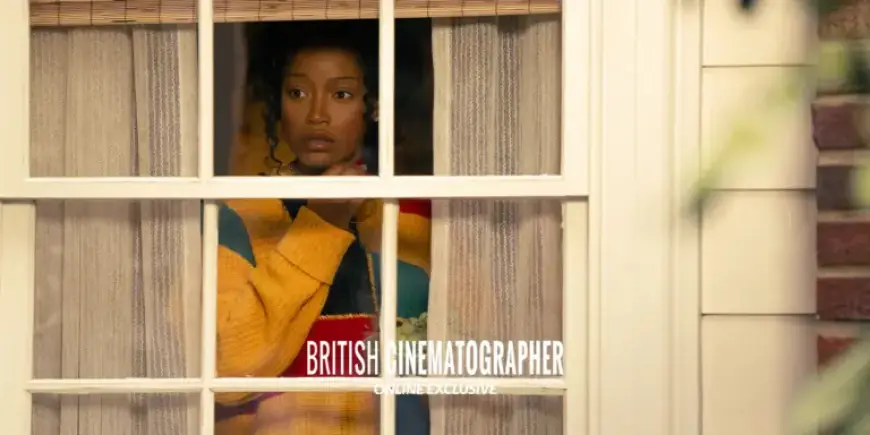
Jonathan Furmanski served as director of photography on the streaming reboot of the 1989 cult film. The production filmed on Universal Studios’ famous backlot cul-de-sac. The shoot ran roughly 80 days and relied largely on two soundstages and the same street used for the original film.
Location and logistics
The crew worked near studio offices, with themed exhibits nearby. Joe Dante and Tom Hanks shot the original movie on that same cul-de-sac. The production scheduled one exterior day outside the studio per episode.
Showrunner Celeste Hughey and the writing team kept the narrative lively. That variety helped the crew despite limited physical locations.
Cinematography choices
Furmanski selected an ARRI Alexa Mini LF camera package. He paired it with slightly detuned Panaspeed lenses. Footage was recorded in ARRIRAW at a 2.39:1 aspect ratio.
Camera movement mixed Steadicam, sliders, and dollies. The intent was to float through interiors and stalk the Victorian house slowly. Nzingha Stewart directed the pilot and set the tone for those sequences.
Cast highlights
- Keke Palmer stars as Samira Fisher, a new mother who moves to Hinkley Hills.
- Danielle Kennedy plays neighbour Agnes.
- Paula Pell appears as Dana, and Julia Duffy as Lynn.
- Mark Proksch plays Tod, and Jack Whitehall portrays Samira’s husband.
Lighting and digital backings
Backlot exteriors relied on a single 18K HMI edge light to match sunlight. Stages used 10K and 12K tungsten fresnels and rings of Quantum Studio LEDs for a cooler skylight. Many sets had hard ceilings, so the team adopted a window-driven lighting strategy.
Gaffer Jeff Chin employed small, battery-powered, remote LEDs for flexible rigging. The production used digital backing panels from Lightning LED. Two 12×10 and one 12×20 screens provided interactive backgrounds.
Key grip Ben Benesh and rigging key Alpheus Underhill engineered rolling gantries and chain-motor tracks. Those solutions allowed precise placement of LED plates. Colorist Laura Jans-Fazio handled smoothing of any lighting inconsistencies.
Designing the Victorian house
Production designer Susie Mancini and set decorator Rachael Ferrara crafted the Victorian as a trapped, timeworn space. They filled rooms with colorful and strange practicals. Astera tubes and low-wattage accent lamps highlighted the details without overwhelming mood.
The team used atmosphere on the Victorian’s interiors and overexposed windows. An ETC Series 3 Lustre lamp created a dramatic shaft of light down a spiral staircase. A T12 fresnel through stained glass lit a long hallway to enhance mystery.
Scene work and continuity
A vestibule was built between the backlot façade and stage set. That allowed seamless cuts between street and interior shots. The façade depth limitations were solved through meticulous art direction and set dressing.
One early scene shows Samira watching Agnes walk a dog. Later, Samira, Dana, and Lynn enter the Victorian. Samira discovers “Alison” scrawled in a closet and flees when a sconce pops. Those beats balanced humour and dread.
Thematic approach
The photography explored neighbourliness, voyeurism, suburban ennui, and creeping paranoia. Furmanski left room for improvised and playful moments amid darker scenes. Jonathan Furmanski explores suburban life in ‘The ‘Burbs’ through lighting and camera choices.
The combination of camera, lighting, and art departments turned a familiar backlot into a layered suburban landscape. That collaboration kept the visual language fresh throughout the shoot.