

























Democratic States Threaten Lawsuits Minutes After Trump Signs Voter Database Order

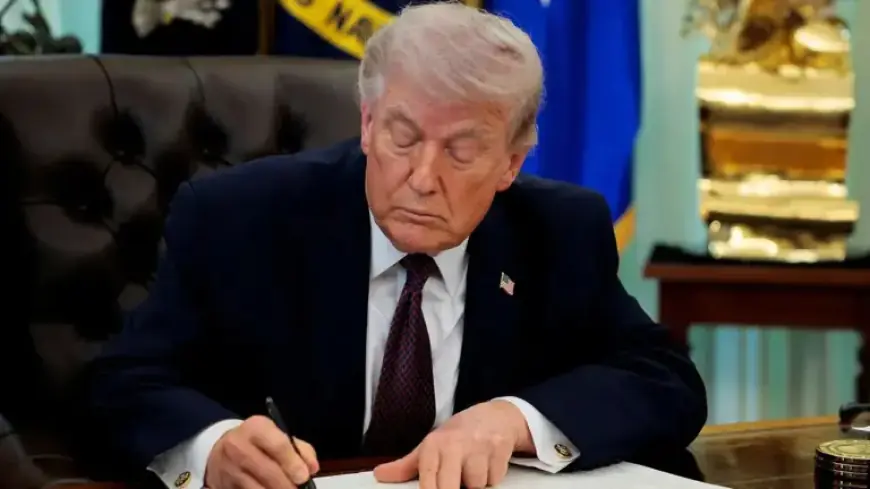
President Donald Trump signed an executive order to create a federal list of verified eligible voters. Democratic states threatened lawsuits minutes after the action, signaling swift legal battles.
What the order requires
The order directs the Department of Homeland Security to work with the Social Security Administration. They are to compile lists of eligible voters for each state.
It also seeks limits on mail-in voting and asks the Postal Service to block absentee ballots. The order calls for ballot envelopes with unique tracking barcodes.
Immediate state responses
Arizona, California and Oregon immediately vowed to sue. Other states could join, including Colorado, Hawaii, Maine, Minnesota, Nevada, Utah, Vermont, Washington state, Washington, D.C., and Wisconsin.
California Governor Gavin Newsom announced a legal challenge. Arizona Secretary of State Adrian Fontes said Arizona’s vote-by-mail program serves about 80% of voters.
Statements from state officials
Oregon Secretary of State Tobias Read said the state will go to court. Oregon Attorney General Dan Rayfield pledged to use all legal tools available.
Maine Secretary of State Shenna Bellows called the order unconstitutional. Nevada Secretary of State Francisco Aguilar said it would burden local election officials.
Legal and expert objections
Election lawyers and advocacy groups called the order unlawful. The Brennan Center’s Wendy Weiser said the president lacks authority to take over state election administration.
David Becker of the Center for Election Innovation and Research argued the Constitution leaves election administration to states. UCLA’s Richard Hasen said the order would likely be blocked.
Democratic election lawyer Marc Elias described the move as an effort to suppress votes. NAACP President Derrick Johnson said the order was unserious and unconstitutional.
Technical and administrative concerns
Voting-rights groups have criticized the federal SAVE system as error-prone. They warned federal databases could wrongly remove eligible voters from rolls.
Officials also noted limits on presidential control over the Postal Service. The Postal Service is governed by a board of governors, reducing direct presidential authority.
Political backdrop and history
Trump framed the move as an election-security measure after a Senate stalemate over the SAVE America Act. Republicans hold narrow majorities in both chambers.
Trump won 30 states in 2024 while Kamala Harris carried 18, plus Washington, D.C. Maine and Nevada split Electoral College votes.
Mail voting landscape
Several states run broad mail-in programs. New Jersey, Maryland, Illinois and Minnesota use permanent absentee lists.
New York, Virginia, Massachusetts, Rhode Island, Connecticut, New Mexico and Delaware allow no-excuse mail voting. Maine saw more than a quarter of votes cast by mail in 2024.
What comes next
Legal challenges are expected quickly. Observers note a March 2025 executive order with similar aims was largely blocked after court fights.
State officials and national legal experts predict prompt judicial review. The dispute could reach higher courts before the 2026 midterms.
- Key agencies named: DHS and Social Security Administration.
- Immediate challengers: Arizona, California, Oregon.
- Potential challengers: Colorado, Hawaii, Maine, Minnesota, Nevada, Utah, Vermont, Washington state, Washington, D.C., Wisconsin.
- Noted critics: Wendy Weiser, David Becker, Richard Hasen, Marc Elias, Derrick Johnson.
Filmogaz.com will continue to track developments as legal filings and court responses unfold. Expect rapid litigation and appeals in the months ahead.