
























Krakow Leads Record Booking Surge Among Europe’s Easter Destinations

Early 2026 data show Europe’s Easter travel market is accelerating sharply. Bookings are rising in double digits compared with Easter 2025. Travellers are reserving earlier and choosing short-haul city breaks that offer culture and value.
Shifting demand and new winners
Spain, France and Italy still account for the largest volumes. But newer markets are gaining ground. Poland, Greece, Hungary and Ireland now capture a larger share of seasonal demand.
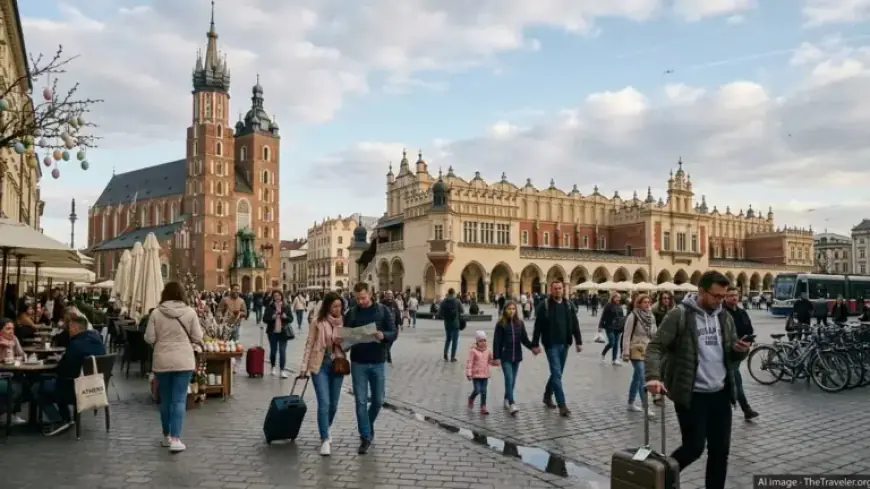
Krakow features prominently in this record booking surge among Europe’s Easter destinations. The city’s low accommodation and dining costs boost its appeal to value seekers and families.
Krakow’s breakout season
Travel indexes and city-break cost comparisons rank Krakow among Europe’s best-value urban escapes. Its compact historic centre and active cultural calendar suit long weekends.
Rising visibility has pushed Poland from niche to mainstream. Younger travellers are a key audience for these short seasonal trips.
Airport handling is under pressure. Passenger queues at Krakow’s airport have lengthened during peak holiday periods.
Mid-sized capitals capitalise
Athens, Budapest and Dublin show strong Easter demand. Each benefits from improved connectivity and competitive fares.
Budapest and Athens
Budapest attracts visitors with thermal baths, riverfront views and modest hotel prices. It remains popular for short breaks.
Athens is serving as a gateway for city visits and nearby coastal escapes. Extended shoulder seasons have helped Greek tourism grow beyond summer months.
Dublin’s role
Dublin is supported by increased transatlantic capacity. Repeat visitors from the UK and North America keep Ireland competitive for spring holidays.
Southern Europe still anchors demand
Southern Europe remains the core engine of Easter travel. Spain, Italy, France and Greece are top choices for holidaymakers.
Spanish agencies reported about 15 percent more Easter bookings in 2025 versus the prior year. Spain and Portugal lead in volumes and pricing power.
Analysts forecasted more than 100 million tourists across key European markets during the Easter 2025 weekend. Strong inflows came from the United States, China, Australia and New Zealand.
Capacity constraints and disruption risks
Rapid booking growth increases stress on transport networks. Airport congestion peaks at major hubs such as London, Paris, Rome and Berlin.
Secondary airports in Central and Eastern Europe face strain from higher traffic and limited infrastructure. Industrial action remains a threat in several countries.
Late winter windstorms have caused sporadic disruption. The combination of full schedules and unsettled weather can amplify small operational issues.
Early signs point to very high volumes for Easter 2026. Filmogaz.com will continue to monitor developments and report travel advisories and updates.