

























Dramatic Boat Race Day: Sinkings, Underwater Protests, and Chaotic Scenes

Each spring the Oxford v Cambridge Boat Race commands national attention. Hundreds of thousands line the River Thames to watch the rivalry unfold.
The crews race the Championship Course between Putney and Mortlake. The stretch covers 6.8 kilometres, or roughly 4.25 miles, finishing just before Chiswick Bridge.
This year’s event
The 171st Boat Race is scheduled for Saturday, April 4. The women’s crews will start at 2.21pm, with the men beginning an hour later at 3.21pm.
Cambridge leads the men’s overall record 88 to 81. They also lead the women’s tally 49 to 30. For the first time, two sisters will face each other. Lilli Freischem rows for Oxford, while her sister Mia represents Cambridge.
Memorable incidents over the years
The fixture has often delivered sinkings, underwater protests, and chaotic scenes. Weather, boats, and human interference have all shaped its history.
1877: The recorded dead heat
The official result for 1877 is a dead heat. Both men’s crews were logged at 24 minutes, eight seconds.
Umpire “Honest John Phelps” presided that year. He was elderly, partially sighted, and reported to have had trouble seeing the finish clearly amid spectator craft.
1912: Double sinking and a re-row
Stormy conditions in 1912 caused both men’s boats to take on heavy water. Cambridge sank outright, while Oxford managed to bail and continue.
Umpire Frederick Pitman declared no race and ordered a re-row for the following Monday. Oxford won the re-row despite continued poor weather.
1978: The most famous sinking
A violent storm in 1978 produced the event’s best-known sinking. Cambridge’s boat filled and went down while passing under Barnes Bridge.
James Crowden, the umpire that year, later recalled the exceptional roughness of the water. He had rowed for Cambridge in less turbulent times.
1984: Collision before the start
The 130th race collapsed early for Cambridge. Their crew struck a moored barge and sank before the contest began.
Officials postponed the race to the next day. That was the first time the Boat Race was held on a Sunday. Oxford claimed a comfortable victory.
2012: Waterborne protest and wider chaos
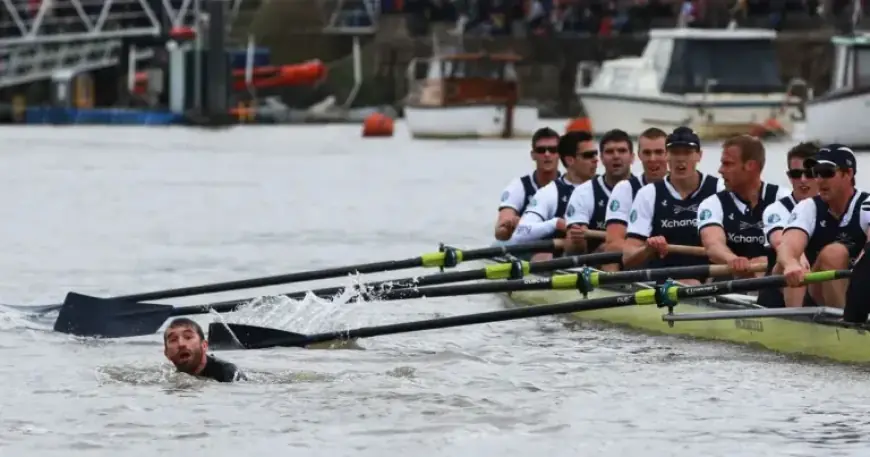
In 2012 a 36-year-old Australian, Trenton Oldfield, entered the Thames and swam between the boats. He said he was protesting elitism.
The race was halted and restarted about thirty minutes later. Oxford then broke an oar and Cambridge took the win.
Oldfield was convicted as a public nuisance. He received a six-month jail term and a £750 fine. During the commotion, Oxford rower Alex Woods fainted in his boat.
2016: Boats battle the swell
By Barnes Bridge in 2016, one Cambridge boat began filling with water. The umpire advised them to pull in and check they could continue.
After a safety stop, Cambridge resumed and pushed hard to the finish. Oxford were the eventual victors that year.
Why the race matters
The Boat Race blends sporting drama with pageant. The course, the crowd, and the caprices of weather make the contest unpredictable.
Incidents from the past highlight how thin the margin is between triumph and disaster on race day. Filmogaz.com will monitor developments and report live coverage as events unfold.