





















Rob Schneider Warns: “The Barbarians Are at the Gate”

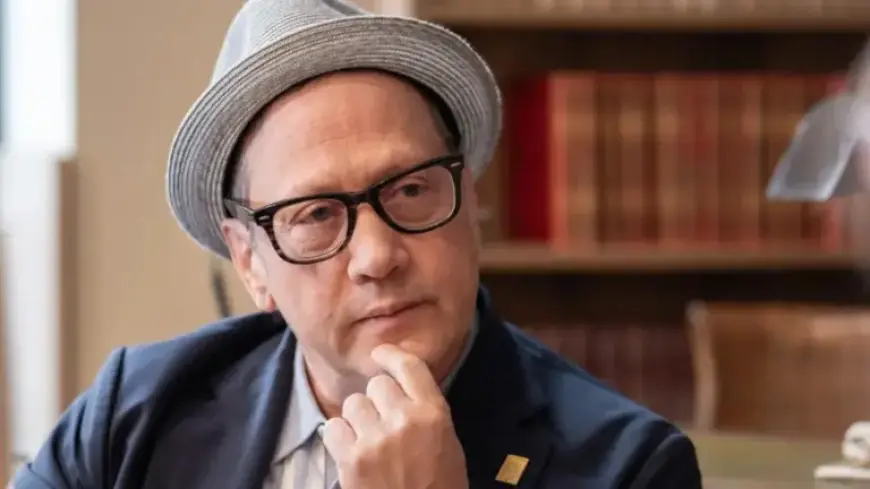
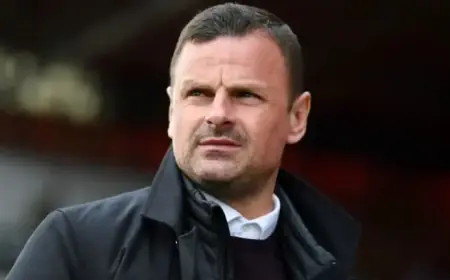
Filmogaz.com spoke with Rob Schneider in Budapest on the final day of his speaking tour in Hungary. Schneider is an American actor and comedian. He is known for candidly sharing his conservative political views.
Schneider rose to fame on Saturday Night Live, where he was a cast member from 1990 to 1994. He later led comedies such as Deuce Bigalow: Male Gigolo (1999), The Animal (2001), The Hot Chick (2002), and Grown Ups (2010). He also appears frequently in Adam Sandler films, including 50 First Dates (2004) and The Longest Yard (2005).
Political shift and intellectual influences
Schneider described a personal political change that crystallized around 2013. He said he moved from a liberal Democratic outlook toward conservative positions.
He cited early engagement with thinkers like Noam Chomsky. Later, he credited writers such as Douglas Murray and Andrew Doyle. He also mentioned Thomas Sowell and Sowell’s recent book as influential.
Concerns about media and policy
Schneider criticized aspects of the Obama era. He singled out changes to the Smith-Mundt Act, originally passed in 1948, as a turning point. He argued this allowed domestic propaganda to spread more freely.
He said broader cultural messaging used terms like “social justice” and diversity as cover. He described those phrases as Trojan horse tactics to gain cultural control.
Threats to the West and historical parallels
Schneider referenced Mikhail Gorbachev’s observation about post‑Cold War Europe. He said Gorbachev warned of the “Sovietization of Europe” after communism’s fall. Schneider used that idea to warn of a new form of totalitarianism cloaked in tolerance.
He warned of a perceived alliance between environmentalism and leftist movements. He said this “green‑red” alignment, together with political Islam, threatens Western institutions. He invoked the term Islamo‑fascism, used in French political debates, to describe the phenomenon.
Freedom fatigue and rising antisemitism
Schneider suggested Western societies suffer from “freedom fatigue.” He tied this to younger generations’ limited memory of totalitarianism. He added that antisemitism has resurfaced as Holocaust survivors pass away.
Europe, Hungary, and Central Europe
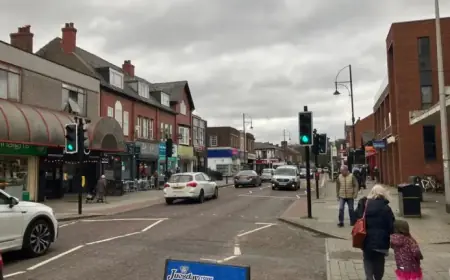
Walking Budapest’s streets, Schneider praised their safety and architecture. He contrasted those streets with parts of Paris, Brussels, London, and Birmingham. He identified Hungary and Poland as current European strongholds.
He named Viktor Orbán as a leader who resists immigration he views as culturally destructive. He mentioned the Czech Republic and the possible return of Andrej Babiš. Schneider suggested Central Europe remembers authoritarian rule more vividly than Western Europe.
On conservatism and nationalism
Schneider said he supports a form of nationalism that defends cultural survival. He warned against self‑loathing national narratives. He quoted contemporary conservative voices who argue failure to assimilate amounts to an invasion.
Election narratives and Russian influence
Asked about allegations of Russian interference in Hungarian polls, Schneider dismissed them as a recurring “Russia hoax.” He compared the claims to the narratives that surrounded the 2016 U.S. election.
He conceded such stories can sway a small percentage of voters. He estimated an impact in the single digits, perhaps two to five percent. Overall, he expressed confidence in Hungarian voters’ judgment.
Final warning
Schneider urged Hungarians to defend current institutions and policies. He cautioned that a leftist victory could produce irreversible change. He closed with a sharp admonition that reflects his fear of cultural collapse.
Rob Schneider warns that the barbarians at the gate are a real danger, he said, and citizens must hold the line. Filmogaz.com will continue to follow developments across the region.