

























Home Charging Costs Rise, Yet Remain More Affordable Than Public Stations

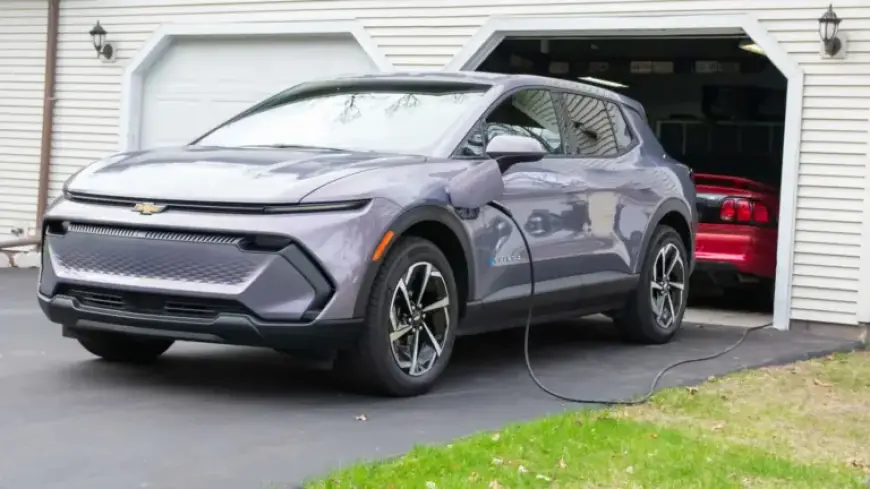
New research from J.D. Power shows homeowner satisfaction with EV charging has slipped as electricity costs rise. Filmogaz.com reviewed the firm’s Electric Vehicle Experience Home Charging Study and its findings.
Study scope and methodology
The survey included 5,399 electric and plug-in hybrid owners. Interviews ran from November 2025 through February 2026. Participants owned model year 2020–2026 vehicles.
Where charging happens
Most charging is done at home. J.D. Power reports 86% of EV charging occurs at residences. That makes home charging a central factor in owner satisfaction.
Satisfaction scores by charger type
The study scored satisfaction on a 1,000-point scale. Level 1 portable chargers averaged 569. That was a 12-point drop from the prior year.
Level 2 portable chargers scored 710, down four points. Installed Level 2 units remained highest at 733 and held steady year-over-year.
Charging costs and regional trends
The firm found average home charging costs rose about $5 per month versus last year. Respondents reported spending $63 on home charging in the last 30 days.
Electricity prices increased nationwide by roughly 6% from 2024 to 2025. Some states experienced much larger jumps.
- Ohio: just over a 10% increase, per the Energy Information Administration.
- New Jersey: a 17% rise in electricity costs from 2024 to 2025.
Impact on satisfaction
Where local rates stayed lower, satisfaction tended to be higher. Colorado was cited as an example of stronger owner sentiment. Higher electricity prices correlated with lower satisfaction scores.
Ways owners can lower costs
Off-peak charging remains a simple strategy. Many utilities offer cheaper rates late at night and early morning.
J.D. Power found 38% of owners always schedule charging. Those owners reported lower bills and higher satisfaction.
- Always-schedulers: $65 spent in the last 30 days.
- Never-schedulers: $71 spent in the last 30 days.
Utility programs and uptake
Smart-charging and time-of-use programs can cut costs automatically. Awareness of these offerings is relatively high.
About 69% of owners knew such programs existed. Yet only 12% were enrolled. Roughly 20% reported they had not been told about these programs when buying the vehicle.
J.D. Power’s Brent Gruber said scheduled charging helps owners both save money and charge more efficiently.
Limitations and local examples
Not every incentive works well for every household. Ohio’s opt-in time-incentive program raised on-peak rates for some customers. Some participants saw bills increase after enrolling.
An EV-specific meter can separate vehicle charging from household use. But installing that meter carries upfront cost and complexity. Renters may find it infeasible.
Public charging and gasoline comparisons
Despite rising residential costs, home charging remains less expensive than many public DC fast chargers. Home Charging Costs Rise, Yet Remain More Affordable Than Public Stations is reflected in the data.
Electric fueling also compares favorably to gasoline. With pump prices near $4 per gallon, a full gas tank can equal an EV owner’s typical monthly home charging bill.
Filmogaz.com will continue covering developments in EV ownership, utility policies, and charging economics.