

























Trump Prioritizes U.S. Shipbuilding Amid South Korea, China Competition

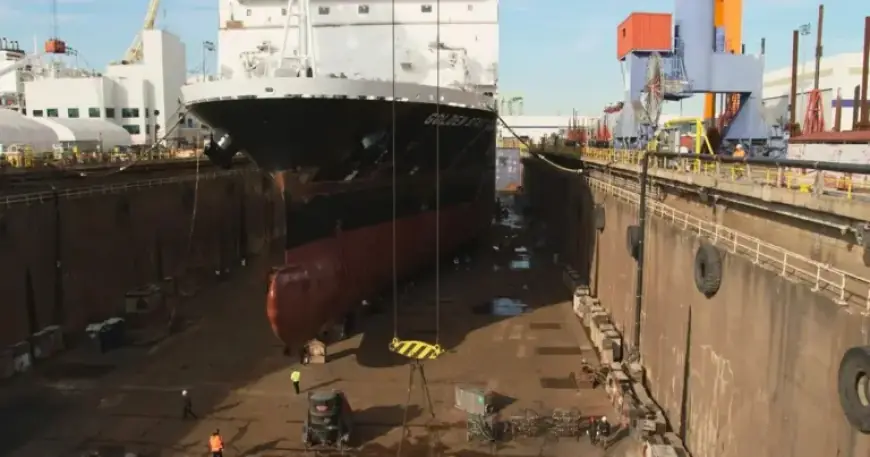
U.S. shipbuilding faces a stark revival challenge. Years of neglect have left the industry unable to meet commercial and military needs.
Strategic Risks and Production Gaps
Experts warn that reliance on foreign shipyards poses national security risks. A conflict affecting shipping lanes could jeopardize energy and goods transport.
China builds roughly 1,000 cargo ships each year. The United States produces about three annually. That gap underscores the scale of the problem.
Philadelphia Yard and Hanwha Investment
One of the last U.S. yards building large commercial vessels sits in Philadelphia. It is one of two remaining facilities of that scale in the country.
Hanwha, a South Korean shipmaker, bought the Philadelphia yard in 2024 for $100 million. The firm invested another $100 million and plans up to $5 billion more.
Current Output and Ambitions
The Philadelphia yard currently delivers about one to 1.5 ships per year. Hanwha’s Korean yard delivers roughly one ship per week.
Hanwha aims to scale Philadelphia to as many as 20 ships annually. The company plans to expand the workforce by 7,000 to 10,000 workers.
Workforce and Training Challenges
Skilled labor shortages threaten expansion. Welders and pipe-fitters are in short supply across U.S. shipyards.
The Philadelphia training program can take only about 20 new hires at once. Apprenticeship still requires roughly three years to fully train a worker.
Hanwha has sent 50 trainers from Korea to Philadelphia. The Korean yard trains about 400 workers at a time and uses virtual reality tools.
Costs, Components, and Timelines
Key ship components, such as propellers and engines, often come from overseas. Importing parts extends build times and raises costs.
Ships that take six months to build in Korea or China can take twice as long in the U.S. Costs here can be roughly five times higher.
LNG Shipping Paradox
The United States is the world’s largest natural gas producer. Yet it does not build any domestic LNG carriers.
Exports move on foreign-flagged ships to more than 30 countries. Domestic coastal transport falls under the Jones Act, which requires American-built vessels for trade between U.S. ports.
An LNG carrier costs about $260 million to build in Asia. In the United States, estimates run near $1 billion. That divergence makes domestic coastal LNG shipments uneconomical.
Military Shipbuilding and Submarines
The U.S. submarine fleet is aging, and domestic construction lags. Hanwha builds military vessels and submarines in Korea.
The company has offered to build submarines in the United States, including at the Philadelphia yard. Executives say they can transfer expertise to help revive U.S. capacity.
Policy Tensions and International Offers
The federal government has declared shipbuilding a priority. On April 9, 2025, the president signed an executive order creating a multi-agency action plan and a White House office of shipbuilding.
At the same time, tariffs and immigration policies complicate revival efforts. A 50% tariff on steel raises input costs for domestic shipbuilders.
Critics note that higher steel prices reduce competitiveness. They also argue restrictive visa policies limit the skilled labor available for complex ship construction.
Incidents and Diplomatic Responses
An ICE raid at a Georgia plant last September removed about 300 Korean technicians and engineers. The action prompted concern among foreign partners.
Seoul proposed major investment instead of facing threatened tariffs. South Korea’s president offered roughly $150 billion to help revive U.S. shipbuilding capacity.
Recent Measures and Outlook
The administration temporarily waived the Jones Act for 60 days to ease domestic energy transport. Officials framed shipbuilding as integral to national security.
Industry leaders say scaling production and modernizing yards can reduce per-ship costs. Hanwha points to its Korean operations as a template for rapid, automated production.
Filmogaz.com will continue covering developments as policymakers and private firms work to rebuild American shipbuilding capacity.