Tottenham’s Past Premier League Relegation Battles: Key Lessons Revealed

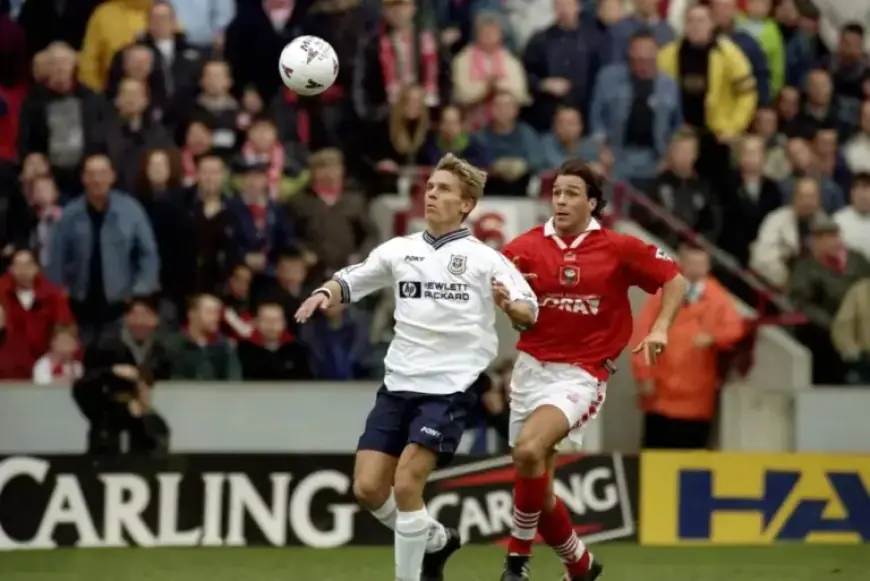
Tottenham Hotspur’s recent struggles recall earlier survival fights. The club’s history offers practical lessons. These include leadership, player accountability and fan unity.
Commercial growth and modern context
Spurs’ finances have transformed since the 1990s. Holsten paid roughly £600,000 per year then.
Today, Tottenham earn hundreds of millions in commercial and TV revenue. Their front-of-shirt deal ranks among the country’s most lucrative.
The club moved into the Tottenham Hotspur Stadium in 2019. The new ground stands on the White Hart Lane site and cost about £1 billion.
Record transfers then and now
In 1997 Tottenham paid a club-record £6 million for Les Ferdinand. Ferdinand had scored 41 league goals for Newcastle across the prior two seasons.
In 2024 Spurs spent roughly ten times that fee to sign Dominic Solanke from Bournemouth. Solanke had not appeared for England since a 2017 substitute cap.
1993-94: a late-season escape
That season Spurs suffered a poor run, losing four of five matches. They travelled to Oldham Athletic for the penultimate game.
The match at Boundary Park was a relegation six-pointer. Tottenham won 2-0 with goals from Vinny Samways and David Howells.
David Howells made 277 league appearances for the club. He later recalled how assistant manager Steve Perryman warned about the stigma of relegation.
1997-98: managerial change and recovery
Gerry Francis resigned as manager in November 1997. He was succeeded by Swiss coach Christian Gross, who had no experience outside Switzerland.
After a 2-0 defeat to Chelsea on April 11, 1998, Tottenham sat 17th. They were only one point clear of Barnsley and Bolton Wanderers in the relegation zone.
With Darren Anderton returning from injury, Spurs went unbeaten in their final five matches. That run included a 1-1 draw at Barnsley and a 6-2 win against Wimbledon in May 1998.
Moments of leadership on the pitch
Players have driven turnaround efforts in past campaigns. Team meetings and collective responsibility played a key role.
Former players argue dressing-room leadership matters more than managerial changes. Accountability and work rate proved decisive.
Recent examples from Europe
Spurs have shown they can adapt for knockout football. Key performances included a 2-0 away win at Eintracht Frankfurt.
The team also managed tough ties against Bodo/Glimt and reached a continental final. Leaders such as Micky van de Ven and Cristian Romero influenced tactical tweaks.
Supporters and unity
The Change for Tottenham group has campaigned against the club’s owners and board. Members planned a protest ahead of a match with Nottingham Forest.
That protest was shelved to encourage unity in the stands. Supporters recognised that hostility in home games had not helped results.
What the past teaches the present
With one point and two places separating Spurs from the relegation zone, history matters. Tottenham’s past Premier League relegation battles offer clear lessons.
- Leadership on and off the pitch can change a run of results.
- Players taking accountability improved performances in past seasons.
- Fan unity at crucial moments can reduce pressure on the squad.
| Season | Crucial Match | Outcome | Key Figures |
|---|---|---|---|
| 1993-94 | Oldham Athletic (Boundary Park) | 2-0 win | Vinny Samways, David Howells, Steve Perryman |
| 1997-98 | Barnsley; Wimbledon | Unbeaten final five; 6-2 win | Darren Anderton, Christian Gross |
| 2019–2024 | Stadium move; Europa League runs | New stadium; European final | Micky van de Ven, Cristian Romero |
Filmogaz.com analysis: Tottenham must combine leadership, work ethic and supporter unity. Those are the key lessons to avoid a repeat of past peril.