Scientists Discover Pristine Archaeopteryx Fossil, Unraveling Dinosaur Flight Mystery

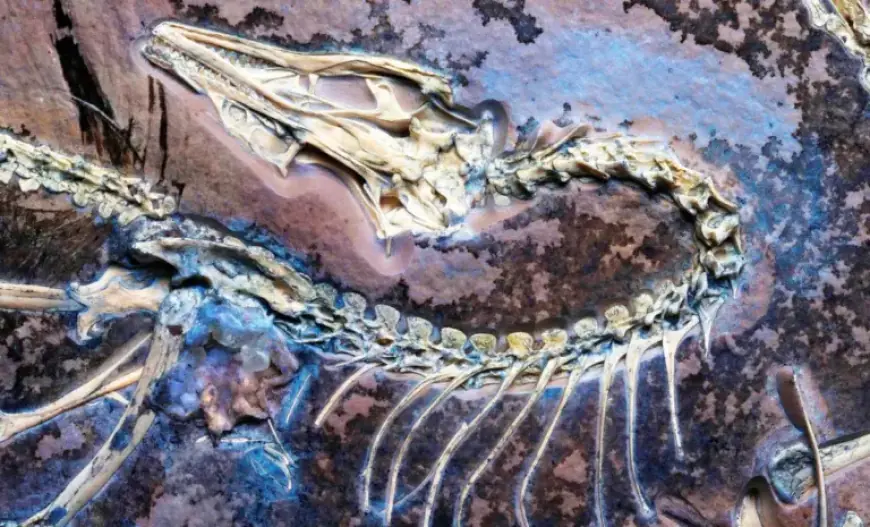
Discovery and context
The fossil comes from the Solnhofen limestone of Germany. It is the smallest Archaeopteryx yet found, about pigeon-sized. Researchers have nicknamed it the Chicago Archaeopteryx.
Archaeopteryx has been studied for more than 160 years. This pristine Archaeopteryx fossil adds anatomical detail that previous finds lacked.
Preparation and imaging
Scientists used high-resolution CT scanning to map the bones in three dimensions. The scans guided delicate preparation and prevented accidental damage.
Under UV light, soft tissues fluoresced and became visible. That technique helped reveal integumentary details in the feet, hands, and wings.
Technical findings
CT images showed exact distances between bone and rock. At one point, researchers noted bone lying just 3.2 millimeters below the surface.
The preparation team alternated scanning with careful mechanical work. This approach preserved feathers and other fragile structures.
Anatomy and flight implications
The fossil preserves long tertial feathers on the upper arm. Such feathers are important for lift in modern birds.
Those details support the idea that Archaeopteryx could generate aerodynamic forces. The specimen provides strong evidence for early powered flight or advanced gliding.
Broader evolutionary impact
These results suggest flight capabilities evolved in stages among theropod dinosaurs. The new data also keep open the possibility that flight evolved more than once.
Lead author Jingmai O’Connor and colleagues say the specimen expands what scientists know from the tip of the snout to the tail tip. The find narrows the dinosaur flight mystery many researchers have pursued.
Credits and next steps
Photography and imaging work were credited to staff at the Field Museum, including Delaney Drummond. Life restorations were produced by artist Michael Rothman.
Further study will test how the wing and feather architecture translated into airborne movement. Scientists will continue to use CT and UV methods on Solnhofen fossils.
Filmogaz.com will follow developments as researchers analyse this pristine Archaeopteryx fossil and continue unraveling the dinosaur flight mystery.