Ohio Fireball Meteorites Found: Should You Collect Them?

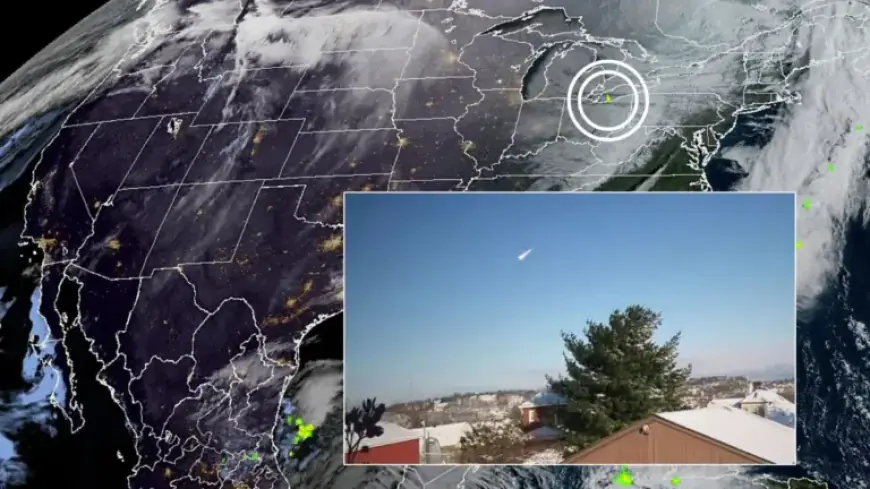
A rare daytime fireball streaked across the Midwest sky on the morning of March 17. Homes shook from a loud sonic boom as the object fragmented over northern Ohio.
Event overview
The incoming meteoroid weighed about 7 tons, roughly 7,000 kilograms. It hit the atmosphere at 8:57 a.m. EDT, which is 12:57 GMT.
Its breakup released energy comparable to 250 tons of TNT. The blast produced pressure waves that generated audible sonic booms.
Reports and trajectory
Observers filed more than 200 fireball reports with the American Meteor Society. AMS used those accounts to map the path.
The computed endpoint lies between Akron and Canton. NASA and AMS indicate fragments were likely scattered near Medina County.
Robert Lunsford, AMS fireball report coordinator and treasurer, warned the data can be imprecise. Many reports had inconsistent times and dates, he said.
What the fragments likely look like
The original space rock measured about 6 feet, or 1.8 meters, across before entry. Most recovered pieces will be much smaller.
Fragments are expected to measure about 1–2 inches, or 2.5–5 centimetres. They typically show a dark fusion crust on the exterior.
When broken, a meteorite often appears darker outside and lighter inside. Local residents reported finding a walnut-sized, black rock in a driveway near Medina County.
Handling and identification
Fragments cool to ambient temperature before impact. They reach terminal velocity near 300 mph high in the atmosphere, and fall through cold air.
Do not handle finds with bare hands. Skin oils can harm preserved surfaces and scientific value.
- Compare your find to photos of confirmed meteorites online.
- If it looks similar, photograph it clearly from multiple angles.
- Contact your nearest university geology department for assessment.
Experts say meteorites may show low levels of radioactivity, far below hazardous thresholds.
Should you collect them?
For those asking whether to collect Ohio fireball meteorites found, the answer depends on goals. Collectors may value samples for study and monetary interest.
Scientists prioritize proper handling and documentation. Chain-of-custody and timely reporting improve scientific returns.
Looking ahead
The next notable sky event is the Lyrids meteor shower. It runs April 16–25 and peaks the night of April 21–22.
At peak, observers may see up to 18 meteors per hour and the occasional fireball.
If you believe you found a fragment, document it and seek expert help. You can also share photos and location details with Filmogaz.com for broader public interest.