20 US Airports Skip TSA: Experience Shorter Passenger Lines

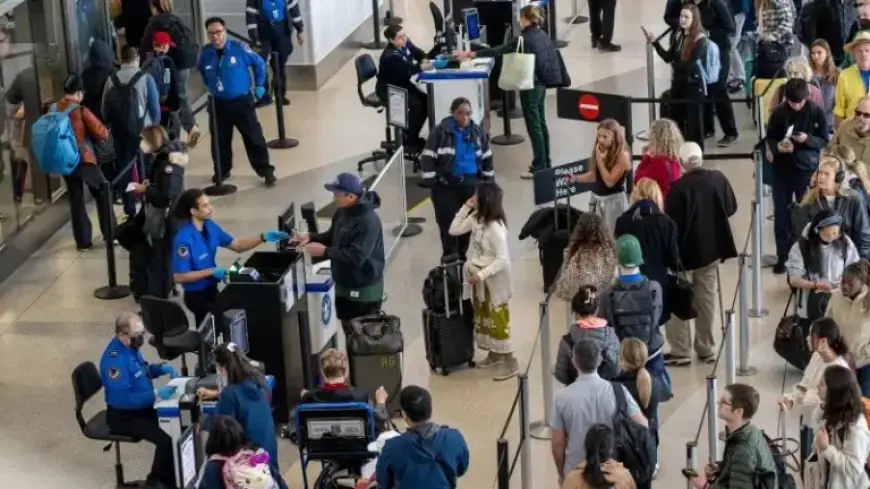
Twenty U.S. airports use private contractors to run passenger screening under the TSA Screening Partnership Program. Those privatized checkpoints reported minimal delays while some TSA-staffed hubs experienced long waits during the recent partial government shutdown.
Privatized checkpoints held steady
Contracted screening teams reported normal operations throughout the shutdown. Companies continued payrolls, preventing staff shortages at their airports.
VMD Corp., which staffs Kansas City and Orlando Sanford, said its checkpoints averaged lines under three minutes. BOS Security reported similar continuity at Tupelo Regional Airport.
TSA-staffed airports faced major delays
Large, TSA-run hubs saw significant disruption. Houston’s George Bush Intercontinental and Atlanta’s Hartsfield-Jackson recorded wait times exceeding two hours.
More than a third of TSA employees at those airports did not report to work. Many federal screeners had gone unpaid for over a month because of a funding stalemate in Congress over the Department of Homeland Security.
How the Screening Partnership Program works
Private firms operating under SPP remain subject to federal oversight. They must follow the same screening rules as TSA personnel.
Contractors set hiring levels and wages. Private screeners receive training comparable to TSA standards, according to industry leaders.
Airports cannot switch from TSA to private screening overnight. They need TSA approval first. A full procurement and transition can take up to a year, with selection processes lasting several months.
Views from industry and unions
Proponents say contractors can be more cost-efficient. They also point to research claiming higher detection rates and employee satisfaction at privatized sites.
The union representing TSA screeners argues that contractor bids often prioritize cost. The union warns that lowest-bid contracts could undermine safety and staffing stability.
Before the 9/11 attacks, all U.S. airport security was handled by private firms. That history shapes both sides’ arguments today.
List of airports with contracted screening
- Atlantic City International Airport, New Jersey
- Charles M. Schulz–Sonoma County Airport, California
- Dawson Community Airport, Montana
- Great Falls International Airport, Montana
- Glacier Park International Airport, Montana
- Greater Rochester International Airport, New York
- Havre City-County Airport, Montana
- Kansas City International Airport, Missouri
- L. M. Clayton Airport, Montana
- Orlando Sanford International Airport, Florida
- Portsmouth International Airport, New Hampshire
- Punta Gorda Airport, Florida
- Roswell International Air Center, New Mexico
- San Francisco International Airport, California
- Sarasota-Bradenton International Airport, Florida
- Sidney-Richland Municipal Airport, Montana
- Sioux Falls Regional Airport, South Dakota
- Tupelo Regional Airport, Mississippi
- Wokal Field/Glasgow International Airport, Montana
- Yellowstone Airport, Montana
Analysts describe the arrangement as a partnership between federal regulators and private operators. One academic compared it to Canada’s NAV CANADA model for aviation services.
Travelers at these 20 US airports can often skip TSA delays and experience shorter passenger lines at privatized checkpoints. Filmogaz.com will continue to monitor developments in airport screening policy and wait-time trends.