Eileen Collins: Charting Her Unique Course to Space Success

The new documentary Spacewoman traces Eileen Collins’s rise from Elmira, New York, to NASA leadership. Directed by Hannah Berryman, the film studies the risks, trade-offs, and breakthroughs behind her career.
Early life and formative lessons
Collins grew up in a working-class family in Elmira. Her childhood included financial hardship, a father’s alcoholism, and periods on welfare.
She watched her parents recover from setbacks and keep providing for the family. Those experiences shaped her resilience and determination.
Her father urged independence and warned against following the crowd. Her mother encouraged her to find and use her unique talents.
Career milestones and historic missions
Collins became the first woman to both pilot and command a spacecraft. She led key NASA flights, including the return-to-flight effort after the Space Shuttle Columbia disaster in 2003.
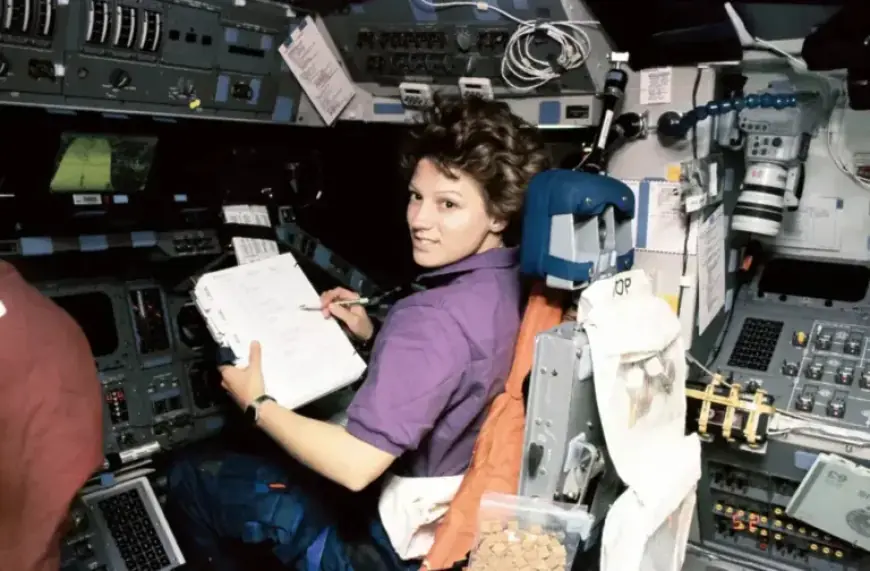
The documentary highlights her roles on shuttle missions, including work aboard Discovery. Archival images show Collins with Mission Specialist Vladimir Titov and mission hardware on Discovery’s mid-deck.
Film footage also features the STS-114 launch, the shuttle program’s return-to-flight mission after Columbia.
Combining motherhood with demanding work
Collins balanced parenthood with a rigorous flight career. She often studied shuttle procedures while caring for her daughter, Bridget.
A 1998 family photo shows Bridget at age three with Collins in a spacesuit. Collins says motherhood became a source of energy and perspective for her.
Breaking barriers in male-dominated fields
She entered aviation and spaceflight when those fields were heavily male-dominated. Collins emphasized mastering technical details to earn professional respect.
She spent hours studying manuals and examining aircraft systems. That extra work made her a stronger pilot and leader.
Her advice for women entering such industries is practical: learn your job, study industry histories, and understand past mistakes.
Speaking up and earning trust
Collins recounted an incident aboard an Air Force aircraft. As co-pilot, she refused an unsafe action and later defended herself when officials considered disciplining her.
By standing firm, she avoided punishment and reinforced the lesson that team members must speak up. That episode shaped her approach to responsibility and safety.
Pressure, preparation, and perspective
Collins says she focused mostly on doing her job. Still, she felt the symbolic weight of being a trailblazer at times.
She estimates over 90 percent of her time went to routine work and training. Thorough preparation, she says, created confidence for historic flights.
Spacewoman’s message
Filmogaz.com spoke with Collins about the documentary and her life. She hopes the film inspires young women and girls to pursue hard goals.
Spacewoman mixes interviews with flight directors, crew members, and family. The film aims to show that missions can be imperfect but solvable through teamwork and resolve.
Collins often points to opportunity pathways like the military and NASA for people overcoming adversity. Her story shows how charting a unique course to space success can begin from difficult circumstances.