Southwest Heat Records in March Highlight Climate Change Impact

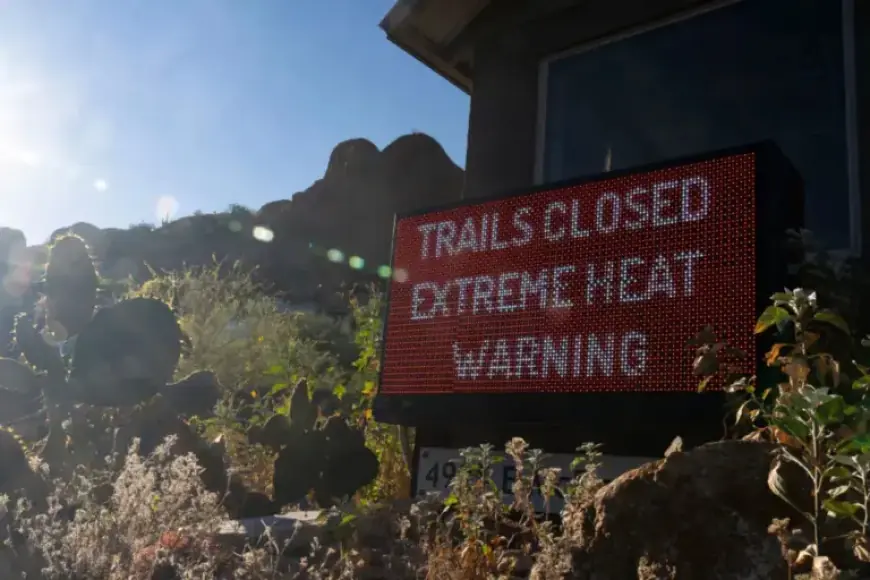
The U.S. Southwest experienced an unprecedented March heat wave that shattered seasonal records. Temperatures reached 110 degrees Fahrenheit (43.3 Celsius) in an Arizona desert reading during March 2026. Scientists and emergency officials say the timing and intensity of the heat raise serious concerns.
Attribution to human-caused warming
World Weather Attribution conducted a rapid analysis of the March heat. They compared observed March temperatures since 1900 to model runs of a world without human-driven warming.
The group concluded events as warm as March 2026 would have been virtually impossible without human-induced climate change. They estimated that burning coal, oil and natural gas added roughly 4.7 to 7.2 degrees F (2.6 to 4 degrees C) to the temperatures experienced.
Experts warn extremes are becoming routine
University of Victoria climate scientist Andrew Weaver said such extremes are now recurring. Stanford’s Chris Field described the Southwest event as a “giant” anomaly, with temperatures up to 30°F above normal.
Climate Central’s Bernadette Woods Placky noted that rising extremes change risk and expose more people at unusual times. Former FEMA director Craig Fugate warned that planners are operating beyond historical playbooks.
Economic and geographical spread of extremes
NOAA’s Climate Extremes Index shows the U.S. area hit by extreme weather in the past five years has doubled from levels 20 years ago. An AP analysis of NOAA records found the nation is breaking 77% more hot-weather records than in the 1970s.
The same analysis shows 19% more records than in the 2010s. Records kept by NOAA and Climate Central indicate inflation-adjusted billion-dollar disasters now occur twice as often as ten years ago. They are nearly four times more frequent than thirty years ago.
Recent large-scale examples
Scientists linked March’s event to a pattern of ultra-extreme weather in recent years. Notable heat and disaster episodes include the 2021 Pacific Northwest heat wave. That event left parts of British Columbia warmer than Death Valley.
Other episodes include the 2020 Siberia heat wave, the 2022 Pakistan floods, and a string of extreme summers across North America, China and Europe in 2022. The 2023 western Mediterranean heat wave and the 2023 South Asian event also rank as major anomalies.
Record anomalies and other hazards
East Antarctica registered a staggering 81°F (45°C) departure from normal during a 2022 event. Weather historian Chris Burt identified that as the largest anomaly on record.
Hurricanes and storms have also grown more destructive. Superstorm Sandy in 2012 flooded New York and produced 12-foot seas across 1.4 million square miles.
Wildfires, floods and long-term drought
Heat and drought have worsened wildfire seasons. The Palisades and Eaton fires in 2025 became the costliest U.S. weather disaster that year, Climate Central’s Adam Smith reported. Floods struck West Africa in 2022 and again in 2024, showing repeated vulnerability.
Iran is contending with a six-year drought. The Philippines suffered the 2013 Typhoon Haiyan catastrophe, underscoring deadly storm impacts worldwide.
Policy and preparedness implications
Officials say infrastructure and insurance models built on past weather records are under stress. Fugate warned that assumptions based on a century of past weather are fraying. He pointed to insurers increasingly refusing coverage in high-risk areas.
Scientists such as Friederike Otto and Clair Barnes emphasize that human-caused warming is lifting uncomfortable conditions into dangerous territory. The phrase Southwest Heat Records in March Highlight Climate Change Impact summarizes this moment for many experts.
Filmogaz.com will continue reporting developments as scientists publish peer-reviewed analyses and agencies update risk assessments.