2026 LEGO SMART Brick Teardown Reveals New Innovations

LEGO introduced a new SMART brick in early March 2026. The piece resembles a classic 2×4 stud brick. It packs sensors, LEDs, NFC and Bluetooth into a small shell.
A 2026 teardown of the LEGO SMART brick reveals several small innovations inside the module. The brick aims to add interactivity to builds. It also supports mesh-style connections between similar bricks.
How the brick is sold and examined
Officially, the brick is available inside the ‘Smart Play’ set. Individual bricks briefly appeared for sale on eBay. A detailed teardown video was published by EvilmonkeyzDesignz on YouTube.
Footage and disassembly notes were also shared earlier by Reddit user PsychologicalYak4619. Filmogaz.com reviewed the available analysis and images.
Physical design and opening
The unit charges inductively, so its enclosure is tightly sealed. Opening the shell requires destructive techniques. The top cap is transparent and hides internal components.
Internal layout
- A speaker sits directly beneath the transparent top.
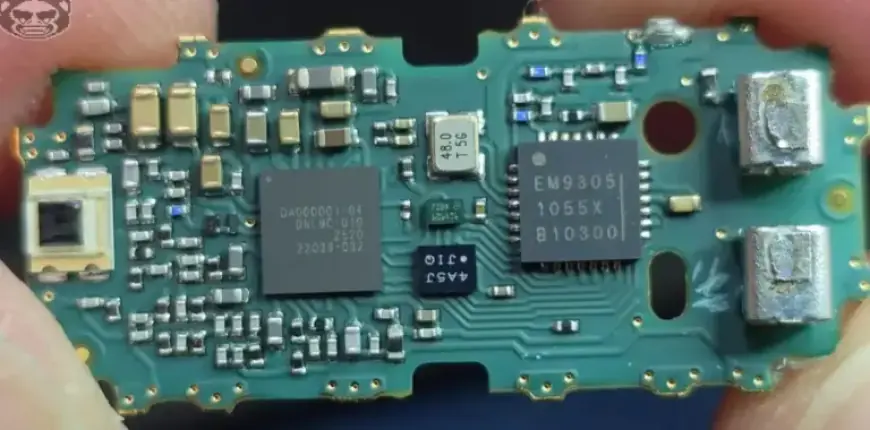
- The main body houses a PCB with a microphone and several RGB LEDs.
- A photo sensor sits on the PCB opposite the LEDs.
- Copper wires wrap around the main assembly and press into side pads without solder.
Key silicon and memory
The teardown identified a Bluetooth 5.4 system-on-chip. It is marked EM9305 from EM Microelectronics. A 16 Mb Winbond SPI Flash chip is also present.
The advertised custom application ASIC is marked DA000001-04. It uses a flip-chip package, making the die easy to image. Visible die markings include letters that resemble CSEM.
No separate RAM chip appears on the PCB. This suggests the application ASIC contains internal memory. The SPI Flash may store firmware for the ASIC or the Bluetooth SoC.
What remains unknown
The ASIC’s internal architecture and full capabilities remain unclear. Die images do not reveal conclusive design attribution. Firmware extraction could yield more insight.
Durability and environmental concerns
The well-sealed construction limits repair and component replacement. If a component fails, the brick can become electronic waste. The built-in lithium-ion battery is of particular concern.
Li-ion cells typically begin to degrade after about two years of use. That battery life could define the brick’s usable lifetime. The battery may also trigger regulatory scrutiny under new EU rules coming into effect next year.
Final notes
The teardown confirms a compact, feature-rich module. It combines audio, light, sensing, NFC and wireless networking in a 2×4 form. The custom ASIC remains the most intriguing element uncovered.