Winston Churchill and Donald Trump Spark Fresh Scrutiny of the U.S.-UK ‘Special Relationship’

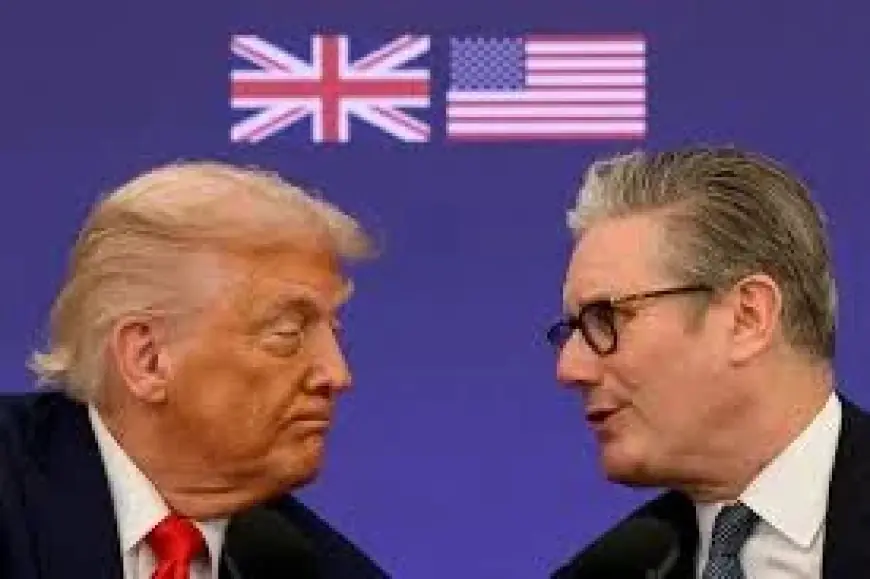
winston churchill is at the center of renewed debate this week as new commentary revisits the origins of the U. S. -UK “special relationship” and questions how resilient it would be under renewed political strain. The discussion is being propelled by pieces that frame Britain’s evolving view of the United States, the legacy of wartime-era alignment, and what shifting national security strategies could mean for international partners and global business.
Winston Churchill’s ‘Special Relationship’ Under a New Political Lens
A fresh round of analysis places winston churchill’s role in creating the “special relationship” at the forefront, while posing a pointed question about whether Donald Trump could damage that longstanding framework. The premise reflects a broader uncertainty about whether political leadership changes—especially in Washington—can alter the assumptions that have historically underpinned close cooperation between the two countries.
The renewed attention is notable not because it introduces a newly confirmed policy shift, but because it underscores how historical narratives are being used to interpret the present. By centering winston churchill in the conversation, the commentary signals that the relationship is being discussed not only as day-to-day diplomacy, but as an identity-defining bond whose durability is now being openly tested in public debate.
Britain’s ‘America Problem’ Moves From Private Anxiety to Public Argument
One major strand of the current conversation argues that Britain is increasingly ready to acknowledge it has an “America problem. ” Framed as an opinion-driven assessment, the argument suggests a shift in tone: less a quiet strategic concern and more a public-facing debate about the costs, risks, and expectations tied to close alignment with the United States.
While the details of that “problem” are not laid out here beyond the headline framing, the thrust is clear: the relationship is being examined through a more skeptical lens than a simple celebration of shared history. In practice, that kind of argument can signal a change in the domestic political space—where questions about dependency, reliability, and national interest gain traction even without an immediate triggering event.
This is a debate about perception as much as policy. The implication is that the U. S. -UK relationship may face pressures not only from government decisions but also from a changing public conversation about what Britain should expect from the United States, and what it should do when expectations are not met.
National Security Strategy and Global Business Implications
Alongside the historical and political framing, a separate analysis highlights the practical angle: navigating U. S. and UK national security strategies and what that means for global business. The emergence of this theme alongside the broader debate points to a common reality for companies operating across borders—national security strategy is not abstract. It influences planning, risk management, and assumptions about stability and cooperation between governments.
The juxtaposition of these perspectives—historic legacy, political durability, and strategic implications—captures the essence of the current moment. The “special relationship” is being treated both as a cultural idea tied to figures like Winston Churchill and as an operating environment with direct consequences for decision-makers watching the direction of Washington and London.
What remains unclear from the available material is whether the discussion is tied to any single immediate policy move or event. Instead, the headlines indicate a broader reassessment: a public debate about resilience, leadership, and alignment, paired with an emphasis on how strategic shifts can ripple into the business world.
For now, the clearest development is the convergence of these themes in near-simultaneous commentary—suggesting that questions about the U. S. -UK bond are not confined to history or politics alone, but are increasingly being framed as a live issue with real-world implications.