Catherine Connolly Warns Ireland Against ‘Normalisation of War,’ Invokes UN Charter In St Patrick’s Day Message

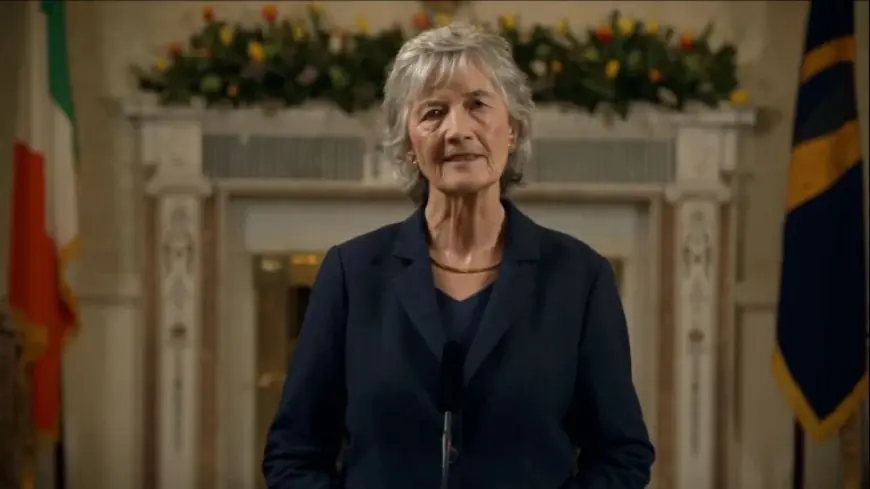
Irish President catherine connolly used her St Patrick’s Day message to warn that “The normalisation of war can never be accepted. Now, more than ever, we must renew our commitment to peace and diplomacy. ”
Catherine Connolly’s St Patrick’s Day Message
In her holiday remarks, the President urged a recommitment to peaceful resolution of conflict and signaled that the tradition of the day should be paired with a clear moral stance on war and peace. Her statement emphasized that embracing conflict as routine or inevitable risks eroding the international norms that have guided states since the mid-20th century.
The message was accompanied by a St Patrick’s Day card that reproduced language from the United Nations charter seeking to “save succeeding generations from the scourge of war” and uphold international law. The card’s design features front cover artwork by Éadaín Madigan, with the UN text placed on the inside to anchor the broader theme of peace.
On the back, the President included Article 29 of the Irish Constitution, underscoring Ireland’s stated commitment to the “pacific settlement of international disputes” and to internationally recognised legal principles in its dealings with other states. A third-page greeting read: “May the blessing of St Patrick’s Day light the path of peace across the world. ”
Card Highlights UN Charter And Irish Constitution
The constitutional passages shared by the President set out Ireland’s foreign policy ethos in clear terms. They include: “Ireland affirms its devotion to the ideal of peace and friendly co-operation among nations founded on international justice and morality. Ireland affirms its adherence to the principle of the pacific settlement of international disputes by international arbitration or judicial determination. Ireland accepts the generally recognised principles of international law as its rule of conduct in its relations with other States. ”
By pairing these constitutional pledges with founding UN text, catherine connolly framed St Patrick’s Day not only as a cultural celebration but also as an occasion to reiterate Ireland’s long-stated position on diplomacy and legal norms. The approach mirrored the tone of her holiday remarks, which rejected any drift toward accepting conflict as a default condition.
Government Response And Recent Context
The President’s emphasis on international law comes after earlier comments this month highlighting what she described as “violations of international law” that are “shocking and numbing, ” paired with a call that “we cannot afford inaction. ” In those remarks, she did not name either the UN or Israel but said: “What we have witnessed in recent days in the Middle East, and beyond, are not political disputes. They are deliberate assaults on international law, the international laws that have underpinned global peace for eighty years. We must name them as such, without euphemism and without equivocation. ”
Following those statements, a Government spokesperson noted that the responsibility for foreign affairs rests solely with the Government, while also pointing out that successive Irish governments have voiced support for international law—an emphasis described as especially important for a small country. Later, Tánaiste Simon Harris clarified that the President had a right to speak on issues that concern her.
The President’s International Women’s Day speech also featured the full text of Article 29 of the Constitution, echoing the same foundational themes later included in her St Patrick’s Day card. The consistent focus on legal principles and peaceful dispute resolution tied both interventions together, reinforcing a message centered on the role of law in sustaining global order.
With the St Patrick’s Day address and the accompanying materials, Catherine Connolly amplified a stance grounded in international law and constitutional commitments. The latest message indicates a continued effort to connect national celebrations with a broader call for diplomacy and the rejection of war’s normalisation—an appeal likely to shape public discussion in the days ahead.