Banksy Identité Revelation in Bristol Sparks Questions About Anonymity

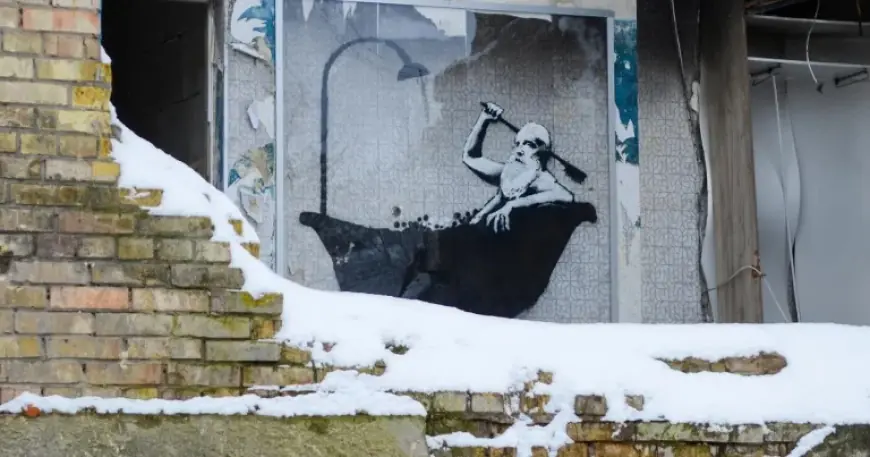
A lengthy investigation published on March 13, 2026 has ignited fresh debate over the long-standing mystery of banksy identité, asserting that the anonymous street artist is Robin Gunningham, who is said to have later adopted the name David Jones.
Banksy Identité: Investigation Names Robin Gunningham
The agency published a year-long inquiry on March 13, 2026 that asserts new evidence points to Robin Gunningham as the individual behind the Banksy pseudonym. The investigation identifies Gunningham as born in Bristol in 1973 and formerly educated at the Bristol Cathedral School, and says he changed his name a few years ago to David Jones. The name Robin Gunningham had previously been suggested in 2008 by a British tabloid, and ‘ work is presented as a follow-up that brings additional documentation and corroboration to that earlier hypothesis.
Local Roots and the Bristol Connection
Local coverage highlights the significance of the claim for Bristol, long seen as the likely origin of the artist’s work. The Bristol Post has tracked the developments closely, noting that Banksy was widely believed to hail from the city and to be older than fifty. The city connection aligns with the account that the artist was an active member of a group of street artists whose work reshaped Bristol’s streets in the 1980s before similar work appeared in London, Los Angeles and New York.
Contested Elements, Alternate Theories and Unresolved Questions
The investigation examined competing theories and material evidence while drawing conclusions that some in the community have questioned. The inquiry considered another popular candidate, Robert Del Naja of the group Massive Attack, and concluded that Del Naja is not the anonymous artist but could be a longtime friend or collaborator. The probe also referenced travel-related data tied to a journey to Ukraine in 2022 and connected those movements to murals that appeared in that region around the same time.
Despite the findings, the identity of Banksy remains officially unconfirmed. The artist has not issued a public confirmation, and legal representatives have contested elements of the investigation. Advocates for street artists have raised concerns about the implications of exposing an individual whose anonymity has been presented as central to their practice and a safeguard for freedom of expression. The debate over whether uncovering the person behind the work is in the public interest continues to unfold.
Why This Matters and What Comes Next
The new claims mark a potential turning point in a decades-long story that captured global attention. If the asserted identification is upheld, it could reshape how Banksy’s work is contextualized in both legal and cultural terms. At the same time, unanswered questions remain about evidence, motive, and the potential consequences for others in the street-art community. Observers say the matter will likely proceed through further scrutiny and public discussion rather than immediately resolving the status of anonymity that has long defined the artist’s profile.
For now, the revelation has stimulated renewed scrutiny of the interplay between artistic secrecy and accountability, with Bristol at the center of the conversation and the broader art world watching how debates around identity, authorship and protection of expression develop in the weeks ahead.