Alexander Stubb In London: Europe Won’t Help Trump Because He Didn’t Consult Us

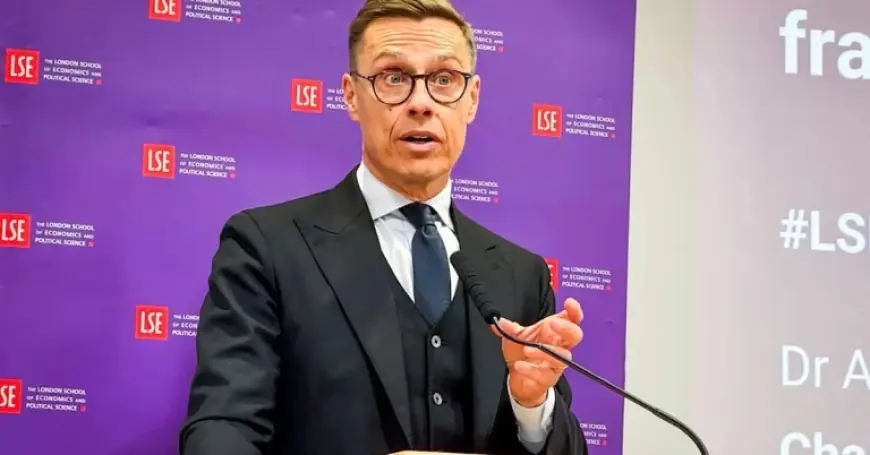
President alexander stubb said it is now crucial to remind President Donald Trump why he needs Europe, arguing that the reluctance of Britain, Germany and France to send forces to the Strait of Hormuz is understandable because they were not consulted in advance.
Alexander Stubb: Consultation, De‑Escalation and U. N. Reform
President Alexander Stubb told students in London that the key reason for Europe’s hesitation is the lack of prior consultation. He said convincing Trump of Europe’s importance is essential, and that partners will react differently when they are not informed beforehand.
Stubb contrasted the current U. S. approach with past conflicts, noting that in Libya, Iraq and Afghanistan the United States exercised military superiority but also consulted international institutions or allies; if those channels failed, it still consulted partners. He said this time the United States did not contact Western allies before striking Iran, and he called for renewed efforts at mediation and de‑escalation, adding that he does not see either the United States or Iran wanting to end the war.
At the same London event Stubb presented proposals to overhaul the U. N. Security Council. He said membership should be doubled, adding one seat from Latin America, two from Africa and two from Asia, and mentioned India as an obvious candidate from Asia. He also argued for removing the veto and for stripping voting rights from any council member that breaches the U. N. Charter.
Europe Weighs Military Options; Finland’s Limits and Capabilities
European foreign ministers are discussing whether to mount an operation to keep shipping lanes through the Strait of Hormuz open, a response driven by U. S. demands that NATO and European partners assist in safeguarding oil transit. President Trump has warned that NATO faces “a very bad future” if members do not help secure the strait, and he has asked allies for minehunters and possibly special forces.
EU officials are evaluating whether to expand the existing Aspides maritime operation, which protects commercial shipping from Houthi attacks in the Red Sea, the Indian Ocean and the Persian Gulf, or to support a separate coalition of willing countries focused on the strait. One EU official attending talks said it is in Europe’s interest to keep the strait open and that discussions are ongoing about what Europe could do.
Finland’s foreign minister stressed that Helsinki is cooperating closely with partners on the question but made clear national capabilities are prioritized for defending NATO’s vital interests. Finland was described as having world‑class expertise in mine countermeasures and is already participating in the Aspides operation, but, as Stubb noted, Finland as a small country does not possess the heavy equipment needed for a large deployment to the region and its duty in the alliance is to secure Europe’s northeast.
The debate exposes a wider tension: U. S. pressure for immediate allied military support to reopen shipping through the strait collides with European caution when consultation and coalition building have been limited. Stubb’s comments and his U. N. reform proposals frame a push for renewed diplomacy and clearer multilateral procedures as the path forward.
Officials continue to assess what capabilities could be made available and whether existing naval missions can be adapted, while leaders emphasize the need to coordinate any steps with partners and to seek ways to reduce tensions rather than escalate them further.