Dlss 5 Unveiled: Nvidia Shows Generative AI Tool for Photorealism and Industry Ambitions

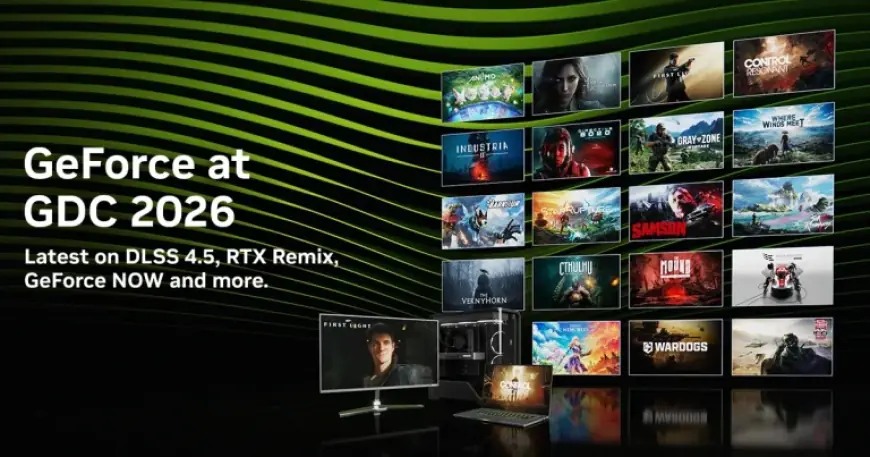
Nvidia used its keynote to introduce dlss 5, a new real-time neural rendering system that combines traditional 3D graphics data with generative AI to produce more photorealistic images while reducing compute. The company presented the system as a bridge between structured game data and probabilistic generative models, and an early technical video is already available for review.
Dlss 5: The Announcement And Early Coverage
Nvidia presented Dlss 5 during its keynote as a next-generation AI graphics technology that infuses pixels with photoreal lighting and materials. An early technical demonstration has been circulated by a technical video outlet, showing how the system operates in real time. The company framed the unveiling as part of a broader set of graphics and AI updates shown around its developer-focused events.
How Dlss 5 Works And Which Developers Are Supporting It
The system pairs controllable 3D graphics — the structured, ground-truth data of virtual worlds — with generative AI models that can predict and fill in parts of an image, allowing GPUs to produce detailed scenes and lifelike characters without rendering every element from scratch. Jensen Huang described the approach as a fusion of “controllable 3D graphics, the ground truth of virtual worlds, the structured data…with generative AI, probabilistic computing. ” He said that combining these two ideas produces content that is both “beautiful, amazing, as well as controllable. “
Nvidia said the initial rollout will include support from multiple major studios and publishers. The company indicated that the technology is coming this fall and named an initial set of partners that will implement the system in their projects.
Why Nvidia Says This Could Extend Beyond Games
Leadership positioned dlss 5 not only as a gaming advancement but as an example of a broader computing shift in which structured datasets are used by AI systems to generate high-value outputs. Huang suggested the same concept could apply to enterprise platforms that manage structured data, arguing that fusing structured information with generative AI will repeat across industries. He pointed to large enterprise data platforms as examples of structured datasets that future AI systems may analyze and generate insights from.
The company underscored that gaming is a smaller portion of its revenue today than in the past, but framed Dlss 5 as a technology with ambitions beyond entertainment — a toolset for rendering and generative tasks that could scale into other compute-heavy fields.
Looking ahead, Nvidia plans wider developer adoption and public demonstrations later in the year, while early technical coverage is now available for those tracking the new approach to real-time neural rendering.