France England Rugby Referee Calls Face Fresh Scrutiny After Chaotic Six Nations Finale

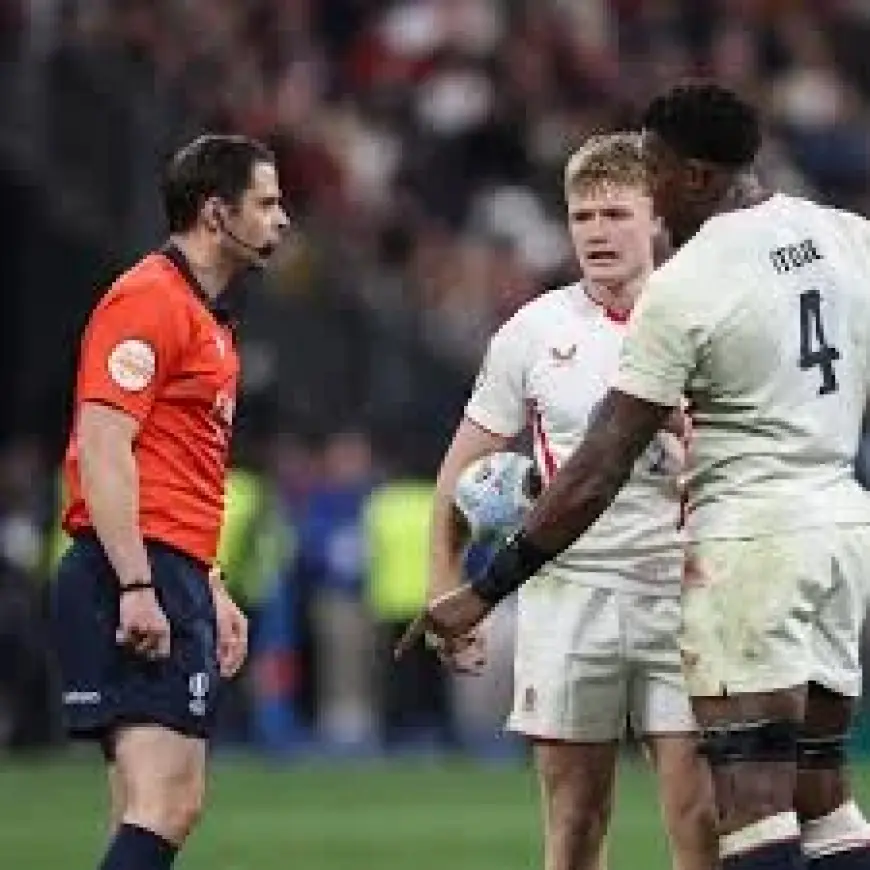
Debate over the france england rugby referee intensified after a wild Six Nations decider in Paris, with key calls and England’s discipline under the microscope as France sealed the title with a last-gasp penalty.
France England Rugby Referee Decisions Under Scrutiny
The match turned on a handful of officiating flashpoints overseen by Georgian referee Nika Amashukeli and the television match official, Brett Conran. The most contentious moment was a first-half penalty try for France and a yellow card to Ellis Genge for collapsing a maul. While that specific collapse warranted sanction, a broader view raised questions: the French jumper appeared to be shielded by teammates as he landed and the maul formed, which would constitute obstruction before the collapse. That potential earlier offence was not picked up on the field, and there was no clear intervention from the TMO.
Confusion also surrounded an incident that preceded one of Louis Bielle-Biarrey’s scores. England believed they were playing under penalty advantage, only for it to be changed to a knock-on advantage during the same passage before France broke out and Bielle-Biarrey finished for his fourth try. An explanation of how that on-the-fly switch aligns with TMO protocol has been called for by observers who felt the sequence warranted clarification.
Beyond those moments, the officiating team managed a ferocious, end-to-end contest with minimal back-and-forth dissent. Amashukeli’s firm stance on dialogue limited on-field debate, a contrast to England’s earlier interactions with a debutant French referee against Italy, when players were frequently in the official’s ear. The france england rugby referee debate now centers on the penalty-try maul setup and the TMO’s role in switching advantage mid-play.
England’s Discipline Costs Them in Paris Thriller
England led 27-17 late in the first half, only for a rapid burst of infringements to swing momentum. Two quick penalties invited French pressure, Genge was sent to the sin-bin for the maul collapse, and the penalty try followed. That brief spell became a turning point, triggering a damaging run of points while England were down to 14.
Game management went astray again at the finish. After Tommy Freeman’s late try edged England ahead 46-45 and with France down a man, England conceded crucial penalties in the final moments. In the closing sequence, infringements by Trevor Davison and Maro Itoje offered France the option of a penalty kick from either of two positions. Thomas Ramos duly converted, clinching the title in the dying seconds.
The wider trend was familiar: across the championship England led the field in penalties conceded, collected eight yellow cards and one red, and shipped 63 points while a player was off the pitch. Those numbers framed Paris as a harsh but unsurprising culmination — a showcase of expansive attack undercut by costly lapses in concentration and technique at critical junctures.
Why It Matters for the Six Nations Picture
France’s victory over England sealed the championship and underscored a campaign defined by breathtaking drama. The champions combined ice-cold late-game composure with explosive strike power, not least from Bielle-Biarrey, whose prolific run included another nine tries to make it 18 from 14 Six Nations appearances. With this triumph, France have now secured back-to-back titles and, if they can tighten their defence, will be among the favourites when the tournament returns.
Elsewhere, a turbulent final round saw Ireland end Scotland’s hopes in Dublin. Wales snapped a three-year winless run in the championship by beating Italy in Cardiff, while Italy themselves notched notable victories in Rome earlier in the tournament. The overall picture was one of fine margins and wild momentum swings — the kind of jeopardy that leaves contenders punished for even brief lapses.
Looking ahead, two threads will draw immediate attention. First, England face a forensic review of their penalty profile, card count and endgame control after surrendering a lead in Paris. Second, competition stakeholders are likely to seek clarity on TMO protocols, particularly around advantage and earlier-phase offences at maul formation, given how those decisions shaped the finale. After a championship that thrilled from start to finish, those adjustments could set the tone for the next edition’s defining moments.