Drone Strike Disrupts Dubai Flights as Iran Continues Gulf Attacks — Dubai Iran War

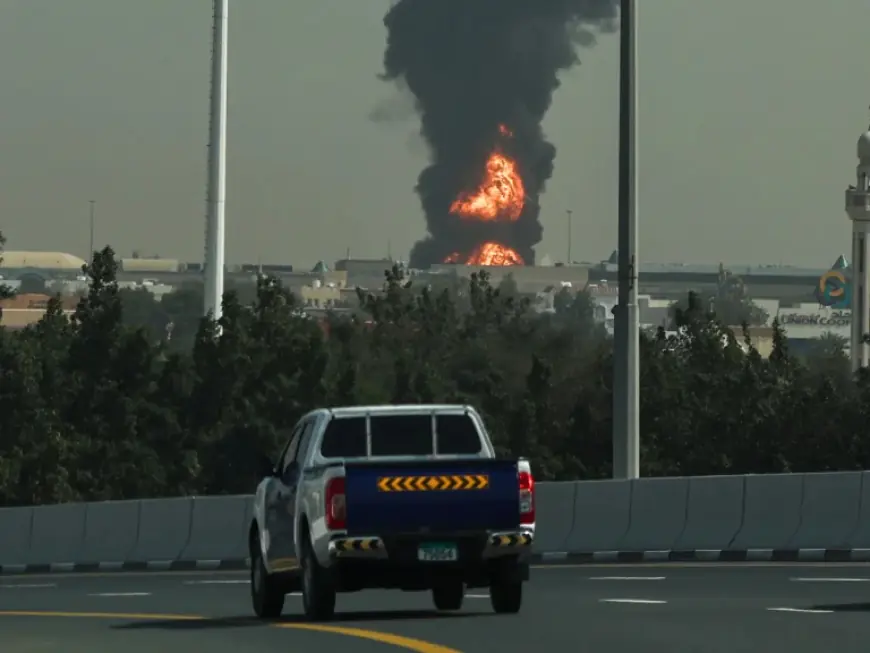
A drone strike near Dubai’s international airport forced diversions and a temporary suspension of flights on Monday, a development in the dubai iran war that damaged a fuel tank area and triggered emergency responses across the emirates. Authorities said civil defence teams contained the blaze and that no injuries were reported so far.
Dubai Iran War: Impact on Flights and Local Infrastructure
Civil defence crews contained a fire resulting from an impact to a fuel tank in the vicinity of Dubai International Airport, and some flights were diverted to Al Maktoum International Airport. The Dubai Civil Aviation Authority temporarily suspended flights at the airport as a precautionary measure to ensure the safety of passengers and staff and did not provide a timeline for resumption.
Earlier in the week, the city media office said two falling drones wounded four people near the airport, and debris from an interception caused a separate minor incident on a building façade in central Dubai. A later drone strike prompted a fire at an industrial zone in Fujairah, and civil defence teams were working to control that blaze with no injuries reported.
Regional Toll, Interceptions and Political Response
The wave of attacks has affected multiple Gulf states. Authorities in Abu Dhabi said a missile fell on a civilian vehicle in the Al Bahyan area and that the incident resulted in one casualty of Palestinian nationality. The UAE’s Ministry of Defence has reported six deaths since the war began on February 28, including four civilians and two military personnel who died in a helicopter crash blamed on a technical malfunction.
Iran has framed its operations as a response to the presence of US military bases in Gulf states after Israel and the US carried out joint air strikes on Tehran on February 28. While much of the incoming fire has been intercepted, the campaign has struck civilian infrastructure, including airports, ports and energy facilities. The UAE has been targeted more than any other country in the conflict, with Iran firing more than 1, 800 missiles and drones at the emirates. All Gulf Arab states have reported in total more than 2, 000 missile and drone attacks since the conflict began.
Leaders of Gulf states have pushed back. The president of the UAE and the crown prince of Saudi Arabia held a phone call condemning the attacks on Gulf Cooperation Council members and reaffirmed their intent to defend their territories. The GCC, joined by the United Kingdom and Jordan, issued a joint statement condemning Iranian aggression and calling for de-escalation.
What Changed and What Comes Next
The immediate change is the temporary suspension and diversion of flights at one of the world’s busiest airports after a drone impact near a fuel tank and subsequent fires in other emirates. Authorities have emphasized containment and passenger safety but have not provided a timeline for restoring normal operations.
With civilian infrastructure repeatedly affected and emergency services stretched across several emirates, officials face ongoing pressure to secure key transport and energy hubs while diplomatic actors press for de-escalation. For now, travel disruptions and defensive interceptions continue to mark the conflict’s spillover into Gulf daily life, and flights remain subject to operational decisions as authorities assess safety.