Who Is Banksy: Reuters Investigation Unmasks Artist as Robin Gunningham

Who Is Banksy is no longer purely a mystery: a detailed investigation by identifies the guerrilla street artist as Robin Gunningham, 51, of Bristol, and traces the steps he took to conceal his identity.
Who Is Banksy: Identifies Robin Gunningham
The investigation concludes that the artist long known as Banksy is Robin Gunningham. The report found that Gunningham changed his name to David Jones in 2008, choosing a name described as one of the most popular in Britain so he could blend into the crowd.
Reporters compiled several strands of evidence. Their reporting drew on a trip to Ukraine where he was photographed and spoke with locals, a falling out with Jamaican photographer Peter Dean Rickards, and a 2000 NYPD arrest report that includes a signed, handwritten confession. also reviewed earlier coverage: Gunningham had previously been identified as Banksy in a 2008 Mail on Sunday piece, but the new inquiry says it pieced together additional forensic elements to reach its conclusions.
The investigation additionally addressed a long-standing alternative theory that the artist was Robert Del Naja, frontman of the Bristol group Massive Attack. That theory was challenged by the reporting, which found Del Naja was also in Ukraine in 2022 but that he was there with Gunningham.
How He Hid In Plain Sight
Central to the report’s narrative is the decision by Gunningham to adopt the name David Jones. The change was framed as a deliberate tactic to avoid identification: the report states the name is so common it helps him hide in plain sight. The inquiry marshalled documentary and witness evidence to show how that name change fit into a larger pattern of evasive steps tied to his public anonymity.
A spokesperson for Banksy did not respond immediately to requests for comment. The artist’s lawyer, Mark Stephens, said the client “does not accept that many of the details contained within your enquiry are correct. ” Stephens added that Banksy has been subjected to “fixated, threatening and extremist behavior, ” and argued that working anonymously or under a pseudonym serves vital societal interests by protecting freedom of expression, particularly on sensitive issues such as politics, religion and social justice.
Legacy, Market Impact and the Debate Over Naming
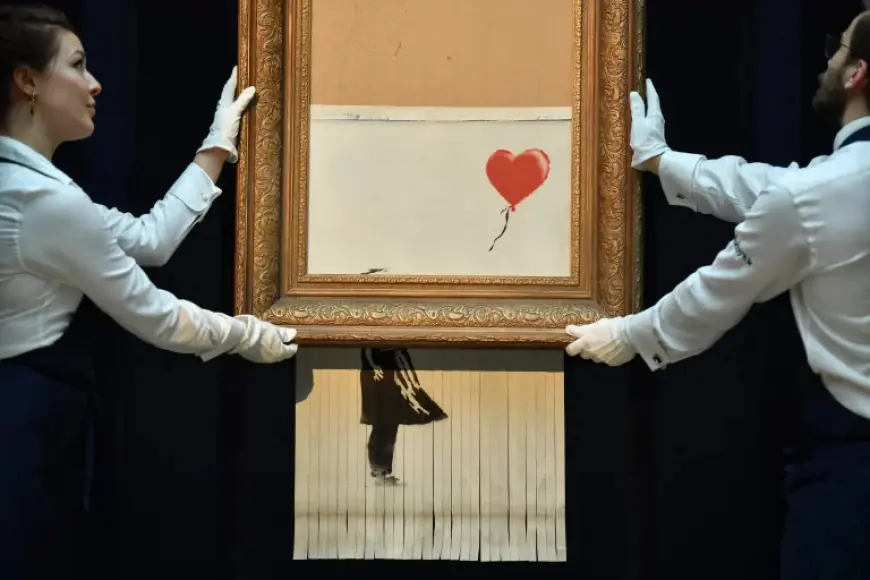
The investigation arrives against a backdrop of intense interest in Banksy’s influence on culture and the art market. The artist’s works have sold for millions of dollars. Among the best-known pieces is “Girl With Balloon, ” a simple stencil of a child letting go of a red heart-shaped balloon that has been widely celebrated in public polls and critical discussion.
That design was central to a high-profile 2018 stunt when a framed copy of the work was partially shredded immediately after it sold at auction. The artist later embraced the altered piece, renaming it “Love Is in the Bin, ” which was subsequently sold for $25. 4 million in 2021.
defended its decision to name the artist, arguing the public has a deep interest in understanding the identity and career of a figure with profound and enduring influence on culture, the art industry and international political discourse. The story leaves unresolved questions about motive and consequence: the lawyer’s denial of many details and the artist’s continued emphasis on anonymity frame the likely next steps as legal and reputational responses rather than immediate resolution of all disputed facts.
The investigation’s authors say their conclusions rest on the assembled forensic evidence and reporting. The artist’s legal team rejects parts of that account, and the public debate over anonymity, accountability and the art market’s appetite for mystique is expected to continue.