Jessie Buckley Cats Controversy Sparks Debate Over Whether a Dislike Matters for Oscar Buzz

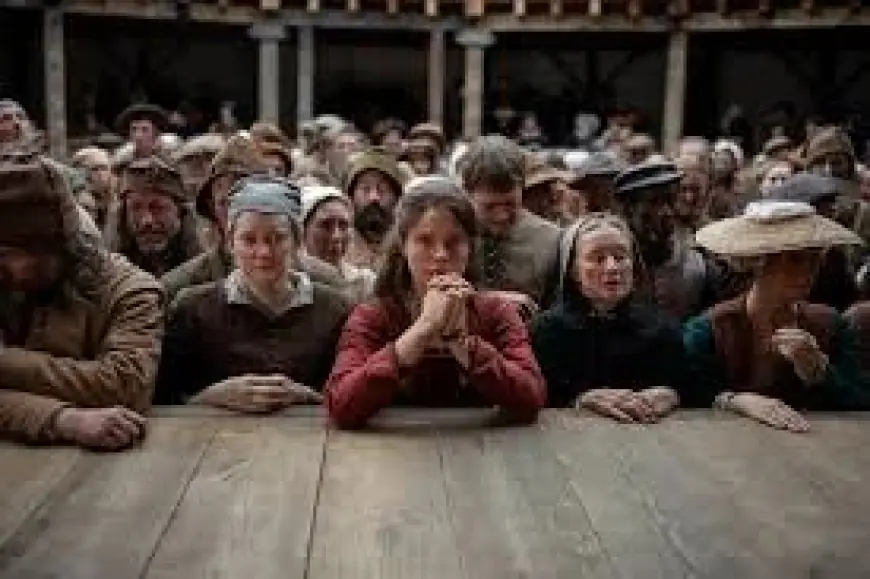
Jessie buckley cats has become an unlikely flashpoint after fresh coverage highlighted that the Hamnet star said she doesn’t like cats, prompting a small wave of debate over whether the remark could help or hurt her Oscar chances—or whether the entire episode is being overstated.
What Sparked the Jessie Buckley Cats Discussion
The latest round of attention centers on a simple claim: Jessie Buckley said she doesn’t like cats. From there, the story has splintered into competing frames that reflect how modern celebrity narratives often evolve—especially when awards chatter is part of the backdrop.
One strand of coverage explicitly asks whether the moment could influence her awards prospects, treating the comment as a potential factor in the soft, perception-driven ecosystem that surrounds major honors. Another focuses on clarifying what the controversy actually is, suggesting the debate itself has become part of the story. A third takes a more dismissive posture, characterizing the matter as a non-story.
What’s clear from the headlines is not that any formal Oscars-related consequence has occurred, but that the comment has been used as a jumping-off point for broader questions about optics, personality, and how quickly small cultural moments can be amplified.
Oscar Narrative vs. Internet Narrative
The most consequential angle raised is the question of impact: will this help or hurt her Oscar chances? The framing implies a familiar tension between two realities—how voters and industry observers might evaluate an actor’s work, and how online discourse can build a parallel narrative around an easily shareable detail.
The available information does not establish any direct link between the comment and awards outcomes. Instead, the development is the debate itself: whether a personal preference like disliking cats should carry any weight in how a performance, a campaign, or a public image is received during a period when attention can be both intense and unpredictable.
At the same time, the “explaining the controversy” framing suggests there is confusion about what is actually being argued: whether people are reacting to the substance of the remark, reacting to others reacting, or simply participating in a moment that took on momentum because it was easy to circulate.
As presented in the current coverage, the Jessie buckley cats conversation is less about a concrete event with measurable consequences and more about the mechanisms that turn an offhand preference into a point of contention—particularly when the subject is a prominent actor tied to a high-profile project.
Why Some Are Calling It a Non-Story
Another strand of coverage argues that Jessie Buckley’s opinion on cats is a non-story. That framing challenges the premise that the comment deserves sustained attention at all, implicitly pushing back on the idea that personal likes and dislikes should be treated as meaningful cultural flashpoints.
That perspective also highlights a recurring feature of entertainment news cycles: the gap between what is consequential in a professional sense and what becomes prominent because it is lightweight, relatable, or provocative in a low-stakes way. A comment about cats can be instantly understood, easily debated, and readily turned into a proxy argument about authenticity, temperament, or taste—even when none of that is grounded in any formal relevance to acting work or awards recognition.
For now, the most grounded takeaway from the available coverage is that the story’s significance depends on the lens. Under one lens, it’s a question about awards-season narrative-making. Under another, it’s an example of a controversy that exists mainly because it is being discussed.
With the present facts limited to the comment itself and the mixed framing around it, there is no confirmed indication of tangible professional fallout. What remains is a public conversation that—at least for the moment—has turned a simple statement into a headline-driving topic.