Mr Nobody Against Putin in Los Angeles Sparks Ethical Debate After Oscar Win

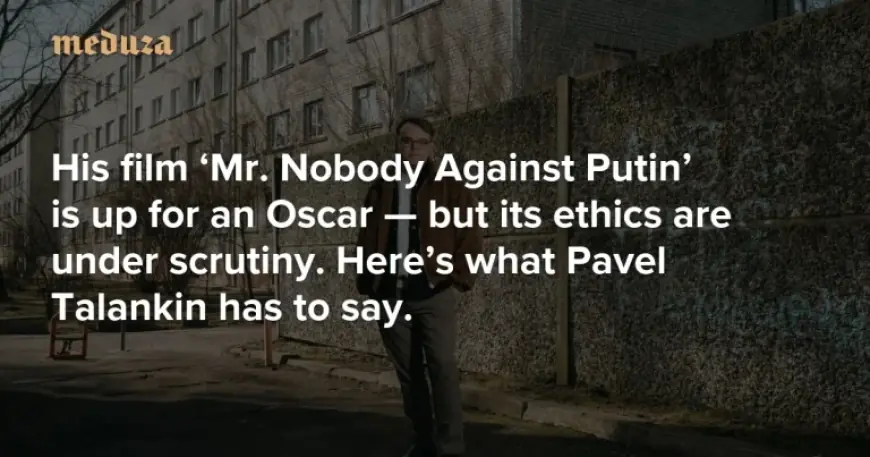
The film mr nobody against putin won the Academy Award for best documentary in Los Angeles, with Pavel Talankin accepting the statuette alongside American co-director David Borenstein. The win crowns a rapid rise from local school events videographer to international recognition and has intensified debate over the film’s methods and the safety of the people it depicts.
From Karabash Videographer To International Stage
Pavel Talankin began his career as an events coordinator and videographer at a primary school in Karabash, a town in the Ural mountains. He left Russia in the summer of 2024 for his own safety after standing up to state-driven wartime messaging. Over the following months he collaborated with an American director based in Copenhagen, transforming footage shot in the school into a feature documentary that drew attention at major festivals and awards.
The film uses material recorded inside the school after directives from authorities introduced more patriotic rituals and flag-raising ceremonies following Russia’s full-scale invasion of Ukraine in 2022. Talankin’s on-the-ground recordings of student performances, music videos and staged events form the backbone of the film’s account of how wartime messaging was embedded into daily school life.
Mr Nobody Against Putin’s Oscar Win And Public Response
At the Academy Awards in Los Angeles the documentary won best documentary, beating several contenders. Talankin and Borenstein accepted the prize together. On stage, Borenstein reflected on the film’s themes, framing the work as an exploration of how a country can be lost through small acts of complicity. Talankin used his moment to issue a public plea calling for the cessation of wars that he said steal the futures of children.
The film’s path to the Oscar included recognition at international festivals and awards prior to the Academy Awards. It won a Special Jury Prize at Sundance and later collected a best documentary prize at a major British awards ceremony in February, milestones that foreshadowed its success in Los Angeles.
Ethical Questions And The Filmmaker’s Response
The film’s prominence has brought intensified scrutiny of its ethical choices. Critics have argued that people appearing in the footage were unaware a documentary was being produced and that showing their faces publicly could place them in danger. These concerns have circulated widely on social media and in commentary about the film’s distribution and exposure of vulnerable subjects.
Talankin has acknowledged the unusual and sudden turn his life has taken since leaving Russia. He has discussed the disorientation of exile and the role of humour as a coping mechanism when confronting authoritarian realities. He has also described the transition from internal exile, where he could speak but had no audience, to external exile, where speech is possible but constrained by distance and language.
Recognition, Responsibility And What Comes Next
The film now stands as both an award-winning work and a flashpoint in conversations about documentary practice in conflict zones. Its creators have been celebrated at major ceremonies, and its subject matter has resonated with juries and audiences. At the same time, the debate over how best to protect subjects and weigh the risks of exposure remains active and unresolved.
The immediate future for Talankin and his collaborators will involve navigating the consequences of international recognition while responding to ethical critiques. The film’s authorship — a collaboration between Talankin and his co-director — and its record of festival and awards success leave it at the centre of a broader conversation about the balance between bearing witness and safeguarding those filmed in wartime settings.