In Bugonia, There’s More to the Film’s Designer Furniture Than Meets the Eye — Bugonia Movie

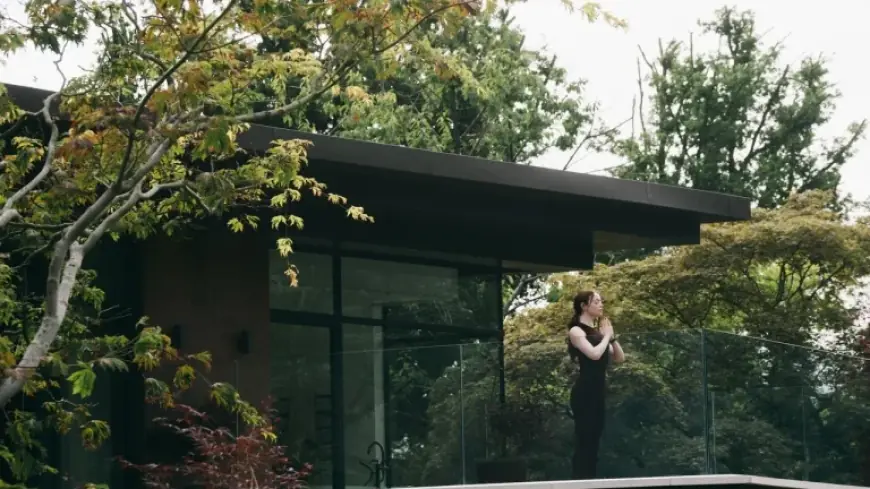
The new coverage of the bugonia movie highlights how set choices and midcentury design function as narrative clues: Emma Stone’s character surrounds herself with iconic furniture that reads as both a claim to humanity and a kind of chilling trophy collection.
Designer Furniture as Character Evidence
The film places recognizable pieces by designers such as Ludwig Mies van der Rohe and Frank Lloyd Wright in Michelle Fuller’s professional and domestic spaces. As Michelle, played by Emma Stone, walks toward her glassed office she passes clusters of Barcelona chairs that shift in color from black to white as she approaches. Production designer James Price describes the items as trophies, framing them as pinnacles of human creativity that Michelle uses to assert her belonging to humanity. The choice gives the objects a static, immaculate quality that underscores the character’s distance rather than her connection.
What Bugonia Movie Reveals About Recognizing Aliens
Bugonia’s narrative — which opens with a warehouse worker named Teddy accusing Michelle of being an extraterrestrial who is killing bees and disrupting ecosystems — converts the question of identity into a public and scientific problem. The film, noted as Oscar‑nominated, poses a central dilemma echoed in expert commentary: would we know an alien if we saw one? Scientists cited in coverage argue there is no clear experimental program for defining life beyond Earth. Sara Walker, an astrobiologist and theoretical physicist at Arizona State University, says, “We don’t have a really clear theoretical and experimental program to ask questions about the nature of life. ” Mike Wong, an astrobiologist at the Carnegie Institution for Science’s Earth & Planets Laboratory, warns that alien life could be radically different from terrestrial examples. Nathalie Cabrol, director of the Carl Sagan Center for Research at the SETI Institute, notes that small environmental differences can steer evolution toward vastly different outcomes. The film stages these questions dramatically by making the suspicion of otherness central to its plot.
Production Choices, Period References and Design Details
Bugonia is set in 2025, but its visual language deliberately echoes midcentury sci‑fi. Price drew inspiration from classics like 2001: A Space Odyssey and the 1965 British film The Ipcress File to create a pared, iconic aesthetic. Specific historical design references are literal: the Barcelona Chair, designed in 1929 by Mies van der Rohe and Lilly Reich and redesigned in 1950 to include the seamless cantilevered base, appears onscreen as a marker of monumentality. Frank Lloyd Wright’s geometric lighting also appears, contributing a humanoid posture to interiors in which human achievement is displayed and weaponized as validation.
By foregrounding furniture as symbolic proof, the film connects visual taste to identity and raises the uneasy possibility that attempts to perform humanity can register as inhuman. That premise — an alien who adopts trophies of civilization and, in doing so, reveals an ineffable distance — is the production’s central formal and thematic move.
As viewers respond to the film’s visual strategy and its plot about bees, accusation and extinction, the coverage leaves open the larger question the movie dramatizes: even when design, behavior and artifacts appear familiar, whether we would reliably identify nonhuman life remains unsettled.