North Korean Ballistic Missiles Fired After US–South Korea Drills As Kim Observes Rocket Test

North Korea fired around 10 north korean ballistic missiles into the sea on Saturday, a show of force that coincided with major US–South Korea military exercises and fresh talk of possible dialogue.
What We Know About North Korean Ballistic Missiles Fired Saturday
South Korea’s military said it detected about 10 ballistic missiles launched from an area near the capital, Pyongyang, toward waters off the country’s east coast. The launches were also described by South Korea’s Joint Chiefs of Staff as originating near Pyongyang’s international airport. The projectiles flew roughly 220 miles before splashing down in the Sea of Japan, South Korean.
Japan’s coast guard said it detected what appeared to be a ballistic missile that fell into the sea. Initial assessments indicated it fell outside Japan’s exclusive economic zone.
Seoul’s national security council called the launches a provocation that violated UN Security Council resolutions that ban any ballistic activity by North Korea. South Korea has since ramped up surveillance in response.
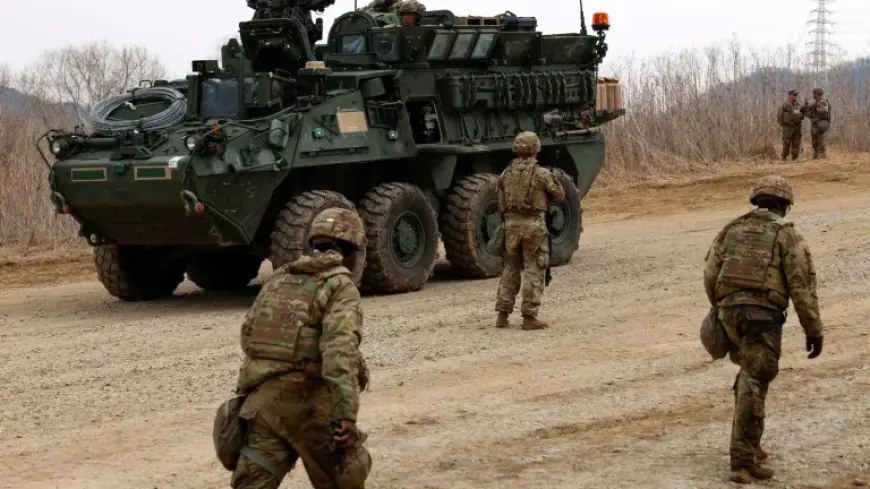
The launches came as US and South Korean forces conducted Freedom Shield, an 11-day exercise held every March that the allies describe as defensive. North Korea has long denounced such drills as invasion rehearsals and frequently pairs them with weapons tests and heated rhetoric. Experts warned the latest barrage could undermine diplomatic efforts made by both sides.
The north korean ballistic missiles highlighted Pyongyang’s continued defiance of international sanctions; the country has been under multiple UN Security Council measures since 2006 for its nuclear and missile programs.
Drills And Diplomatic Overtures Set The Backdrop
The tests unfolded amid parallel diplomatic signals. South Korea’s prime minister met President Donald Trump in Washington in recent days to discuss ways to restart dialogue with Pyongyang, which has largely stalled since 2019. The South Korean leader said the US president indicated that meeting North Korea’s Kim Jong-un would be “good, ” while acknowledging timing remained uncertain.
In recent months, Washington has pushed to revive high-level talks with North Korea, even weighing a possible summit with Kim. The North, for its part, has hardened its stance toward Seoul and urged Washington to drop denuclearization demands as a precondition for talks. Earlier in the week, Kim Jong-un’s sister criticized the allies for proceeding with drills during a period of global instability, saying they undermine regional stability.
Freedom Shield, a computer-simulated command post exercise, is set to run through March 19. North Korea often times its tests to coincide with the drills, framing them as a deterrent.
Kim Oversees Rocket Launcher Test With Daughter
Separately, state media said Kim Jong-un, accompanied by his teenage daughter, observed a live-fire strike drill involving twelve 600mm-caliber, “ultraprecision” multiple rocket launchers off North Korea’s east coast on Saturday. Photos distributed by state outlets showed Kim and his daughter walking near large olive-green launcher trucks and watching weapons fire.
State media quoted Kim as saying the drill would instill “uneasiness” in enemies within a 420-kilometer (about 260-mile) range and give them “a deep understanding of the destructive power of tactical nuclear weapon. ” Kim was also quoted as saying that if the weapon is used, the opponent’s military infrastructure within its range “can never survive. ”
Experts say North Korea’s large-sized rocket launchers blur the line between artillery systems and ballistic missiles because they create their own thrust and use guidance during delivery. North Korea has said some of these systems can deliver nuclear warheads. The appearance of Kim’s daughter at such events since late 2022 has stoked outside speculation that she could be groomed as his heir.
With the drills continuing and the weekend launches fresh, officials in Seoul and Tokyo are watching for additional activity. The allies’ focus now is on deterrence and readiness, while the window for renewed talks remains uncertain.