Ollie Bearman Chinese GP Qualifying Leaves Ocon Down 3-0 With 0.220s Gap

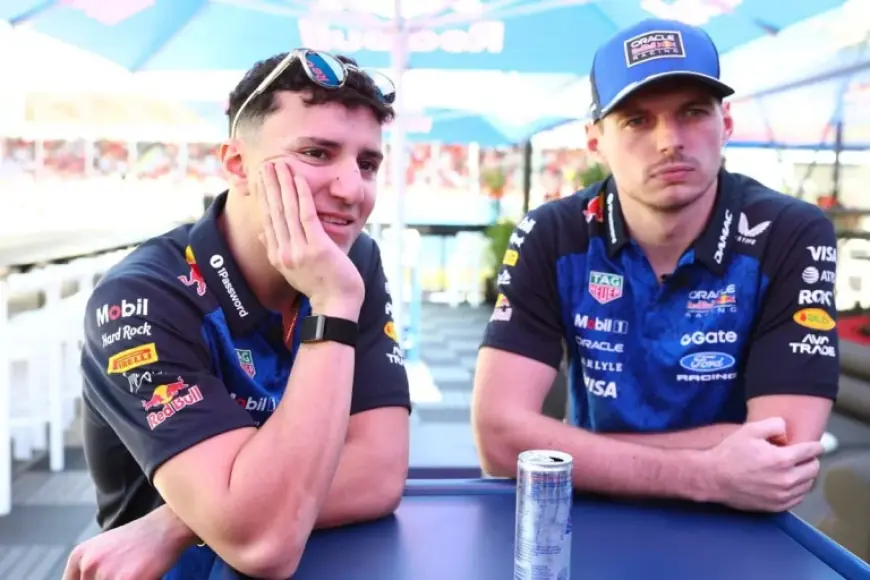
Early qualifying data from the 2026 season show that ollie bearman has a 3-0 advantage over his team-mate in one-lap comparisons, with an average margin of 0. 220 seconds, the current head-to-head tallies. The figures are presented as raw qualifying results and are expected to be refined as the campaign progresses.
Ollie Bearman Tops Team-Mate Duel With Clear Early Margin
The head-to-head standings through the opening rounds list Ocon 0 – Bearman 3, with an average gap noted as Bearman ahead by 0. 220s. That 3-0 run places him among the stronger early performers in single-lap trim when measured strictly by qualifying result comparisons.
These tallies are drawn from one-lap qualifying matchups across the field and exclude instances where a driver could not compete in qualifying; adjustments will be made later to account for a larger sample size and to smooth out outliers.
How Team-Mate Matchups Look Across The Field
The current breakdown of qualifying head-to-heads highlights a range of tight and wide margins elsewhere on the grid. Examples in the same dataset include Norris 1 – Piastri 2 with an average gap of Piastri ahead by 0. 020s, Russell 2 – Antonelli 1 with Russell ahead by 0. 120s, and Verstappen 2 – Hadjar 1 with Verstappen ahead by 0. 294s. At the other end, some matchups show larger discrepancies, such as Gasly 3 – Colapinto 0 with Gasly ahead by 0. 682s and Lawson 3 – Lindblad 0 with Lawson ahead by 0. 535s.
Those comparisons are based exclusively on qualifying results so that grid penalties do not alter the statistics. When a driver is unable to put in a representative lap time due to a technical issue or an incident, that circumstance is noted in the records and the pairwise count is adjusted where necessary.
Calendar Changes And The Weight Of Each Qualifying Result
Season adjustments to the calendar could change the context in which these head-to-heads are interpreted. Four cars missed the start of F1’s Chinese GP, and the cancellation of races in Bahrain and Saudi Arabia — which will not be replaced — reduces the number of events across which drivers can be compared in qualifying trim.
Because each driver can be compared to a team-mate up to 30 times across a full 2026 schedule — 24 grand prix qualifying sessions plus six sprint qualifying sessions — any reduction in races affects the sample available for measuring consistency. The current figures therefore represent an early snapshot rather than a definitive assessment of performance across a full season.
What Comes Next For The Qualifying Tally
The dataset is explicitly described as raw, with further adjustments planned as more rounds are completed and outliers are accounted for. That means the 3-0 margin and 0. 220s average gap in the Ocon–Bearman pairing will remain subject to revision as additional qualifying duels accumulate.
Championship observers and team strategists will watch how pairwise comparisons evolve, particularly after the remaining rounds conclude, to understand whether early streaks such as ollie bearman’s hold up under a larger sample or narrow as conditions, circuits and car developments change.